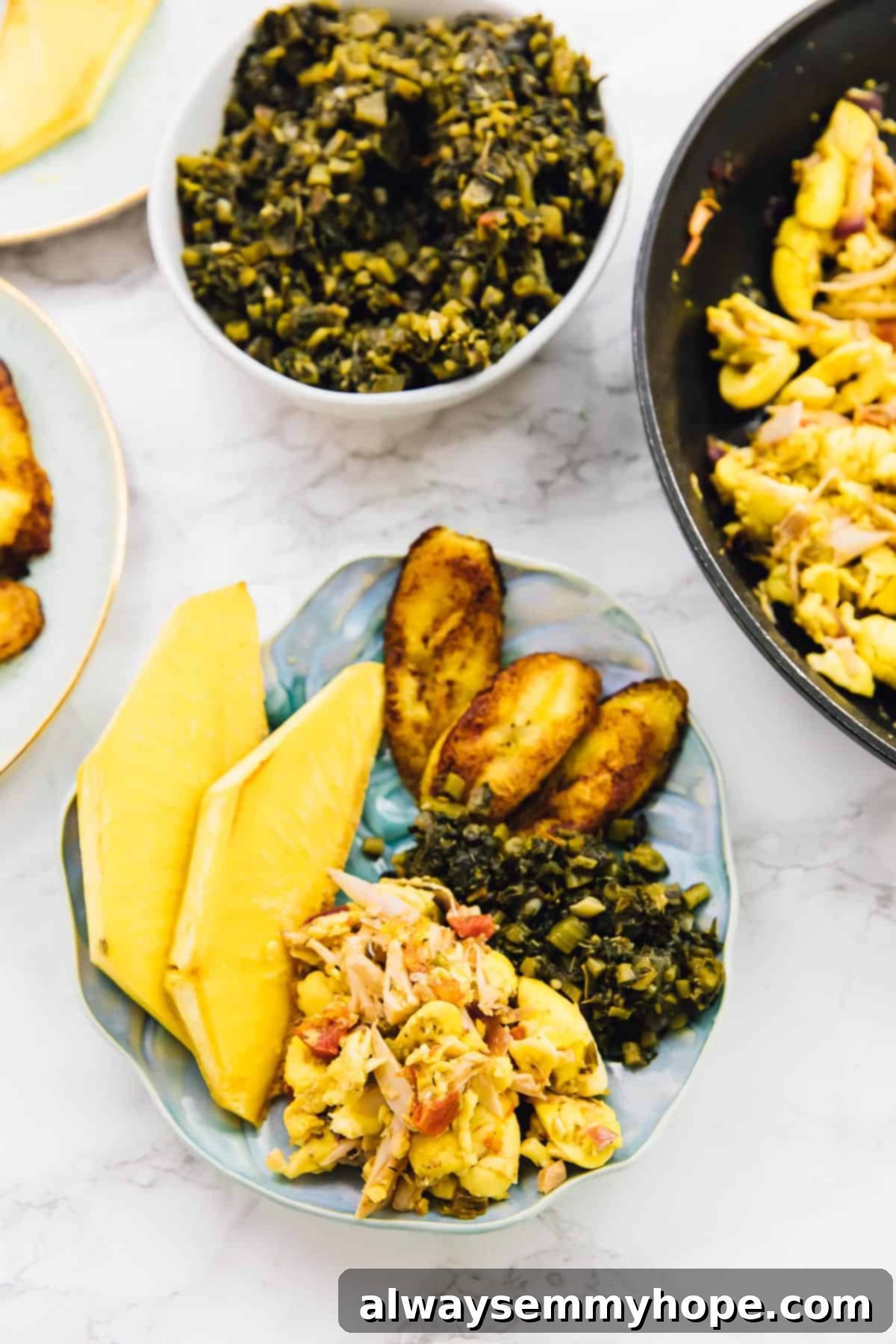
Vegan Ackee and Saltfish: An Authentic Plant-Based Jamaican Breakfast Feast
Embark on a culinary journey to Jamaica with this incredible vegan take on the beloved National Dish: Ackee and Saltfish. This plant-based version captures all the rich, creamy, and savory flavors, offering the ultimate comfort food experience for breakfast or any meal!
For a long time, many of you have asked for more Jamaican recipes, or anything with a vibrant Caribbean flair, from my kitchen. To be completely honest, this has always felt like a slightly daunting task. Growing up, these cherished family recipes weren’t about precise measurements or exact steps; they were cooked with an abundance of love, intuition, and feeling. Translating that soulful approach into a structured recipe for others has been a unique challenge.
However, the overwhelming enthusiasm you showed for my Jamaican Jerk Sauce recipe truly warmed my heart. It encouraged me to dive deeper into sharing these meaningful parts of my heritage. So, my partner Gav and I put our heads together to bring you a truly special creation: a vegan rendition of my absolute favorite breakfast in the entire world – Vegan Ackee and Saltfish. Get ready to experience a taste of Jamaica that’s both authentic and compassionate.
What is Ackee and Saltfish? Jamaica’s National Treasure
Before we dive into the vegan magic, let’s understand the heart of this dish. Ackee and Saltfish is much more than just a meal; it’s Jamaica’s beloved national dish, a staple deeply woven into the island’s culture and history. At its core, it features ackee, a unique and incredibly flavorful fruit, paired with salted cod, traditionally known as “saltfish.”
Ackee is a fascinating and somewhat mysterious fruit. It’s rich and buttery, with a creamy texture reminiscent of scrambled eggs when cooked. However, it’s crucial to note that ackee must only be consumed when fully ripe and properly prepared. Unripe ackee or improper handling can be toxic, which is why it’s typically picked and cleaned by those who know exactly what they’re doing. For those living outside Jamaica, canned ackee is a safe and readily available option, already cooked and perfectly safe to enjoy.
Traditional saltfish, or salted cod, was historically a popular protein source due to its preservation methods, which allowed it to be transported and stored without refrigeration. Its distinct salty, umami flavor and flaky texture are iconic in Jamaican cuisine. When combined, ackee and saltfish create a wonderfully creamy and savory dish, seasoned with aromatic vegetables like onions, bell peppers, tomatoes, and a kick of Scotch bonnet pepper.
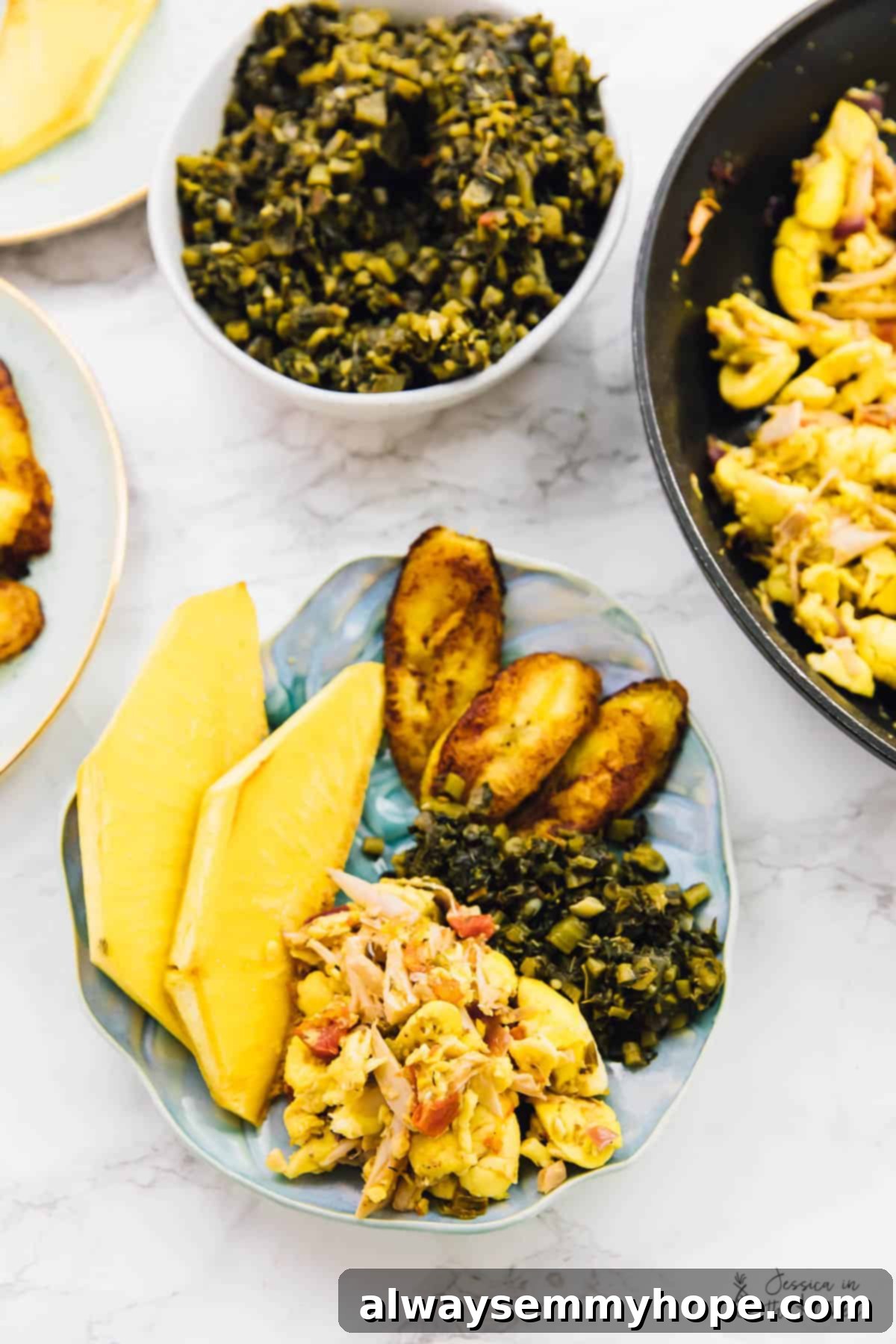
This flavorful medley is usually served as a hearty breakfast, accompanied by a variety of comforting side dishes. Think of boiled dumplings, roasted breadfruit, boiled green bananas, fried dumplings, sautéed callaloo, fried breadfruit, fried plantains, and slices of “pear” (what Jamaicans call avocado). My personal preference leans towards the fried components – fried breadfruit and plantain – because, honestly, one bite and you’ll understand why!
The Journey to a Plant-Based “Saltfish”
This dish has been a constant in my life, from my childhood in the British Virgin Islands, where my mom would regularly prepare it for us, to my adult years. Even after I transitioned to a vegetarian diet, she continued to “cook it up,” skillfully adding such divine seasonings that I never even missed the saltfish. Then, after getting married, I was blessed with a husband who also mastered the art of “Cook Up Ackee,” just like my mom. While I’ve always cherished these interpretations, a new culinary curiosity began to brew: could I create a truly vegan version of the “saltfish” component?
The inspiration struck after making my vegan fish tacos. Hearts of palm had been on my mind, its naturally fibrous and flaky texture reminding me of something familiar. I realized its potential to mimic the texture of salted cod. Moreover, hearts of palm are incredibly versatile and excellent at absorbing flavors, making them an ideal candidate for this experiment. So, armed with this idea, I took my culinary quest to the kitchen.
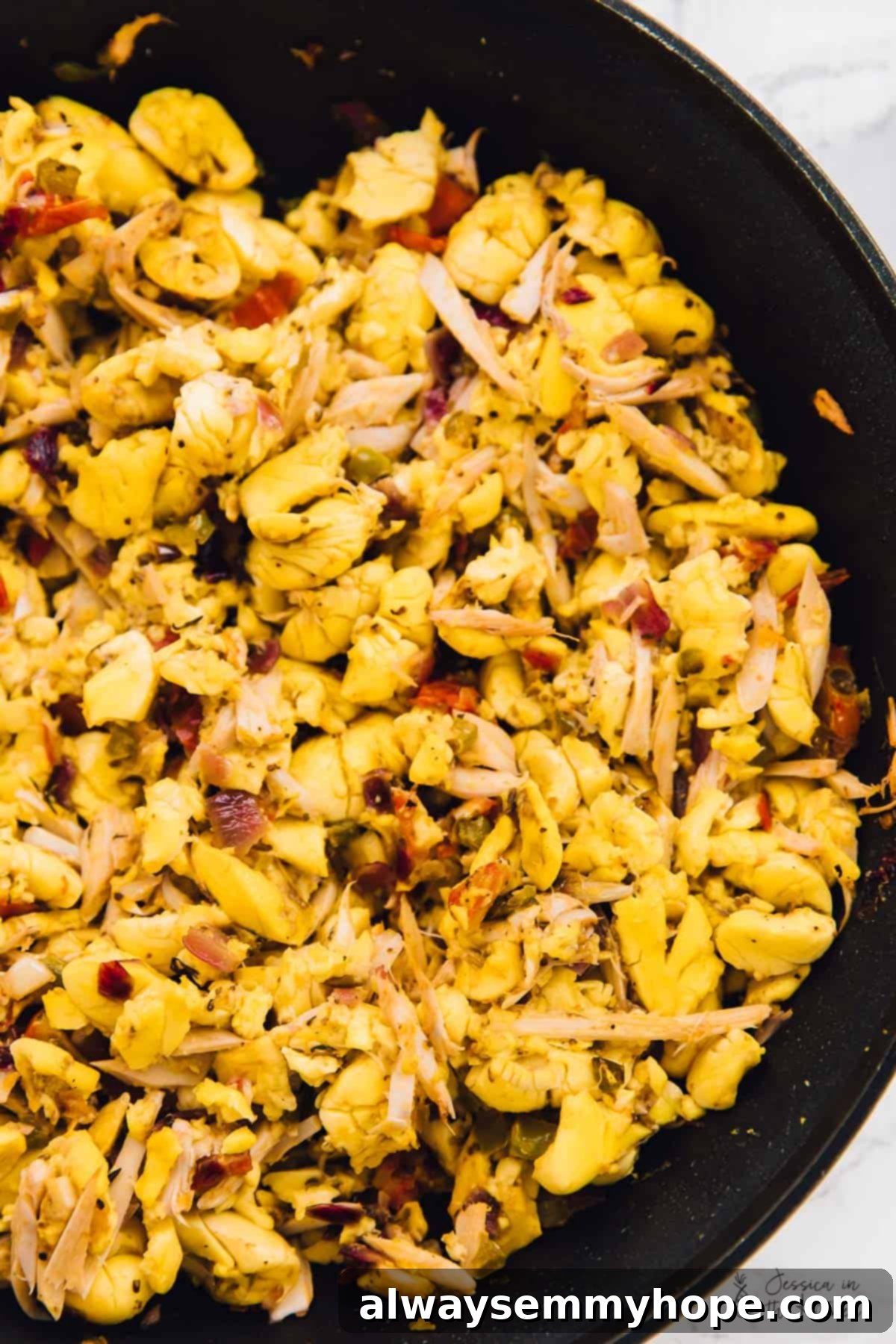
I am absolutely thrilled to report that this experiment was a resounding success! The vegan Ackee and Saltfish you see before you tastes remarkably like the traditional version from my childhood. Every single bite transports me back to those cherished memories of growing up. The texture, the flavor, the comforting aroma – it’s all there, beautifully recreated without a single animal product. Needless to say, this recipe has earned a permanent spot in my rotation, and I couldn’t wait to share it with you all today.
Crafting Your Vegan Jamaican Breakfast
Creating this vegan Ackee and Saltfish involves two main components: preparing the “vegan saltfish” and then combining it with the ackee and fresh seasonings. The process is straightforward, ensuring you get that authentic Jamaican flavor with ease.
The Vegan “Saltfish”: Hearts of Palm Transformation
Our plant-based “saltfish” truly shines in this recipe. Hearts of palm are naturally tender with a stringy, flaky texture that’s perfect for this application. To transform them, we’ll gently shred them and then brine them in a salty solution. This brining step is crucial; it not only infuses the hearts of palm with a savory, ocean-like taste but also helps to firm up their texture, allowing them to hold up beautifully during cooking. For an extra layer of authentic “fishy” flavor, I highly recommend adding a pinch of kelp or nori flakes to your brine. This simple addition makes all the difference in achieving that convincing taste profile.
The Star: Ackee
Whether you’re using fresh, properly cooked ackee or the convenient canned variety, the key is gentle handling. Ackee, especially canned, is delicate and can break apart easily. Its rich, buttery flavor forms the perfect base, soaking up all the wonderful spices and aromatics we add to the pan. When combined with our vegan saltfish, it creates a harmonious blend of textures and tastes.
Aromatic Vegetables and Spices
The heart of Jamaican flavor comes from its fresh produce and vibrant spices. For this dish, we’ll sauté finely diced garlic, roughly chopped Roma tomatoes, colorful bell peppers, and red onions until they’re tender and fragrant. Fresh thyme adds an earthy, aromatic note, while finely diced Scotch bonnet pepper brings that characteristic Jamaican heat. Remember, you can adjust the amount of Scotch bonnet to suit your preferred spice level – a little goes a long way!
Serving Your Jamaican Breakfast Feast
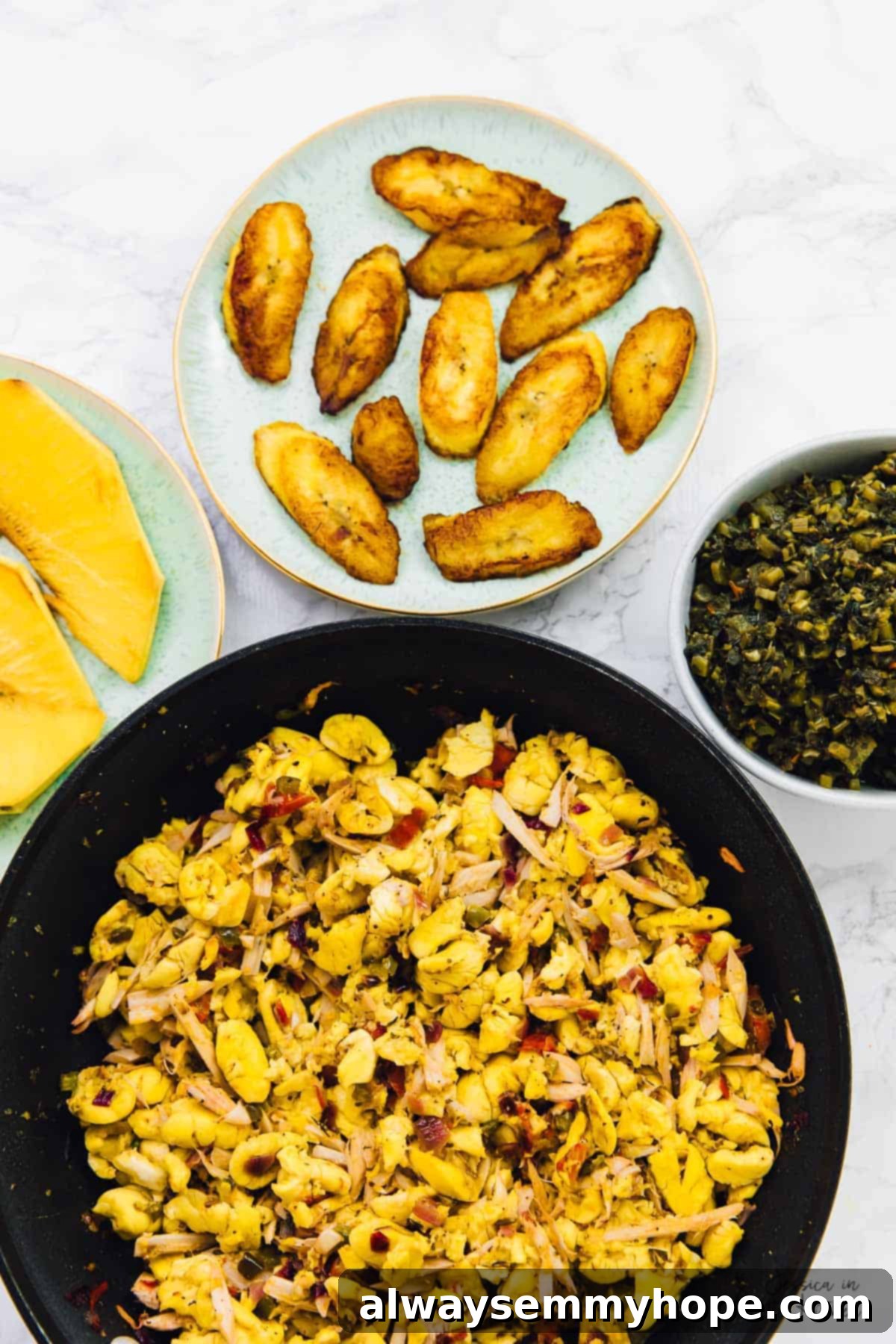
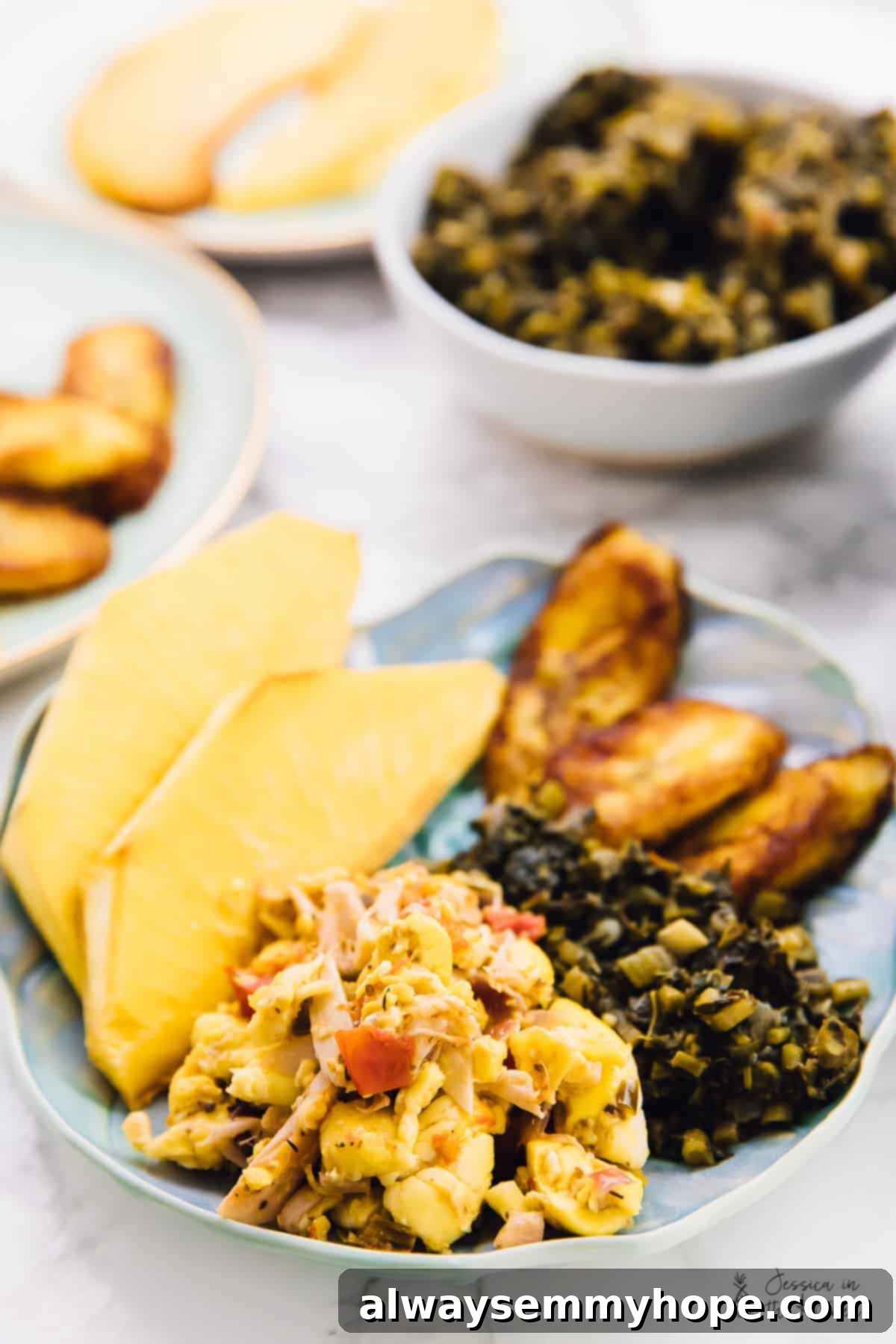
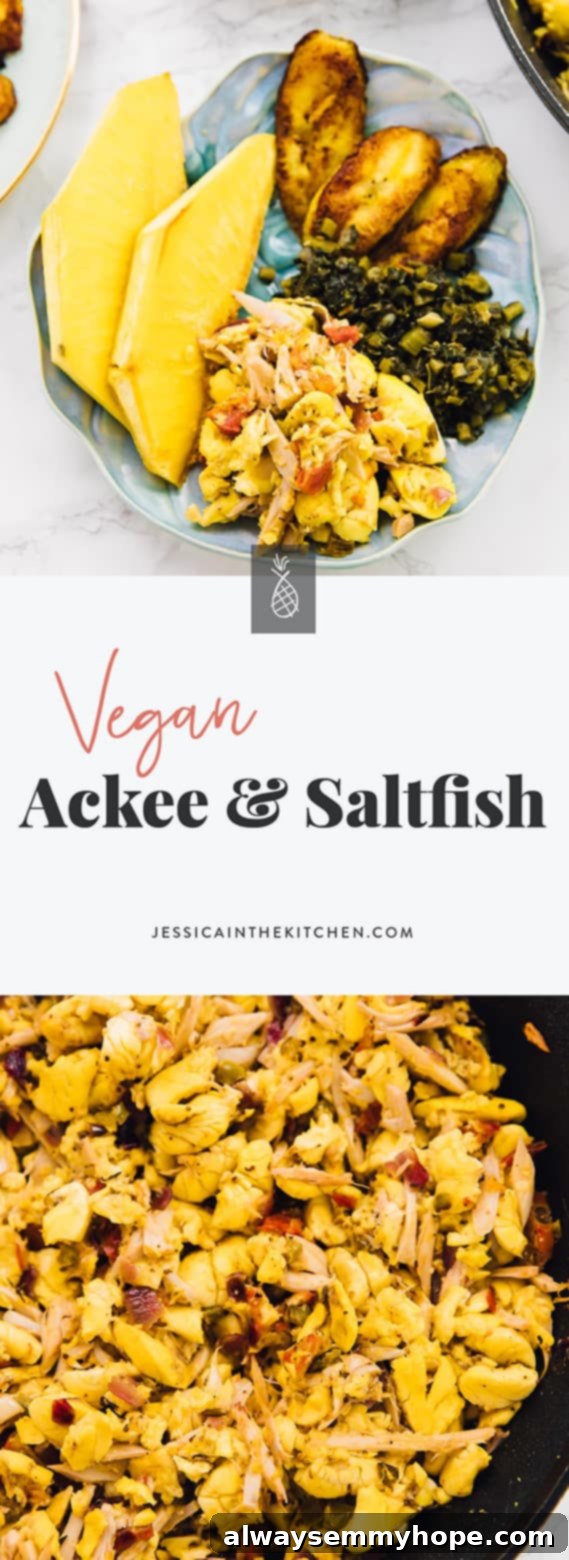
I chose to pair my Vegan Ackee and Saltfish with vibrant sautéed callaloo, crispy fried breadfruit, and sweet fried plantains. If I had fresh avocado (or “pear” as we call it in Jamaica), I would absolutely add slices with a sprinkle of salt. This combination creates a truly complete and satisfying Jamaican breakfast feast. I’ve detailed how to prepare all these delicious sides in the accompanying video, so be sure to watch it for a comprehensive guide!
If you’ve never ventured into Jamaican cuisine, this vegan Ackee and Saltfish recipe is the perfect introduction. You’ll discover that a significant portion of a traditional Jamaican breakfast is already naturally vegan, making the transition to a fully plant-based version wonderfully simple. The only primary substitution needed is for the saltfish, and with our hearts of palm method, the transformation is complete – and utterly delicious!
I sincerely hope you enjoy this taste of history and this incredible dish, my friends! Don’t forget to check out the video (coming soon!) for all my essential tips, including the safest way to handle ackee. Prepare to savor one of the most flavorful and comforting plant-based breakfasts you’ll ever experience. Enjoy every bite!
Vegan Ackee and Saltfish (Jamaican Breakfast Feast)
Pin Recipe
Leave a Review
Ingredients
Vegan Saltfish
- 1 can, 14 oz/396g of Hearts of Palm
- 1 cup filtered water
- 1 tablespoon sea salt
- 2 teaspoons kelp or nori flakes, optional, for that ocean-like flavor
Ackee
- 1 lb cooked ackee or canned/tin ackee*, (454g), drained and rinsed
- Up to 2 tablespoons coconut oil
- 4 cloves of garlic, finely diced
- 2 plummy or Roma tomatoes, roughly chopped
- 1 medium sized bell pepper, roughly chopped (any color)
- ½ red onion, roughly chopped
- 3-4 stalks fresh thyme, stems removed, leaves roughly chopped
- ¼ of Scotch bonnet or more for your preferred heat, finely diced (handle with care!)
- 3 stalks scallion, sliced, for garnish and flavor
- sea salt and ground black pepper to taste**
Instructions
Vegan Saltfish Preparation
- Begin by preparing your hearts of palm. Drain the can, then take each piece and cut them in half lengthwise, then diagonally into smaller segments. Next, gently shred these pieces with your fingers or a fork to create that distinct flaky texture, mimicking traditional saltfish. (See video for a visual demonstration). Once shredded, transfer all the contents to a mason jar or similar container.
- In the jar, add one cup of filtered water and a tablespoon of sea salt to create your salt brine. Stir gently to ensure the salt dissolves and coats all the hearts of palm. If desired, incorporate the kelp or nori flakes now for an added “fishy” depth of flavor. Make sure the hearts of palm are fully submerged in the brine. Let this sit and brine for a minimum of 30 minutes, or for a few hours to intensify the flavor.
Ackee and Saltfish Assembly
- Heat one tablespoon of coconut oil in a large skillet or frying pan over medium heat. Add the finely diced garlic, roughly chopped tomatoes, bell peppers, and red onions. Sauté these vegetables, stirring occasionally, until they soften and the onions become translucent, which typically takes about 5-8 minutes. Stir in the fresh thyme.
- Now, it’s time for our vegan “saltfish”! Carefully drain the salt brine from the hearts of palm, rinse them thoroughly under cold water, and pat them dry with a clean kitchen towel or paper towels to remove excess moisture. Increase the heat slightly, then add the prepared “saltfish” to the skillet with the sautéed seasonings. If the pan appears dry, add another teaspoon or two of coconut oil. Stir everything to combine, allowing the “saltfish” to crisp up slightly and absorb the flavors for about 5 minutes.
- At this stage, gently fold in your fully cooked and drained ackee. If using canned ackee, be particularly gentle to prevent it from breaking apart too much, as it’s quite delicate. Taste the dish and re-season with more sea salt as needed (remembering the hearts of palm were brined) and a generous amount of freshly ground black pepper. Add the finely diced Scotch bonnet pepper here, distributing it evenly for that signature Jamaican heat.
- Remove the skillet from the heat. Garnish with sliced scallions and serve immediately alongside callaloo, fried breadfruit, and fried plantains, or any of your favorite Jamaican side dishes. Eat and enjoy this flavorful breakfast feast!
- Leftover Ackee and Saltfish can be stored in an airtight container in the refrigerator for up to a few days. Simply reheat in your microwave or on the stovetop until thoroughly hot. Callaloo can also be reheated similarly. For the best taste and texture, I recommend only cooking enough plantain and breadfruit for immediate consumption, as they are truly best enjoyed fresh!
Notes
If you are fortunate enough to have access to fresh ackee, please ensure that you are familiar with its preparation or have someone knowledgeable clean and cook it for you to ensure it’s safe for consumption.
**Accurately stating the exact salt amount for this dish can be challenging. Once the ackee is added, the overall saltiness can change significantly, and you want to avoid over-salting, especially with the brininess from your vegan saltfish. I recommend starting with ½ teaspoon of added sea salt after the ackee is in and tasting as you go. Adjust to your preference from there. The same goes for black pepper and Scotch bonnet – start small and add more if you desire more heat and flavor.
Disclaimer: Although jessicainthekitchen.com attempts to provide accurate nutritional information, kindly note that these are only estimates. Nutritional information may be affected based on the product type, the brand that was purchased, and in other unforeseeable ways. Jessicainthekitchen.com will not be held liable for any loss or damage resulting for your reliance on nutritional information. If you need to follow a specific caloric regimen, please consult your doctor first.