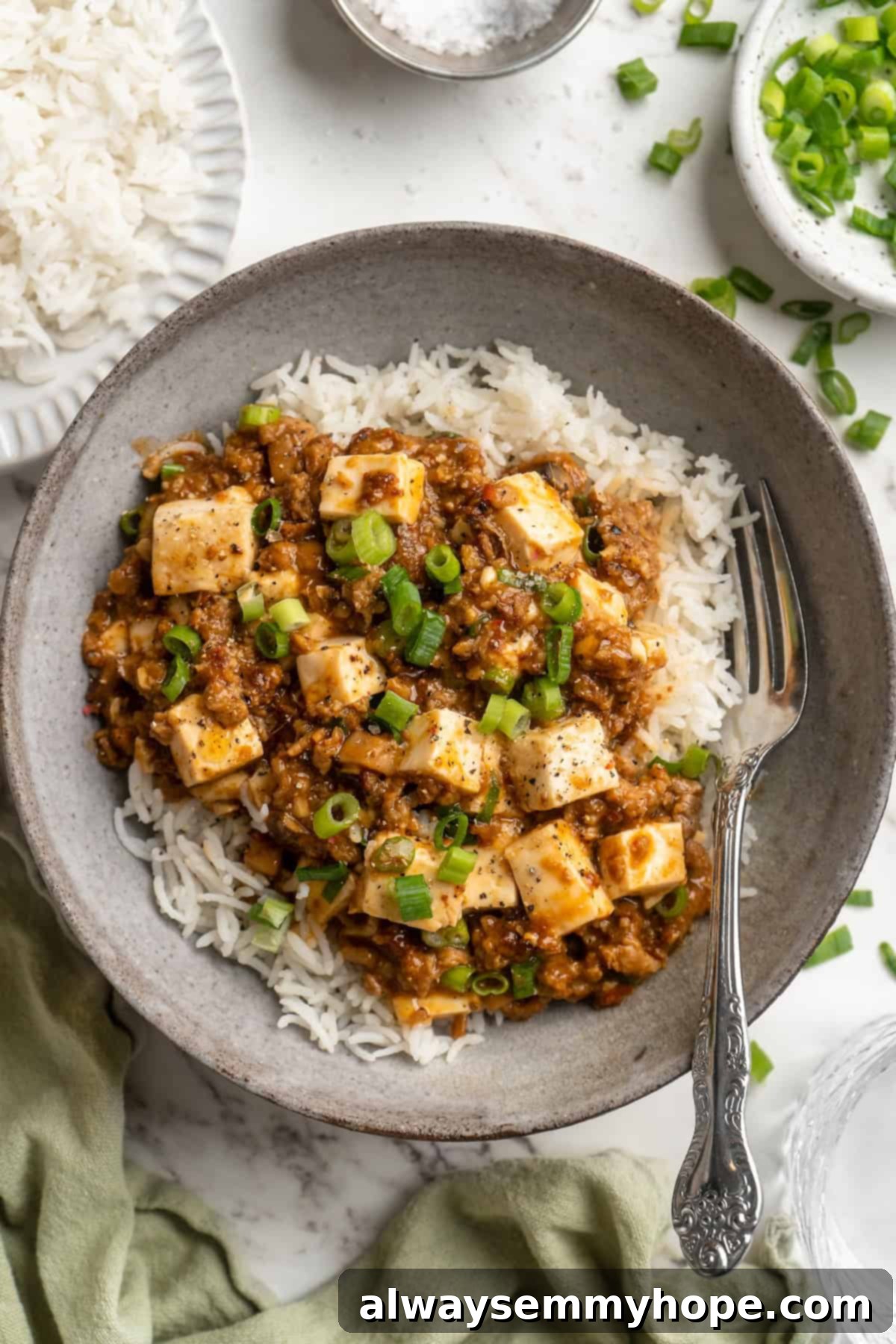
Ultimate Easy Vegan Mapo Tofu: Spicy, Savory & Ready in 25 Minutes!
Prepare yourself for an explosion of flavor with this incredible easy vegan mapo tofu recipe! In just 25 minutes, you can create a spicy, saucy, and deeply satisfying plant-based meal that’s bursting with protein and authentic Chinese flavors. Forget takeout – this homemade version is not only quick but also incredibly delicious and customizable, making it a perfect weeknight dinner.
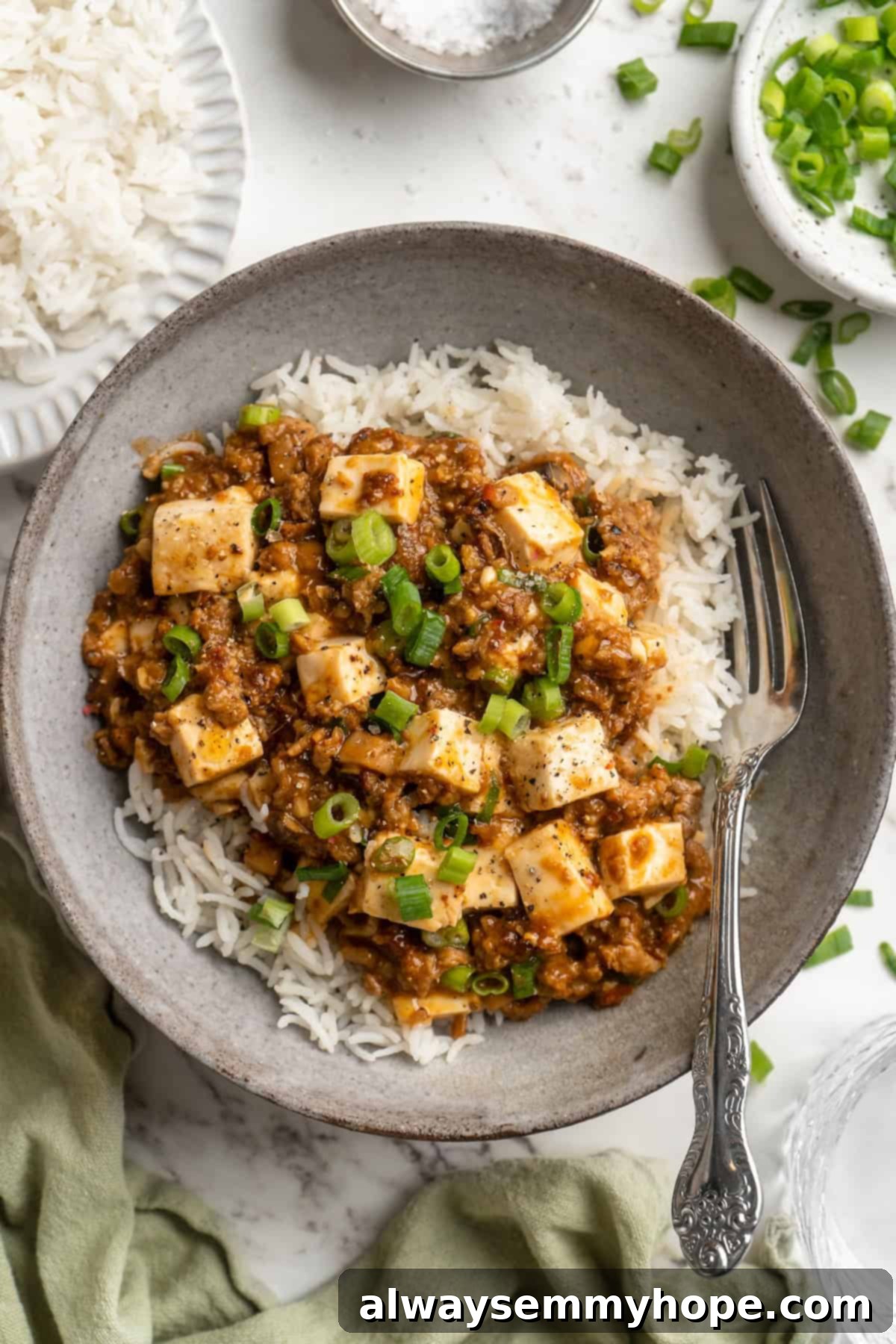
Mapo Tofu has long been a beloved staple in Chinese cuisine, famous for its fiery kick and luscious texture. While traditionally prepared with ground beef, this plant-based adaptation brings all the savory goodness to your table without compromise. Many restaurant versions of mapo tofu include meat unless explicitly stated as vegetarian or vegan, which can be a disappointment for plant-based eaters. But fear not! Crafting this iconic dish in your own kitchen is surprisingly straightforward, delivering a saucy, spicy, and protein-packed experience that will impress even the most discerning palates – including your non-vegan friends and family. This recipe offers an authentic taste with a modern, compassionate twist.
Why This Easy Vegan Mapo Tofu Recipe Will Be Your New Favorite
Discover what makes this plant-based Mapo Tofu a standout dish you’ll want to make again and again:
- Power-Packed Plant Protein. This isn’t just a tasty dish; it’s a nutritional powerhouse! Silken tofu provides a fantastic base of complete plant-based protein, and by incorporating crumbled vegan meat alternatives or mushrooms, we amplify its satisfying qualities. This ensures every serving is hearty and keeps you feeling full and energized, making it an ideal choice for a wholesome meal that fuels your day.
- Effortless Weeknight Wonder. Forget spending hours in the kitchen! Like many beloved Asian-inspired stir-fries and quick meals (such as our delicious Tempeh Stir Fry), this vegan mapo tofu comes together in a flash. With a prep time of just 10 minutes and a cook time of 15, it’s designed for busy weeknights when you crave something flavorful, comforting, and homemade without the fuss.
- Tailor-Made Spice Experience. One of the greatest benefits of preparing this authentic mapo tofu at home is having complete control over the heat. Whether you prefer a subtle warmth, a vibrant tingle from the Sichuan peppercorns, or a fiery explosion of chili spice, you can easily adjust the amount of chili oil and doubanjiang to match your personal preference. No more guessing if a restaurant dish will be too mild or too hot – you’re the chef!
Essential Ingredients for Authentic Vegan Mapo Tofu
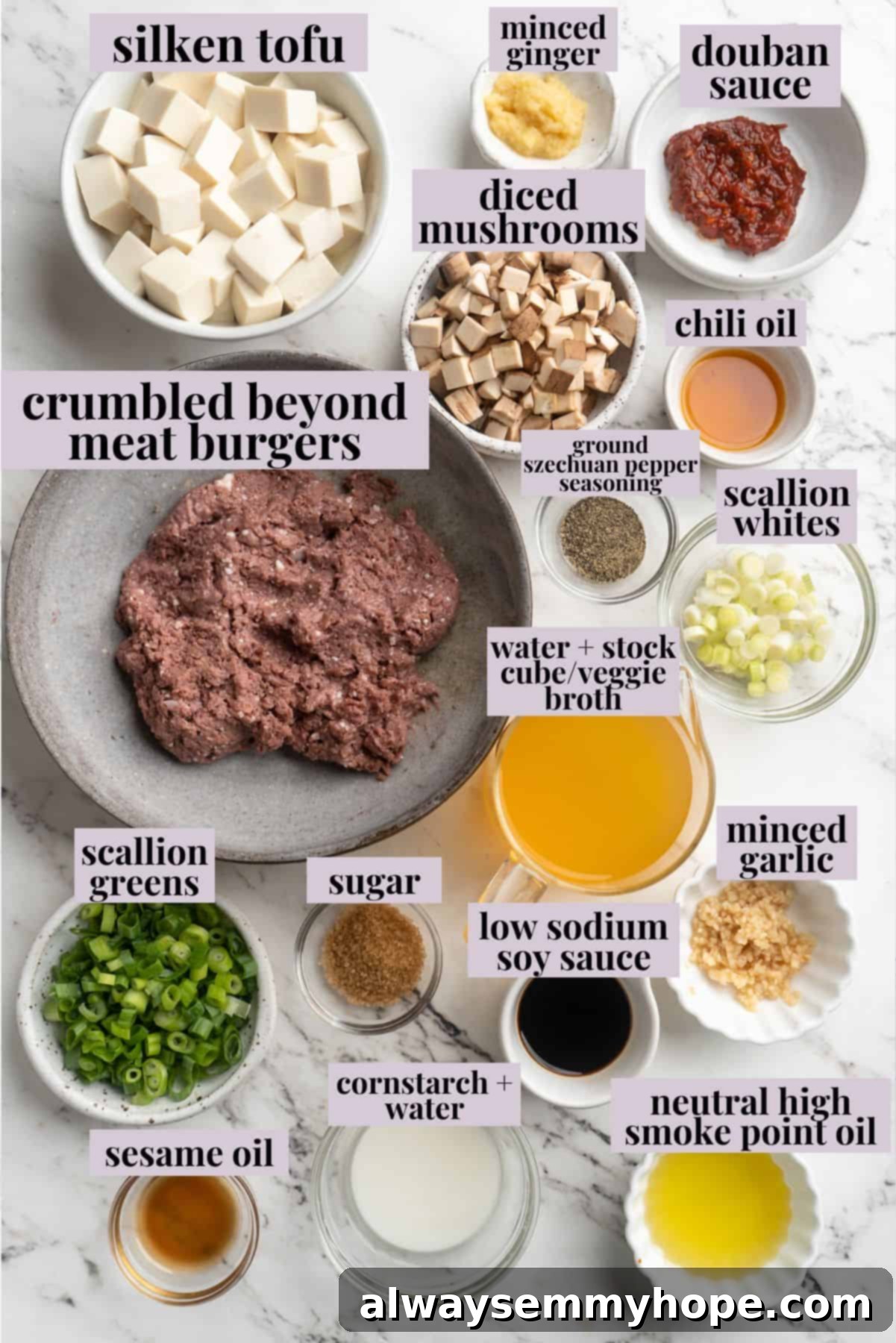
To recreate the rich and complex flavors of traditional Mapo Tofu in its vegan form, a thoughtful selection of ingredients is key. Below, we dive into the specific components that make this dish so special, along with useful tips and substitutions. For exact quantities and step-by-step cooking instructions, please refer to the comprehensive recipe card located further down this page.
- Neutral High-Smoke Point Oil – Essential for stir-frying at high temperatures without burning. Options include sunflower, grapeseed, safflower, or avocado oil. While olive oil can work in a pinch, these neutral oils allow the other vibrant flavors to shine through without imparting their own strong taste.
- Crumbled Vegan Meat Alternative – To mimic the texture and savory depth of ground beef found in classic mapo tofu, we use crumbled veggie burgers. I often opt for Beyond Meat patties for their uncanny resemblance to ground meat, but feel free to use your preferred plant-based mince or even extra mushrooms for a lighter option. This ingredient brings a robust umami foundation to the dish.
- Diced Mushrooms – You can use white or cremini mushrooms, or another variety you like. These add an earthy umami flavor and a pleasant chewiness that complements the tofu beautifully. If you’re opting for an all-mushroom “meat” base, you can increase this quantity for a heartier texture and deeper flavor.
- Fresh Ginger and Garlic – These aromatic powerhouses are the backbone of many Asian dishes, including this mapo tofu. Freshly minced ginger provides a warm, pungent kick, while garlic adds its distinctive savory depth. Do not skimp on these for the best flavor; fresh is always best!
- Scallions (Green Onions) – Both the white and green parts of scallions are used. The whites are cooked with the aromatics for a gentle onion flavor at the beginning, while the vibrant green tops are reserved for a fresh, crisp garnish at the end, adding both flavor and visual appeal.
- Douban Sauce – AKA chili bean paste or doubanjiang sauce. This is the absolute cornerstone of authentic Mapo Tofu. It’s a fermented broad bean and chili paste that delivers a complex, savory, and spicy flavor profile unique to Sichuan cuisine. Look for it in Asian supermarkets – it’s a game-changer!
- Chili Oil – For an extra layer of heat and a beautiful reddish hue, chili oil is indispensable. I typically use the aromatic oil drained from a jar of high-quality chili crisp, such as Fly by Jing’s, which also offers a textural element if you include some of the crispy bits.
- Ground Sichuan Pepper Seasoning – This is what gives Mapo Tofu its characteristic “ma la” numbing and spicy sensation. The unique tingle from Sichuan peppercorns is crucial for authenticity and provides an incredible dimension of flavor. If you can only find whole peppercorns, toast them lightly and grind them yourself for maximum potency.
- Low-Sodium Soy Sauce – Provides a salty, umami depth without overpowering the dish. Using low-sodium allows you to control the overall saltiness better. For those needing a gluten-free option, easily substitute with tamari, liquid aminos, or coconut aminos.
- Sugar – A touch of sugar helps to balance the intense spicy and savory flavors, adding a subtle sweetness that rounds out the sauce and enhances its complexity. Adjust to your taste, depending on how sweet or savory you prefer your Mapo Tofu.
- Vegetable Broth – The liquid base for our rich sauce. Homemade vegetable broth offers the best flavor, but a good quality store-bought broth or a mixture of water with a stock cube/liquid concentrate works perfectly. You can adjust the amount for a thinner or thicker sauce.
- Cornstarch Slurry – Cornstarch mixed with water. This is vital for thickening the sauce, giving it that luxurious, glossy consistency characteristic of mapo tofu that clings beautifully to the tofu cubes.
- Silken Tofu – I like to use a firm silken tofu for this recipe. Unlike other tofu varieties, silken tofu has an incredibly smooth, custard-like texture that gently absorbs all the incredible flavors of the sauce. It’s usually found in shelf-stable cartons in the Asian or international aisle, not in the refrigerated section with block tofu.
- Toasted Sesame Oil – For a nutty finish, use toasted sesame oil. Added at the very end, a drizzle of this fragrant oil imparts a wonderful nutty aroma and a final layer of complexity, elevating the overall flavor profile of the dish.
Crafting Your Delicious Vegan Mapo Tofu: Step-by-Step Guide
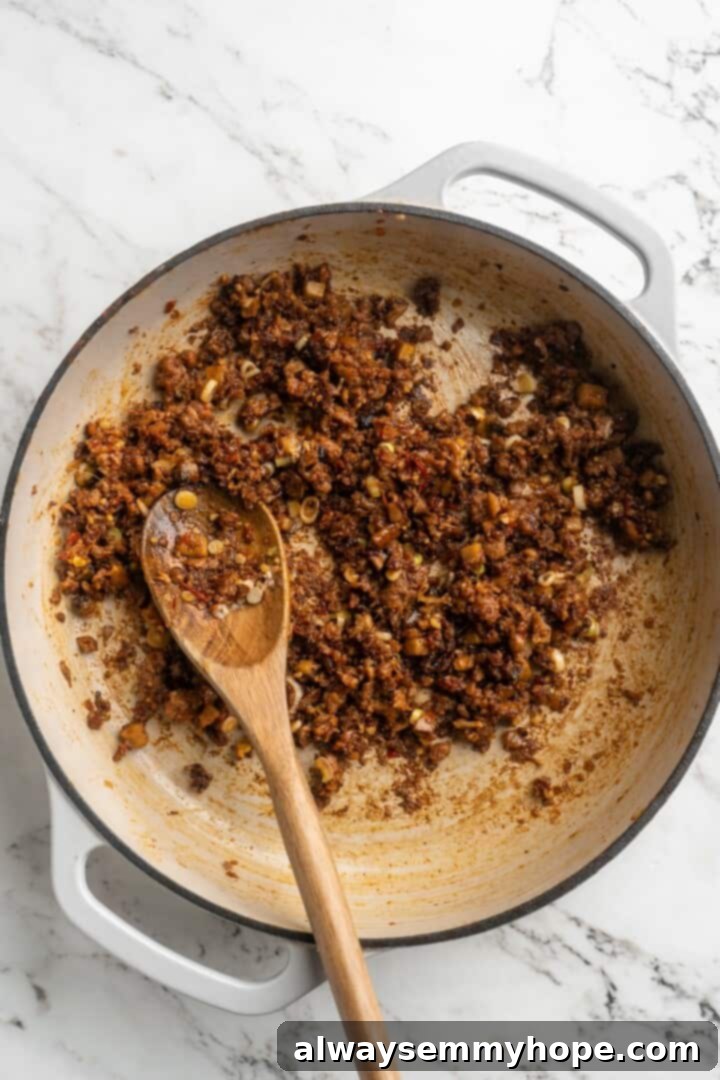
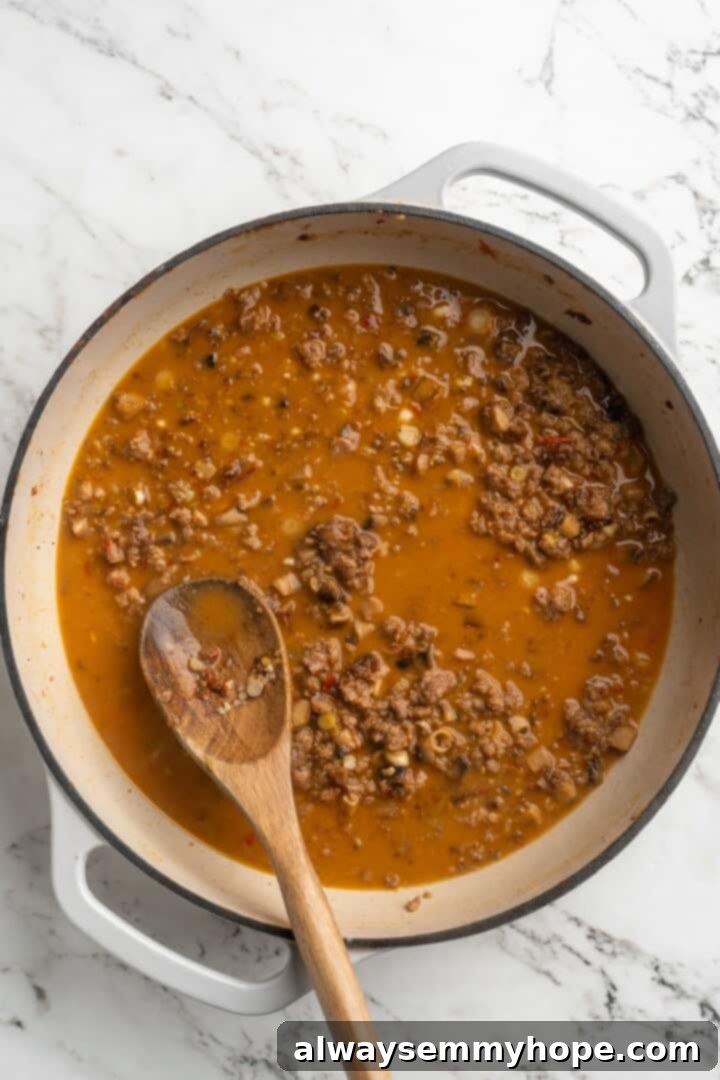
Follow these simple steps to create a restaurant-quality vegan Mapo Tofu in your home kitchen:
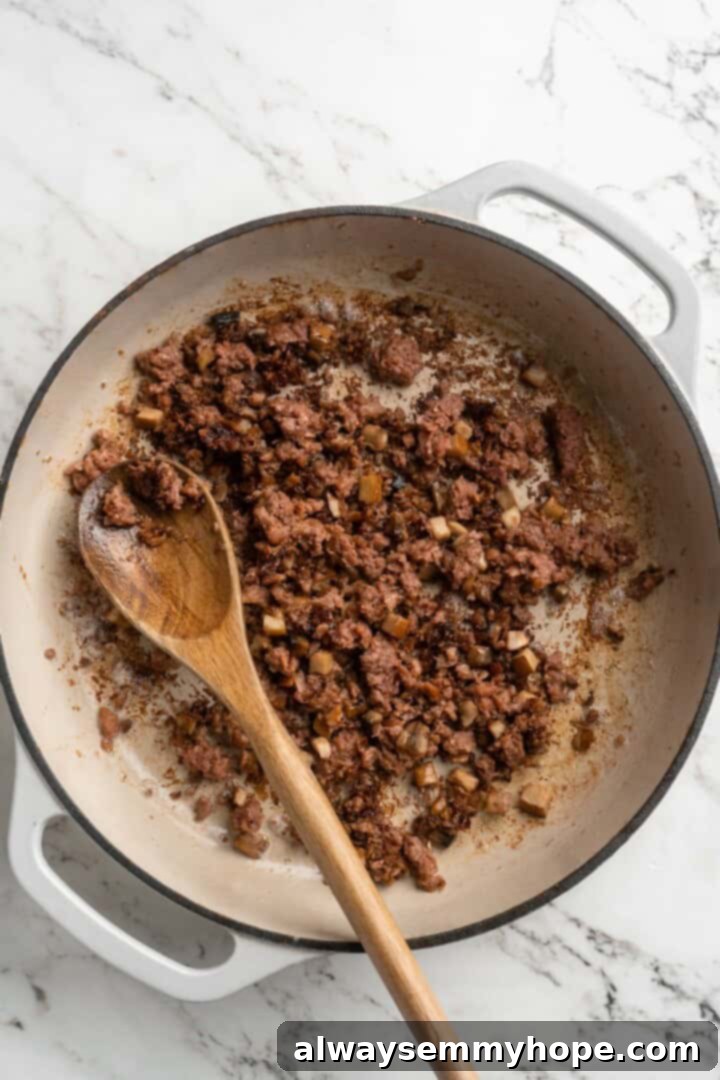
- Sauté Your Plant-Based “Meat” and Mushrooms. Begin by heating your chosen high-smoke point oil in a large wok or a deep pan over medium-high heat. Once the oil is hot and shimmering, introduce the crumbled vegan meat alternative and diced mushrooms. Sauté vigorously for approximately 5 minutes until the plant-based meat is thoroughly cooked and the mushrooms have softened and released their moisture, developing a rich, savory aroma and a pleasing golden-brown color.
- Prepare the Tofu Bath. Simultaneously, get a separate pot of water boiling. It’s crucial to generously salt this water. This step helps to gently warm the silken tofu, preparing it to absorb the flavors of the sauce while also ensuring it retains its delicate texture and doesn’t cool down the main sauce when added.
- Infuse with Aromatics. To the wok with the cooked vegan “meat” and mushrooms, add the freshly minced ginger, garlic, and the white parts of your scallions. Stir constantly for about 3 minutes, allowing these potent aromatics to become wonderfully fragrant and infuse their pungent, sweet notes deeply into the mixture. This step is key for building a complex and authentic flavor base.
- Develop the Signature Sauce. Next, it’s time to introduce the cornerstone flavors of Mapo Tofu. Stir in the douban sauce, chili oil, ground Sichuan pepper seasoning, low-sodium soy sauce, and a touch of sugar. Cook for just a minute or two, allowing the spices to bloom and meld together, releasing their full aromatic potential. Then, pour in the vegetable broth and the cornstarch slurry, stirring continuously until the sauce begins to thicken and achieve that characteristic glossy, clingy consistency that makes Mapo Tofu so appealing.
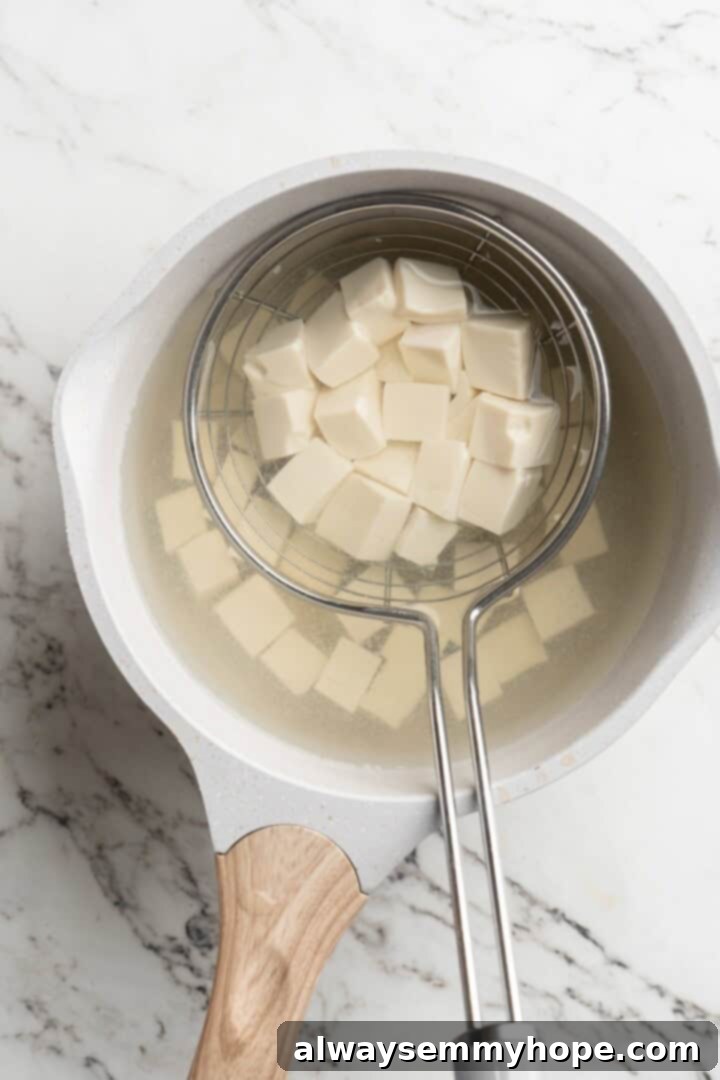
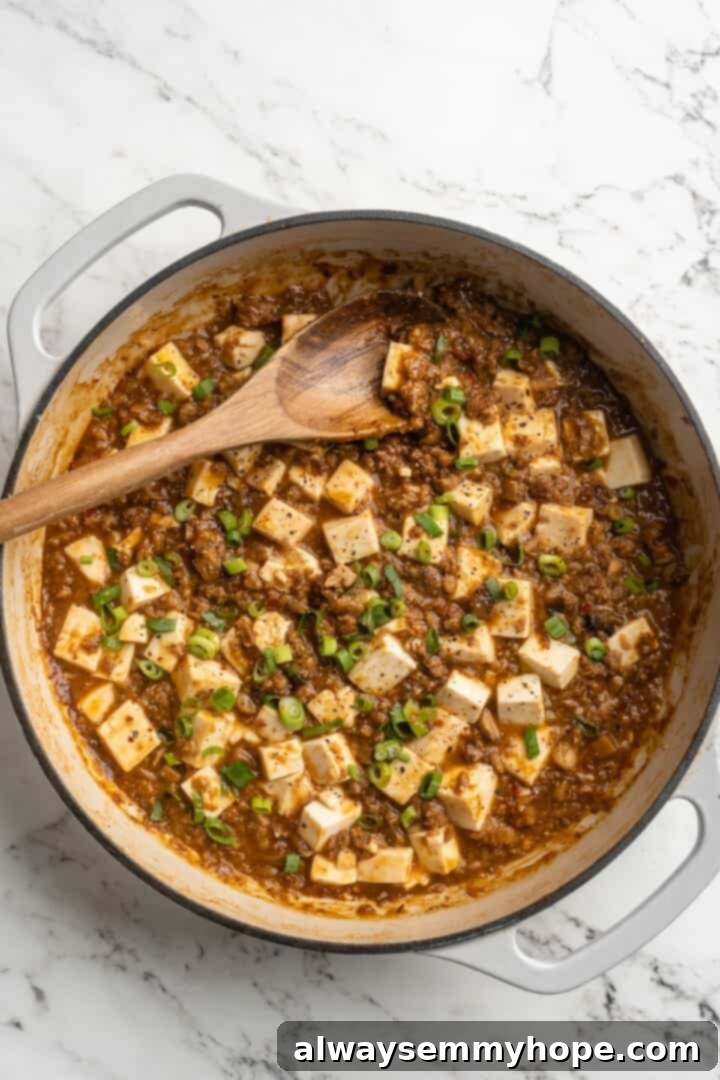
- Perfect the Silken Tofu. Carefully add your pre-cut, cubed silken tofu to the pot of salted boiling water. Let it simmer gently for just 1 to 2 minutes. This step is crucial for warming the tofu through and firming it up slightly, which helps it maintain its shape while still being incredibly tender. Using a slotted spoon, carefully remove the tofu, allowing any excess water to drain away gently.
- Combine and Serve. Delicately transfer the warmed tofu cubes into the wok with the rich, simmering mapo sauce. Stir very gently using a soft spatula or spoon to coat the tofu without crushing its delicate structure. Taste the dish and adjust seasoning with more salt, a pinch more sugar, or extra chili oil if desired. Garnish generously with a final drizzle of toasted sesame oil for a nutty finish and the vibrant green parts of the scallions. Serve immediately over freshly steamed rice for a truly authentic and comforting meal.
Mastering Your Vegan Mapo Tofu: Expert Tips for Success
Achieving the perfect vegan Mapo Tofu is easier than you think, especially with these insider tips:
- Select the Ideal Tofu Variety. The secret to authentic Mapo Tofu lies in the texture of the tofu. Silken tofu, with its incredibly smooth and tender consistency, is non-negotiable. It effortlessly absorbs the bold flavors of the sauce, creating a melt-in-your-mouth experience. Remember, silken tofu is typically found in shelf-stable aseptic packages in the international aisle, not alongside firm or extra-firm tofu in the refrigerated section. Opt for ‘firm silken tofu’ if available, as it offers a slightly better structural integrity.
- Embrace Mise en Place (Prep Ahead). Stir-frying is a fast-paced cooking method, and this Mapo Tofu recipe is no exception. To ensure a smooth and stress-free cooking experience, perform all your chopping, mincing, and measuring before you even turn on the stove. This ‘mise en place’ approach allows you to add ingredients quickly and efficiently, preventing anything from overcooking or burning while you’re scrambling for the next component.
- Handle Tofu with Utmost Care. Silken tofu is delicate! Once you’ve gently added the warmed tofu cubes to the simmering sauce, resist the urge to stir vigorously. Instead, use a soft spatula or spoon to gently fold and combine the tofu with the sauce. This technique ensures that each cube gets beautifully coated without crumbling, maintaining the dish’s appealing presentation and luxurious texture.
- Don’t Skip the Sichuan Pepper: For that signature “ma la” (numbing and spicy) sensation that defines authentic Mapo Tofu, real Sichuan peppercorns are a must. If you only have whole peppercorns, lightly toast them in a dry pan for a minute or two, then grind them fresh. This enhances their unique citrusy and numbing properties, elevating your dish from simply spicy to truly authentic and complex.
- Taste and Adjust to Your Palate: While the recipe provides a great starting point for flavors, always taste the sauce before adding the tofu and after everything is combined. The spiciness from the chili oil and doubanjiang, the saltiness from the soy sauce, and the subtle sweetness from the sugar can all be fine-tuned to your personal preference. Don’t be afraid to add a little more of what you love!
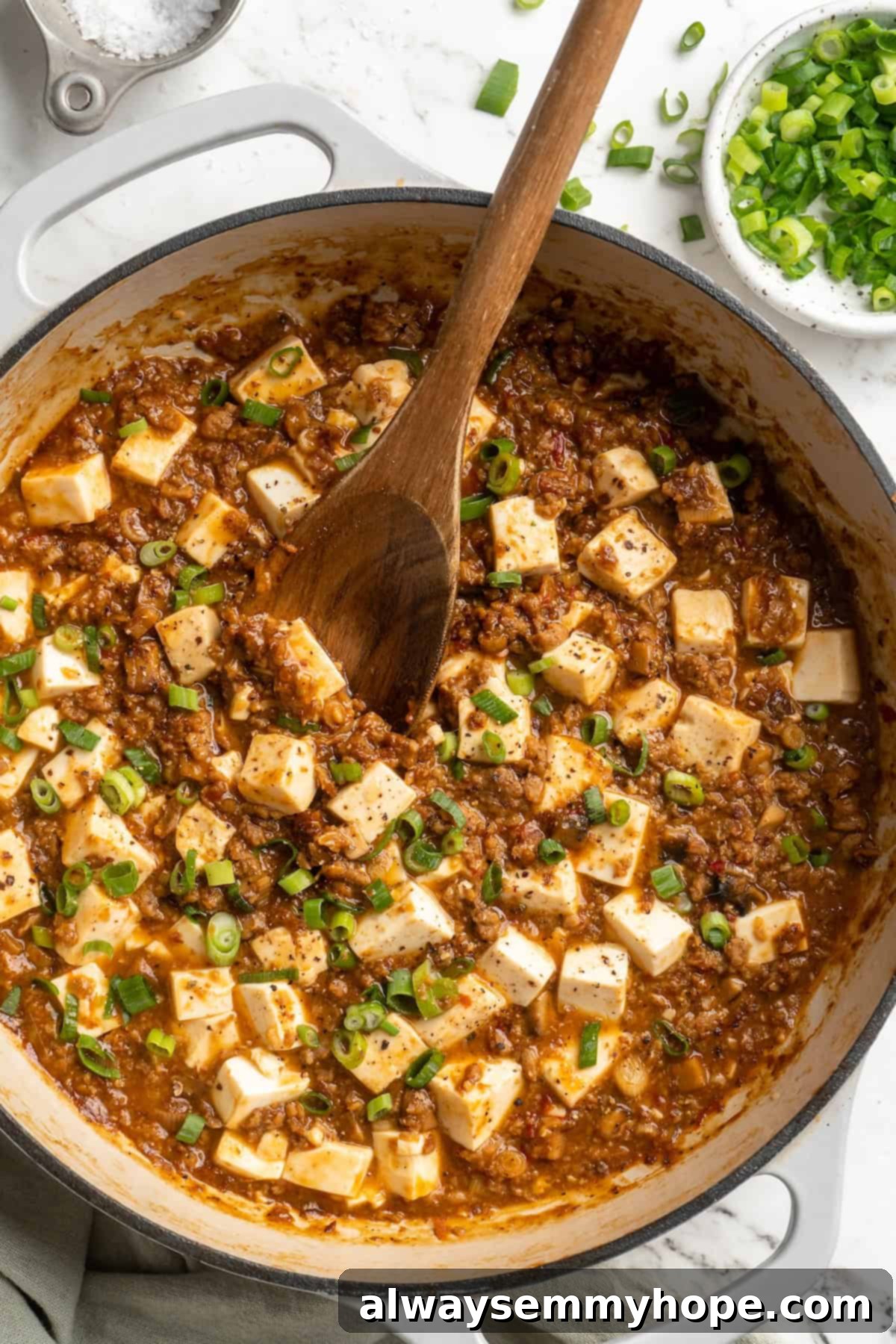
Exciting Variations for Your Vegan Mapo Tofu
While the classic recipe offers an unparalleled experience, vegan Mapo Tofu is wonderfully versatile. Feel free to experiment with these delicious variations to suit your taste or what you have on hand, always keeping the core spicy and savory essence:
- Swap in Tempeh for the Veggie Burger. For a more natural, less processed alternative to vegan burger patties, crumbled tempeh makes an excellent substitute. Its firm texture can be easily crumbled to mimic ground meat, and it absorbs flavors beautifully. Tempeh offers a slightly nuttier flavor profile and a more substantial bite, perfect if you prefer ingredients that don’t try to imitate meat flavor too closely.
- Or Try Seitan. If you’re looking for a chewier, more robust texture that holds up well in a sauce, seitan is another fantastic choice. You can use store-bought seitan, crumbled finely, or even prepare your own from our homemade vegan chicken recipe. Ensure it’s crumbled or diced into small, even pieces before adding it to the stir-fry, allowing it to thoroughly soak up the rich mapo sauce and contribute to a satisfying mouthfeel.
- Add Extra Vegetables: While not strictly traditional, you can boost the nutritional value and texture by adding other quick-cooking vegetables. Finely diced bell peppers, carrots, water chestnuts, bamboo shoots, or even some frozen peas can be added along with the mushrooms for extra color, crunch, and nutrients. Just be sure not to overcrowd your wok.
- Smoky Flavor Boost: For a subtle hint of smokiness, consider adding a dash of liquid smoke or a pinch of smoked paprika to your sauce during the “building the sauce” stage. This can further enhance the savory depth, especially if you’re using just mushrooms as your “meat” substitute, providing an extra layer of complexity.
Perfect Pairings: What to Serve With Vegan Mapo Tofu
The vibrant, spicy, and savory flavors of Mapo Tofu truly shine when paired with the right accompaniments. Traditionally, this iconic dish is enjoyed simply over a bed of fluffy white rice, which beautifully balances the richness and heat of the sauce. However, if you’re looking to modify your meal, there are several delicious and healthy alternatives:
- Steamed White or Brown Rice: The timeless and classic choice. A neutral grain like rice is perfect for soaking up every drop of the delectable mapo sauce and providing a comforting, starchy base that complements the intensity of the dish.
- Cauliflower Rice: For a low-carb, grain-free, or vegetable-packed option, cauliflower rice is an excellent substitute. It mimics the texture of traditional rice and lets the mapo tofu remain the undeniable star of the dish while adding extra nutrients.
- Cooked Quinoa: Boost your meal’s protein content even further by serving your mapo tofu with cooked quinoa. This complete protein grain adds a delightful texture and makes for an even more nutritionally robust and satisfying meal.
- Lightly Steamed Greens: Complement the rich, bold flavors of mapo tofu with a side of lightly steamed or stir-fried Asian greens such as bok choy, gai lan (Chinese broccoli), or fresh spinach. A simple drizzle of soy sauce and sesame oil over the greens would be a perfect, refreshing contrast to the spicy main course.
- Noodles: While less traditional, mapo tofu can also be served over a bed of your favorite noodles, such as ramen noodles, udon, or even simple rice vermicelli, for a different and equally delicious textural experience.
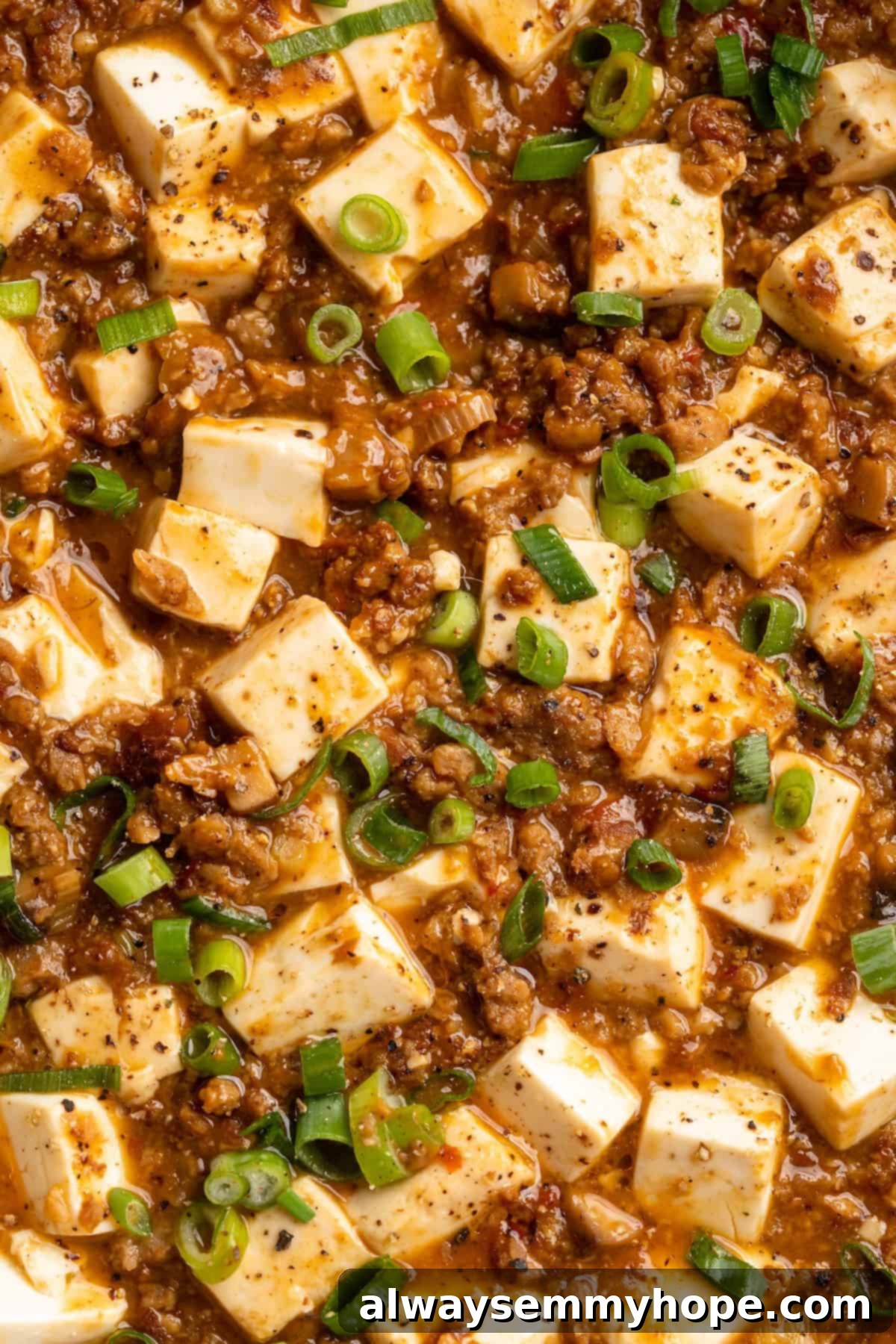
Storing and Reheating Your Delicious Vegan Mapo Tofu
One of the many great things about this easy vegan mapo tofu recipe is how well it holds up as leftovers. In fact, some argue the flavors deepen and become even more complex the next day! Here’s how to properly store and reheat your delicious creation to enjoy it again:
- Refrigerator Storage: Any leftover vegan mapo tofu can be safely stored in an airtight container in the refrigerator for a period of 3 to 4 days. Ensure it cools down completely before transferring it to the container to maintain freshness and prevent condensation, which can affect texture.
- Freezing for Later Enjoyment: For longer storage, mapo tofu freezes beautifully! Portion it into freezer-safe airtight containers or heavy-duty freezer bags, removing as much air as possible to prevent freezer burn. It will keep well in the freezer for up to 3 months. When you’re ready to enjoy it again, simply thaw it overnight in the refrigerator before proceeding with reheating to ensure even warming.
- Reheating Instructions: To bring your mapo tofu back to life, you have a couple of easy options. Gently warm it in a pan over medium heat on the stovetop, stirring occasionally and adding a splash of vegetable broth or water if the sauce appears too thick. Alternatively, you can reheat individual servings in the microwave until thoroughly heated through. Be mindful not to overheat the tofu, as excessive microwaving can sometimes make it a bit rubbery.
Explore More Delicious Asian-Inspired Vegan Recipes
If you’ve fallen in love with the bold flavors and satisfying textures of this vegan Mapo Tofu, you’re in for a treat! Our kitchen is brimming with a variety of other delightful plant-based Asian-inspired dishes that are equally flavorful and satisfying. Expand your culinary repertoire with these fantastic recipes that are perfect for any occasion:
- Spicy Ramen: A comforting bowl of rich, spicy broth and noodles that’s perfect for a cozy night in, packed with your favorite vegan toppings.
- Vegan Pad See Ew: Indulge in wide rice noodles stir-fried with tender vegetables and a savory-sweet sauce, a beloved Thai classic made plant-based.
- Chow Fun Noodles: A quick and healthy stir-fry featuring hearty rice noodles, fresh vibrant veggies, and a delicious savory sauce for a satisfying meal.
- Vegan Thai Red Curry with Tofu: A fragrant and creamy curry packed with vibrant Thai flavors, tender tofu, and fresh vegetables, offering warmth and spice.
- Onigiri: Learn to make these adorable and delicious Japanese rice balls, perfect for snacks, lunchboxes, or light meals, with various fillings.
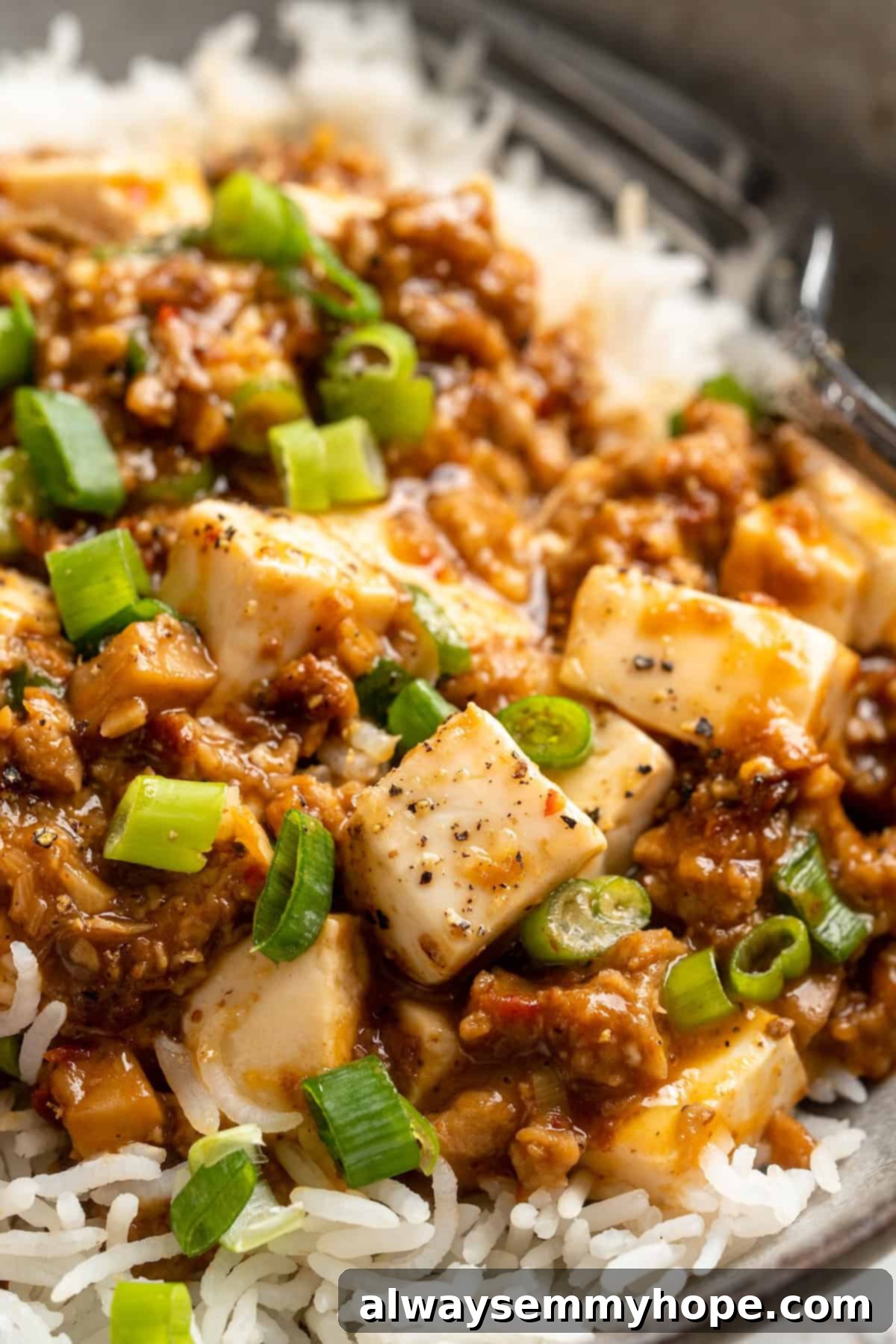
We hope you thoroughly enjoy this vibrant and flavorful easy vegan Mapo Tofu recipe! It’s a dish that truly brings the essence of Sichuan cuisine to your plant-based table with incredible ease and authenticity. When you whip up this spicy, saucy, and satisfying meal, we’d absolutely love to see your culinary creations! Please snap a photo and share it with us by tagging #jessicainthekitchen on Instagram. Your feedback is invaluable to us, so don’t forget to leave a comment below and give this recipe a rating. Happy cooking and enjoy every spicy bite!
Vegan Mapo Tofu
Pin Recipe
Leave a Review
Ingredients
- 1 tablespoon oil, use a neutral, high smoke point oil such as sunflower, grapeseed, safflower, or avocado oil, which are best for stir-frying and won’t overpower the delicate flavors of the dish
- 2 crumbled Beyond Meat burgers, or vegan meat replacement of choice, such as other plant-based mince or simply use 2 cups extra diced mushrooms for an all-vegetable version
- ½ cup diced mushrooms, white or cremini mushrooms work well, adding umami and texture. If using only mushrooms as a meat substitute, increase this quantity.
- 2 knobs fresh ginger, for about 1 tablespoon minced ginger, essential for pungent aroma and flavor
- 5 cloves garlic, for about 1 tablespoon minced garlic, providing a deep savory base
- ¼ cup diced scallion whites, for cooking with aromatics, adding a mild onion flavor
- 1 tablespoon douban sauce, also known as chili bean paste or doubanjiang, this fermented chili bean paste is crucial for authentic Mapo Tofu flavor and spice
- 1 tablespoon chili oil, I usually just drain some off from the jar of a good quality chili crisp, like Fly by Jing’s, for both heat and flavor
- 1 teaspoon ground Szechuan pepper seasoning, essential for the unique ‘ma la’ numbing sensation, Nom Nom Paleo’s ground Sichuan pepper seasoning is highly recommended for its quality
- 1 tablespoon low sodium soy sauce, provides umami and saltiness without making the dish overly salty. Use tamari for gluten-free.
- 1 tablespoon sugar, more or less to taste, balances the spicy and savory flavors
- 1 cup vegetable broth, or mix 1 cup of water + 1 teaspoon of stock liquid (such as Yondu) or a stock cube; add more water if you prefer a saucier consistency
- cornstarch slurry, 2 teaspoons cornstarch mixed with 2 tablespoons water, for thickening the sauce to a perfect, glossy consistency
- 1 pound firm silken tofu, excess water drained, then carefully sliced in half lengthwise and cubed into bite-sized pieces; ensures delicate texture
- 1 teaspoon toasted sesame oil, to add near the end for a rich, nutty finish and aromatic depth
- 1/4 cup diced scallion greens, for topping, adding freshness and a vibrant pop of color as a garnish
Instructions
- Begin by heating your preferred high-smoke point oil (such as sunflower or avocado oil) in a large wok or a deep, sturdy pan over medium to medium-high heat until it shimmers. This ensures even cooking for the subsequent ingredients.
- Once the oil is hot, add the crumbled vegan meat substitute (or additional diced mushrooms if preferred) and the ½ cup of diced mushrooms to the wok. Sauté over medium-high heat for about 5 minutes, stirring frequently, until the vegan meat is thoroughly cooked and browned, and the mushrooms have softened and released their moisture.
- In a separate pot, begin boiling water for the tofu. Generously salt the water, as this will slightly season and firm up the silken tofu.
- To the vegan meat and mushroom mixture in the wok, add the aromatics: minced fresh ginger, minced garlic, and the diced white parts of the scallions. Stir to combine and cook for about 3 minutes, or until the aromatics are wonderfully fragrant and lightly softened.
- Next, add the douban sauce, chili oil, ground Sichuan peppercorn seasoning, low sodium soy sauce, and sugar to the vegan meat mixture. Stir to combine thoroughly, cooking for approximately 1-2 minutes to allow the spices to bloom and meld.
- Finish the mapo tofu sauce by pouring in the vegetable broth (or seasoned water) and the cornstarch slurry. Mix thoroughly and continuously with a whisk or spoon to combine and thicken the sauce to a glossy, rich consistency.
- While the sauce is simmering, carefully add the cubed silken tofu to the pot of salted boiling water. Let it cook for about 1-2 minutes to warm it through and retain its delicate texture. Scoop it out with a slotted spoon, gently shake off any excess water, and carefully add it to the wok, stirring very gently to combine with the rich sauce without breaking the tofu.
- Taste the finished mapo tofu and add more salt, sugar, or Sichuan pepper if desired to suit your palate. Finish by topping generously with toasted sesame oil and the diced green parts of the scallions. Serve immediately over fluffy white rice and enjoy this authentic and spicy vegan delight!
Notes
- Refrigerator Storage: Store any leftover vegan mapo tofu in an airtight container in the refrigerator for a period of 3 to 4 days. Ensure it cools down completely before transferring it to the container to maintain freshness and prevent condensation.
- Freezing for Later Enjoyment: For longer storage, mapo tofu freezes beautifully! Portion it into freezer-safe airtight containers or heavy-duty freezer bags, removing as much air as possible to prevent freezer burn. It will keep well in the freezer for up to 3 months. When you’re ready to enjoy it again, simply thaw it overnight in the refrigerator before proceeding with reheating.
- Reheating Instructions: To bring your mapo tofu back to life, you have a couple of easy options. Gently warm it in a pan over medium heat on the stovetop, stirring occasionally and adding a splash of vegetable broth or water if the sauce appears too thick. Alternatively, you can reheat individual servings in the microwave until thoroughly heated through. Be mindful not to overheat the tofu, as excessive microwaving can sometimes make it a bit rubbery.
Disclaimer: Although jessicainthekitchen.com attempts to provide accurate nutritional information, kindly note that these are only estimates. Nutritional information may be affected based on the product type, the brand that was purchased, and in other unforeseeable ways. Jessicainthekitchen.com will not be held liable for any loss or damage resulting for your reliance on nutritional information. If you need to follow a specific caloric regimen, please consult your doctor first.