
The Ultimate Vegan Vegetable Biryani: A Fragrant and Flavorful Plant-Based Feast
Embark on a culinary journey with this exquisite vegan vegetable biryani – a dish celebrated for its enchanting aroma, rich flavors, and vibrant medley of fresh vegetables. Perfectly crafted to complement your favorite Indian curries, this biryani is so robust and satisfying that it can effortlessly stand alone as a main course or serve as an impressive side dish. Loaded with wholesome goodness and an array of aromatic spices, it promises a delightful experience for both seasoned biryani lovers and those new to this classic Indian delicacy.

Indian cuisine is renowned globally for its incredible diversity and often, its inherent vegan-friendly nature. However, a common ingredient in many traditional dishes, including biryani, is ghee (clarified butter), which contains dairy. For those embracing a plant-based lifestyle, this traditionally meant foregoing the rich, restaurant-style biryani. But not anymore! This homemade vegan vegetable biryani recipe is a revelation – a testament to how utterly delicious and authentic a plant-based version can be, without compromising on flavor or texture.
At its heart, vegetable biryani is an aromatic Indian rice dish expertly layered with a variety of vegetables, fragrant spices, and fresh herbs. The name “biryani” itself originates from the Persian word “birian,” signifying “fried before cooking.” This refers to the traditional method where spices and vegetables are sautéed and lightly fried in a pot before the rice is added, allowing their essences to meld and deepen. The result is a truly mouthwatering, aromatic, and comforting one-pot meal that captivates the senses and is sure to be a crowd-pleleaser at any dinner table.
To truly elevate the flavors of this biryani and infuse it with an authentic Indian essence, we highly recommend using freshly ground spices whenever possible. Grinding your own spices just before cooking releases a more intense aroma and vibrant flavor profile that pre-ground spices simply cannot match. This simple step can transform a good biryani into an extraordinary one!
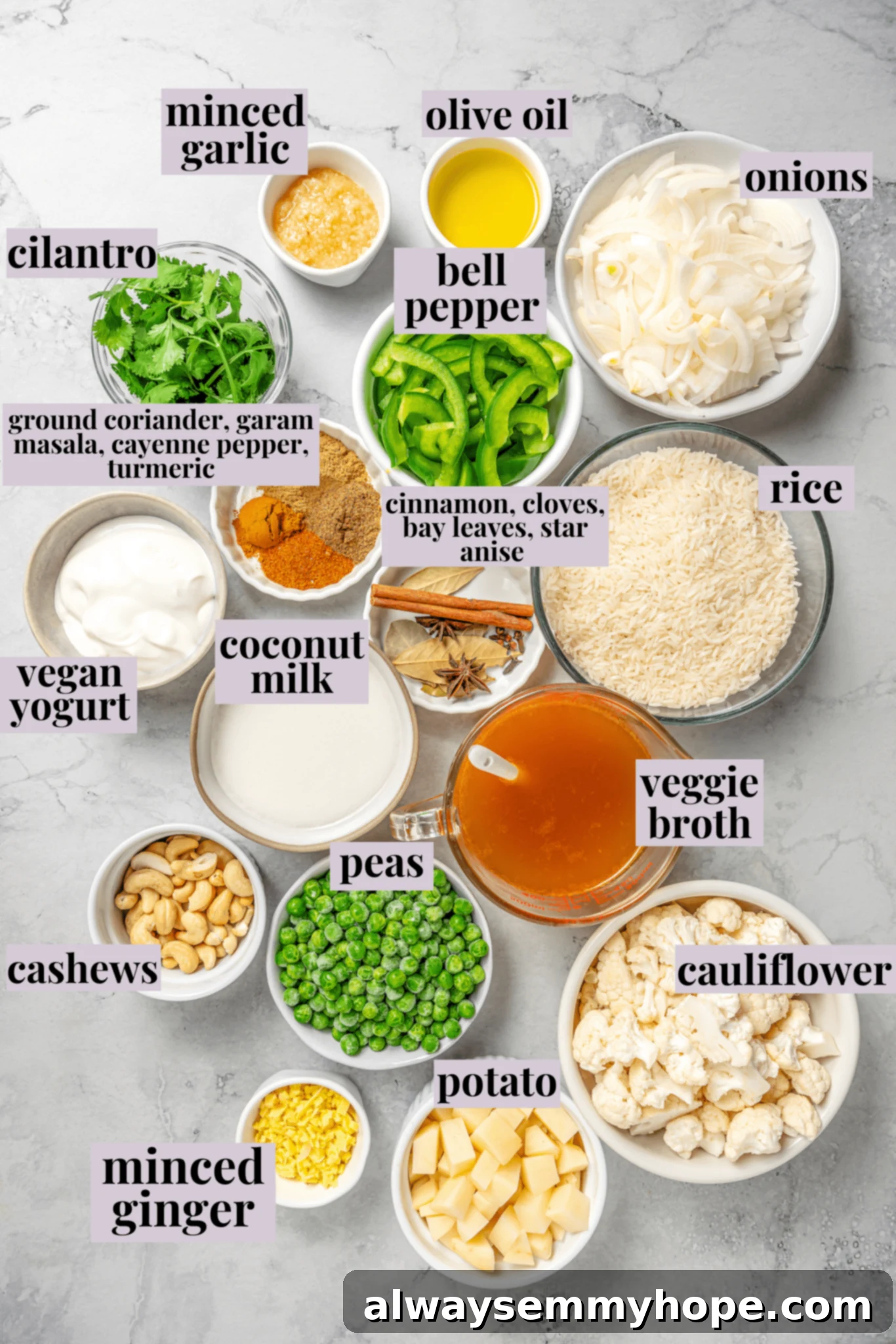
Key Ingredients for an Authentic Vegan Biryani
Crafting a truly memorable vegan vegetable biryani begins with selecting the right ingredients. Each component plays a vital role in building the complex layers of flavor and texture that define this iconic dish. Below, we’ve outlined the essential ingredients and offered some insightful notes to help you achieve the best possible results. For precise quantities and detailed instructions, please refer to the comprehensive recipe card below.
- Olive Oil: The base for sautéing. While olive oil is suggested for its healthy fats and mild flavor, feel free to substitute with other neutral-tasting oils like vegetable oil or canola oil.
- Raw Cashew Pieces: These add a wonderful creamy texture and nutty crunch when toasted, providing a delightful contrast to the softer ingredients.
- Yellow Onions: A fundamental aromatic in Indian cooking. Thinly sliced yellow onions caramelize beautifully, forming a sweet foundation for the dish. White onions can be used as an alternative.
- Garlic: Freshly minced garlic is indispensable for its pungent aroma and depth of flavor.
- Ginger: Crucial for that distinctive warm, spicy kick. Always use fresh ginger root, not ground ginger, as the fresh variety offers a much more vibrant and potent flavor that truly shines in biryani.
- Cinnamon Stick: Whole spices are key to biryani’s unique fragrance. A cinnamon stick imparts a subtle warmth and sweet-spicy note.
- Cloves: These tiny flower buds deliver a powerful, aromatic, and slightly sweet flavor.
- Bay Leaves: Add a delicate, earthy, and slightly floral aroma that permeates the rice during cooking.
- Ground Coriander: A staple Indian spice, offering a mild, citrusy, and slightly sweet flavor.
- Garam Masala: This signature Indian spice blend is a cornerstone of biryani, bringing together a symphony of warm, complex flavors.
- Cayenne Pepper: For a gentle heat that awakens the palate. Adjust the quantity to your preference for a milder biryani, or omit entirely if you prefer no spice.
- Star Anise: Adds a distinct licorice-like, sweet, and pungent aroma that enhances the overall exotic flavor profile.
- Turmeric: Beyond its earthy flavor, ground turmeric is responsible for biryani’s beautiful, signature golden hue.
- Green Bell Pepper: Contributes a fresh, slightly sweet, and crisp texture. You can experiment with other bell pepper colors for varied sweetness and visual appeal.
- Cauliflower Florets: A hearty vegetable that absorbs flavors wonderfully. Cut into bite-sized florets for even cooking.
- Russet Potato: Adds a comforting, starchy element to the biryani. Its cubes become tender and absorb the spices beautifully. Other potato varieties like Yukon Gold or red potatoes can also be used.
- Salt: Essential for seasoning and bringing out all the vibrant flavors.
- Peas: These sweet, tender green morsels add pops of color and sweetness. If peas aren’t your favorite, consider swapping them for edamame or chickpeas for a similar textural and nutritional boost.
- Plain Unsweetened Vegan Yogurt: An optional but highly recommended ingredient. It adds a lovely tanginess and helps tenderize the vegetables, contributing to the dish’s richness. Use a high-quality store-bought vegan yogurt or even homemade vegan yogurt.
- Coconut Milk: Full-fat canned coconut milk is used to create a creamy, luscious base for the biryani, imparting a subtle sweetness and richness without any dairy.
- Vegetable Broth: Provides the liquid for cooking the rice and vegetables, ensuring deep flavor. Homemade vegetable broth from veggie scraps is an excellent way to reduce waste and enhance flavor.
- Basmati Rice: The quintessential rice for biryani. It’s crucial to rinse basmati rice thoroughly under cold water until the water runs clear. This removes excess starch, preventing stickiness and ensuring each grain cooks up light, fluffy, and separate.
- Cilantro: Fresh cilantro is used for garnishing, adding a bright, herbaceous finish to the dish.
The Rice That Makes the Dish: Basmati vs. Other Varieties
Basmati rice is more than just a type of rice; it’s an experience, especially when it comes to Indian and Middle Eastern cuisines like biryani. What sets basmati apart is its distinctive long grain, slender shape, and unique nutty aroma – often likened to popcorn! When cooked correctly, basmati grains elongate, becoming exceptionally light, fluffy, and separate, rather than clumping together. This characteristic texture is vital for biryani, allowing the individual grains to be beautifully coated in the rich spice mixture without becoming mushy. Its inherent flavor is far more pronounced and aromatic than standard white or brown rice, making it the undisputed preferred choice for crafting an authentic and truly flavorful vegetable biryani. Don’t underestimate the power of good basmati!

Step-by-Step Guide: Crafting Your Flavorful Vegan Vegetable Biryani
Making this vegan vegetable biryani is a surprisingly straightforward process once you have all your ingredients prepped. Follow these steps to create a truly delicious and aromatic biryani that will impress everyone at your table:
Step 1: Prepare Your Pan. Begin by warming a teaspoon of olive oil in a large, heavy-bottomed pot or Dutch oven. Set the heat to medium. A Dutch oven is ideal for biryani as it provides even heat distribution, crucial for cooking the rice perfectly.




Step 2: Toast the Cashews. Add the raw cashew pieces to the heated oil. Cook them for about 2 to 3 minutes, stirring continuously, until they achieve a beautiful golden brown color. This toasting process enhances their nutty flavor and adds a lovely crunch. Once toasted, transfer the cashews to a small bowl or plate and set aside; these will be used for garnish later.
Step 3: Cook the Aromatics. Add 1 tablespoon of olive oil to the same pot. Introduce the thinly sliced yellow onions and cook for 3 to 4 minutes, or until they have softened and become translucent. Next, add the minced garlic and fresh minced ginger. Continue to cook for another 1 to 2 minutes, stirring frequently, until the pot is filled with a fragrant aroma. Be careful not to burn the garlic.
Step 4: Bloom the Spices. Add another tablespoon of olive oil to the pot. Immediately follow with the whole spices: cinnamon stick, cloves, bay leaves, and star anise. Then, add the ground spices: coriander, garam masala, cayenne pepper (if using), and turmeric. Stir everything together and cook for approximately 1 minute. This crucial step, known as “blooming” the spices, gently heats them in oil to release their full aromatic potential and deepen their flavors.




Step 5: Cook the Vegetables. Add the cubed russet potato, green bell pepper, cauliflower florets, and salt to the pot. Stir thoroughly to ensure all the vegetables are coated with the fragrant spice mixture. Cover the pot with a lid and let it cook for 20 minutes, stirring occasionally to prevent sticking and ensure even cooking. This allows the vegetables to soften and absorb the rich flavors. After 20 minutes, remove the lid and stir in the frozen peas. If you’re incorporating the plain unsweetened vegan yogurt, now is the time to stir it in and cook for an additional 2 to 3 minutes, allowing it to meld with the vegetables and create a creamy consistency.
Step 6: Add the Rice and Liquids. Introduce the thoroughly rinsed basmati rice to the pot, followed by the vegetable broth and full-fat coconut milk. Stir gently to combine all the ingredients, ensuring the rice is evenly distributed. Bring the mixture to a boil. Once boiling, immediately cover the pot with a tight-fitting lid and reduce the heat to its lowest setting. Allow the biryani to simmer undisturbed for 20 minutes. Resist the temptation to lift the lid during this crucial cooking time, as it traps the steam necessary for perfectly cooked, fluffy rice.

Step 7: Finish and Serve. Once the 20 minutes of simmering are complete, remove the pot from the heat and let it rest, still covered, for another 5-10 minutes. This resting period allows the steam to redistribute, resulting in even fluffier rice. Finally, gently fluff the biryani with a fork. Sprinkle the reserved toasted cashews and a generous amount of fresh cilantro over the biryani before serving warm. Enjoy this fragrant and delicious meal!
Expert Tips for Perfect Biryani Every Time
Achieving a truly outstanding vegan vegetable biryani requires a few key techniques. Keep these tips in mind to ensure your dish is consistently perfect, fragrant, and flavorful:
- Rinse Your Rice Meticulously: This step cannot be overstated. Rinsing basmati rice under cold running water until the water runs completely clear is fundamental. This process washes away excess starch from the surface of the grains, which is the primary cause of sticky, clumpy rice. Proper rinsing ensures that each grain cooks up separate, light, and fluffy – the hallmark of an excellent biryani.
- Monitor Spices During Blooming: When you’re blooming the whole and ground spices in oil, stay vigilant! The goal is to gently toast them to release their essential oils and deepen their fragrance, not to burn them. Burnt spices will impart a bitter, unpleasant taste to your entire dish. Keep the heat on medium-low and stir constantly for just about a minute until they are intensely aromatic.
- Maintain Low Heat for Simmering: Once the rice, broth, and coconut milk are added and brought to a boil, it’s critical to reduce the heat to the lowest possible setting before covering and simmering. Cooking biryani over too high heat can lead to the liquid evaporating too quickly, resulting in undercooked rice or burning at the bottom of the pot. Periodically, you may gently lift the lid to check if the liquid has been fully absorbed, and if the rice is still too firm, you can add a splash more broth (about ¼ to ½ cup) and continue simmering until done.
- Don’t Stir While Simmering: Once covered, resist the urge to stir the biryani while it simmers. Stirring disrupts the steam pockets that form, which are essential for cooking the rice evenly and maintaining its delicate, separate texture.
- Allow for Resting Time: After simmering, remove the pot from the heat but keep it covered for another 5-10 minutes. This resting period is vital. It allows the rice grains to absorb any remaining moisture and steam, making them even fluffier and perfectly tender.
Customizing Your Biryani: Endless Possibilities
One of the many beauties of vegetable biryani is its incredible versatility. It’s a highly adaptable dish that welcomes customization, allowing you to tailor it perfectly to your taste preferences or whatever ingredients you have on hand. Here are some fantastic ideas to inspire your next biryani creation:
- Explore Other Vegetables: Don’t limit yourself to the suggested vegetables. Biryani is wonderful with a wide array of produce. Consider adding thinly sliced zucchini, tender cubes of eggplant, quartered mushrooms for an earthy depth, green beans, or even sweet corn kernels. Root vegetables like carrots or parsnips can also add sweetness and texture.
- Boost the Protein Content: To make your biryani even more substantial and protein-packed, incorporate plant-based protein sources. Chickpeas are a classic addition, offering a hearty texture. Cubed firm or extra-firm tofu, lightly pan-fried or baked beforehand, absorbs the biryani spices beautifully. Tempeh, crumbled or cubed, also works well, providing a unique nutty flavor. You could even try a plant-based mince for a “meatier” texture.
- Add a Touch of Sweetness: For a delightful sweet and savory contrast that is characteristic of some biryani variations, consider stirring in dried fruits. Golden raisins or sultanas, finely chopped apricots, or small currants can add bursts of sweetness and a chewy texture that complements the rich spices.
- Spice It Up (or Down!): If you love heat, increase the amount of cayenne pepper or add a few slit green chilies during the blooming of spices. For a milder version, simply reduce or omit the cayenne. A pinch of saffron soaked in warm plant-based milk can also be added for an exquisite aroma, flavor, and a beautiful golden hue.
- Fresh Herbs Beyond Cilantro: While cilantro is traditional, feel free to experiment with other fresh herbs. Fresh mint leaves, stirred in at the end, can add a refreshing counterpoint to the rich flavors.

Serving Your Flavorful Biryani
This vegan vegetable biryani is incredibly versatile and can be served in many ways. It’s truly satisfying on its own, but it also shines as part of a larger Indian feast. Here are some ideal pairings to create a complete and unforgettable vegan Indian dining experience:
- Vegan Mulligatawny Soup: A creamy, spicy, and tangy lentil soup that provides a wonderful liquid contrast to the fluffy biryani. The rich flavors of the soup complement the biryani beautifully.
- Vegan Butter Chicken (With Tofu!): Indulge in a rich, tomato-based creamy curry made with succulent tofu. Its luxurious texture and mild spice profile pair perfectly with the aromatic biryani, offering a comforting and flavorful combination.
- Easy Chickpea Tikka Masala: A quick and satisfying curry featuring tender chickpeas in a vibrant, spiced tomato sauce. The robust flavors of the tikka masala provide a delightful partner for the nuanced spices of the biryani.
- Vegan Garlic Naan: Freshly baked, soft, and chewy flatbread brushed with garlic and herbs is the ideal accompaniment for scooping up every last delicious grain and morsel of biryani. It adds a textural element and a fresh, garlicky flavor that enhances the meal.
Storage and Freezing: Keeping Your Biryani Fresh
One of the great things about this vegan vegetable biryani is that it stores and reheats beautifully, making it perfect for meal prep or enjoying leftovers. Proper storage ensures you can savor its delicious flavors for days to come.
- How to Store: Once cooled, transfer any leftover vegetable biryani to an airtight container. It can be safely stored in the refrigerator for up to 5 days. For reheating, you can use a microwave for a quick warm-up, or gently reheat it in a skillet over low heat on the stovetop, adding a splash of vegetable broth or water if it seems a bit dry, to restore its moisture.
- Can This Recipe Be Frozen?: Absolutely! Vegetable biryani freezes exceptionally well. To freeze, allow the biryani to cool completely. Then, transfer the leftovers to a freezer-safe airtight container or a heavy-duty zip-top freezer bag, ensuring as much air as possible is removed to prevent freezer burn. It can be frozen for up to 3 months without significant loss of quality.
- To Serve from Frozen: When you’re ready to enjoy your frozen biryani, simply transfer it from the freezer to the refrigerator and allow it to thaw overnight. Once thawed, reheat it according to the instructions above (microwave or stovetop) until it’s warmed through. The flavors will still be wonderfully intact, providing a convenient and delicious meal.

More Plant-Based Rice Delights
If you’ve fallen in love with this vegan vegetable biryani and are looking for more plant-based rice-centric dishes, you’re in luck! Here are some other fantastic recipes that celebrate the versatility and deliciousness of rice:
- Vegan Instant Pot Risotto: Creamy, rich, and effortlessly made in an Instant Pot, this risotto proves that you don’t need dairy to achieve a luxurious texture.
- Congri (Cuban Rice and Black Beans): A flavorful and comforting Cuban classic, featuring rice cooked with black beans, aromatic spices, and a hint of smokiness.
- Vegan Arancini Fried Rice Balls (With Air Fryer Option): Crispy on the outside, soft and savory on the inside, these Italian-inspired rice balls are a delightful snack or appetizer, with an air fryer option for a healthier twist.
- Jamaican Rice and Peas: A vibrant and hearty dish featuring kidney beans cooked with rice, coconut milk, and a medley of spices, offering a taste of the Caribbean.
Enjoy, friends! If you create this delectable vegan vegetable biryani, we’d absolutely love to see your culinary masterpiece. Please snap a photo and tag #jessicainthekitchen on Instagram! Your feedback is incredibly valuable to us, so please consider leaving a comment below and giving the recipe a rating. Thank you so much for your support!

Vegan Vegetable Biryani Recipe Card

Vegetable Biryani
6-8 servings
10 mins
55 mins
1 hr 5 mins
Ingredients
- 1 teaspoon + 2 tablespoons olive oil, divided
- ¼ cup raw cashew pieces
- 1 yellow onion, thinly sliced
- 2 tablespoons minced garlic
- 2 tablespoons minced fresh ginger
- 2 inches cinnamon stick
- 6 whole cloves
- 4 bay leaves
- 2 tablespoons ground coriander
- 1 tablespoon garam masala
- 1 teaspoon cayenne pepper, optional
- 2 whole star anise
- 1 teaspoon turmeric
- 1 green bell pepper, thinly sliced
- 2 cups cauliflower florets
- 1 russet potato, peeled and cubed
- 1 ½ teaspoons salt
- 1 cup frozen peas
- ½ cup plain unsweetened vegan yogurt, optional
- 1 cup canned full-fat coconut milk
- 1 ½ cups vegetable broth
- 2 cups basmati rice, thoroughly rinsed until water runs clear
- Fresh cilantro, for topping (optional)
Instructions
- Place a large pot or Dutch oven over medium heat and add 1 teaspoon of oil.
- Add the cashew pieces to the heated oil and cook for 2 – 3 minutes until golden brown. Transfer the cooked cashews from the pot and set aside.
- Add 1 tablespoon of oil to the pot and add thinly sliced onions. Cook until just softened, approximately 3 – 4 minutes.
- Add the minced garlic and ginger and cook until fragrant for approximately 1 – 2 minutes.
- Add another tablespoon of oil along with the cinnamon stick, cloves, bay leaves, coriander, garam masala, cayenne pepper (if using), star anise, and turmeric. Cook until fragrant, approximately 1 minute, stirring constantly.
- Add the potato, bell pepper, cauliflower florets, and salt, and stir to combine thoroughly. Cover the pot with a lid and cook for 20 minutes, stirring often to prevent sticking.
- Remove the lid and stir the frozen peas into the vegetable and spice mixture.
- Optional step: Stir in the plain unsweetened vegan yogurt if preferred and cook for another 2 – 3 minutes until well combined.
- Add the rinsed basmati rice, vegetable broth, and coconut milk to the pot and stir gently to combine. Bring the mixture to a boil.
- Once boiling, cover the pot with a tight-fitting lid and reduce the heat to low. Simmer undisturbed for 20 minutes. Do not lift the lid during this time.
- When finished, remove from heat and let rest, still covered, for 5-10 minutes. Then, gently fluff with a fork. Sprinkle on the cooked cashew pieces and fresh cilantro leaves before serving warm.
Notes
- Oil: You can use vegetable oil or canola oil in place of olive oil if preferred.
- To store: Vegetable biryani can be stored in an airtight container in the refrigerator for up to 5 days. Reheat it in the microwave, or in a skillet over low heat with a splash of water or broth.
- To freeze: Transfer leftovers to an airtight container or zip-top freezer bag and freeze for up to 3 months. To serve, thaw in the fridge overnight, then reheat according to the instructions above.
Nutrition Information (Estimated)
Carbohydrates: 24g,
Protein: 6g,
Fat: 18g,
Saturated Fat: 10g,
Polyunsaturated Fat: 1g,
Monounsaturated Fat: 5g,
Sodium: 843mg,
Potassium: 573mg,
Fiber: 6g,
Sugar: 7g,
Vitamin A: 529IU,
Vitamin C: 50mg,
Calcium: 80mg,
Iron: 3mg
Disclaimer: Although jessicainthekitchen.com attempts to provide accurate nutritional information, kindly note that these are only estimates. Nutritional information may be affected based on the product type, the brand that was purchased, and in other unforeseeable ways. Jessicainthekitchen.com will not be held liable for any loss or damage resulting for your reliance on nutritional information. If you need to follow a specific caloric regimen, please consult your doctor first.