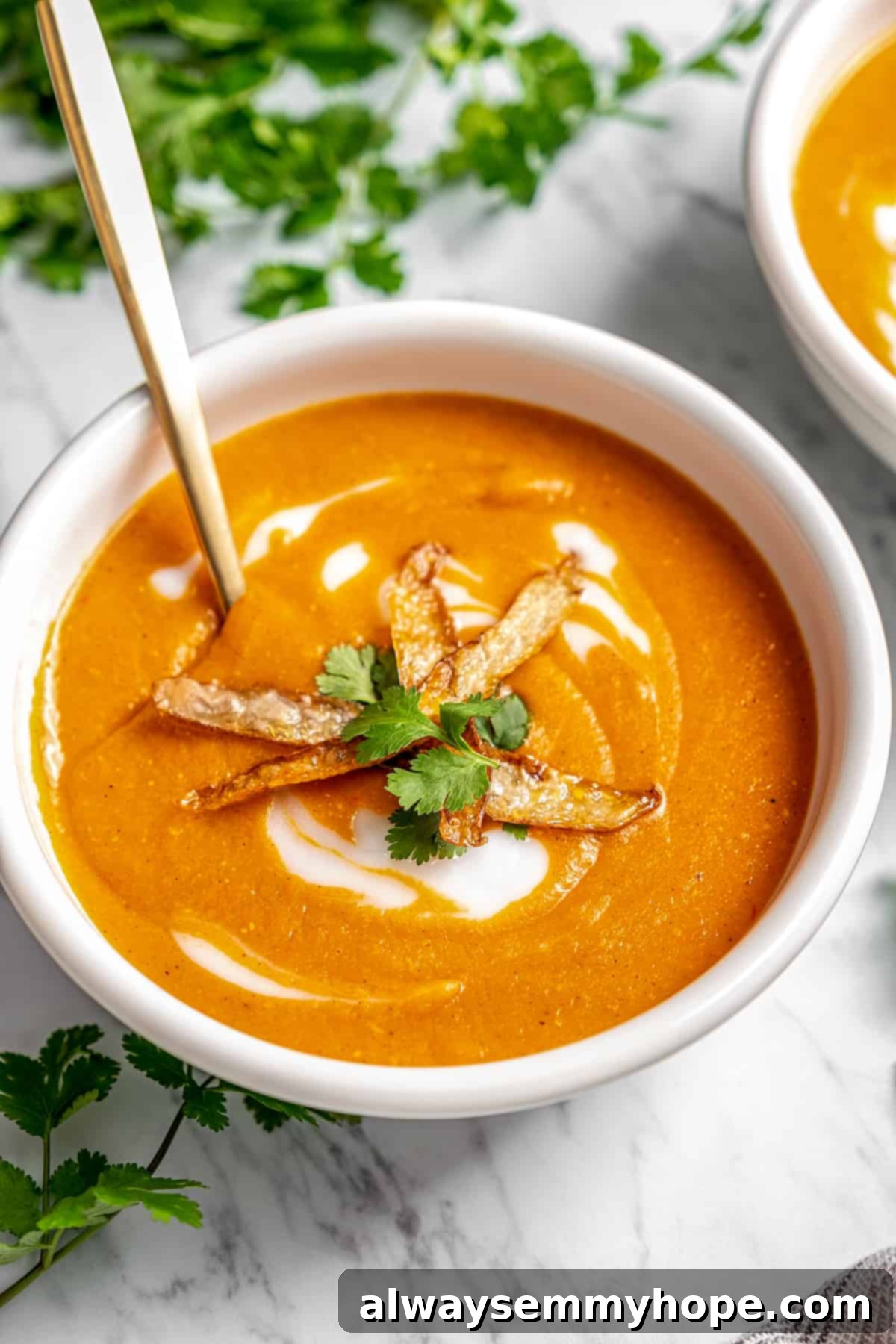
Hearty & Flavorful Vegan Mulligatawny Soup: A Creamy Plant-Based Indian Delight
Prepare to tantalize your taste buds with this exquisite vegan mulligatawny soup! Bursting with the aromatic essence of Indian spices, luxuriously creamy thanks to coconut milk, and packed with wholesome vegetables and protein-rich red lentils, this soup is a true plant-based masterpiece. It’s not just a meal; it’s a comforting embrace in a bowl, perfect for any season, promising warmth and satisfaction with every spoonful.
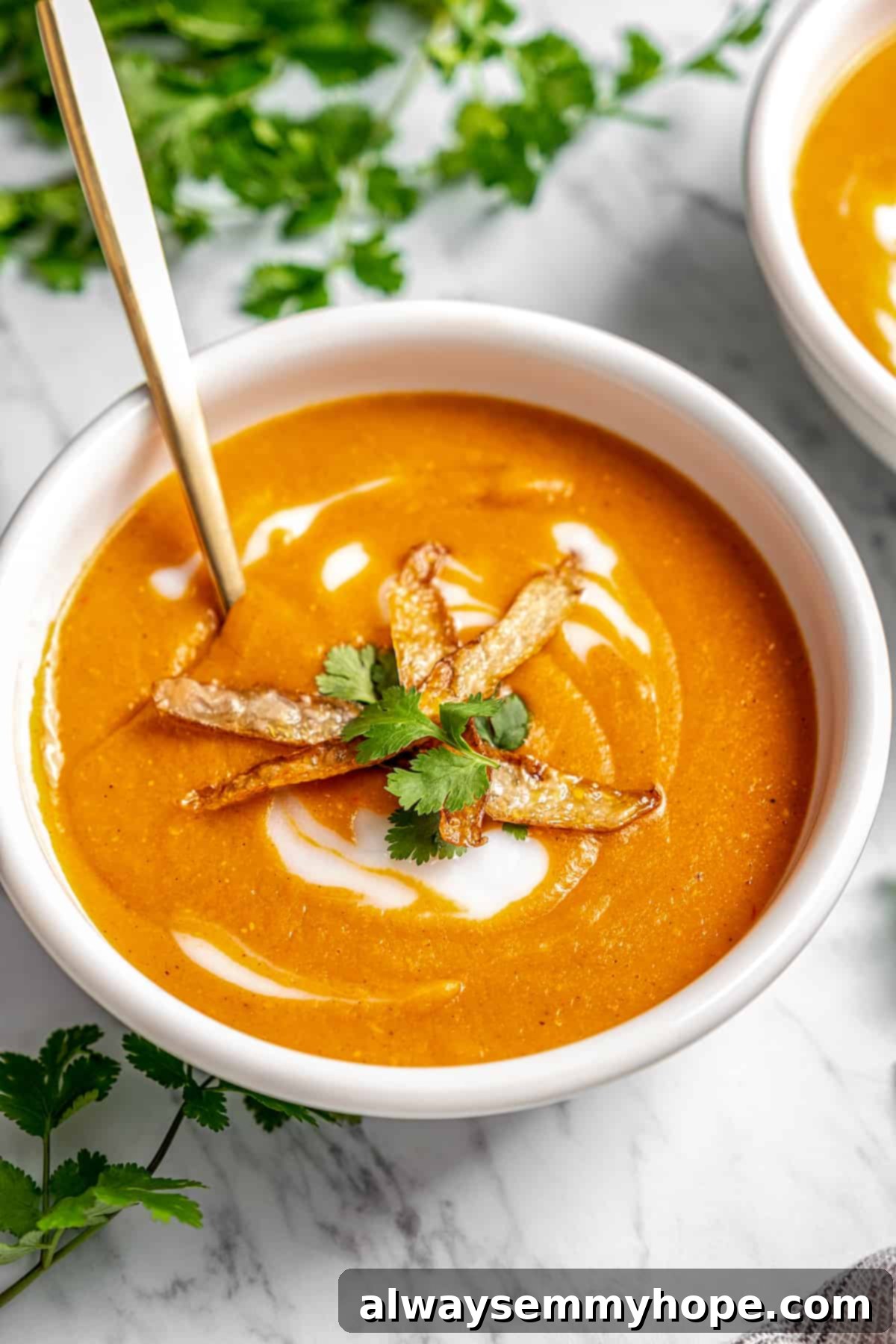
When it comes to plant-based meals, soup holds a special place in my heart for its versatility and comforting nature. While some soups might leave you yearning for more, our vegan mulligatawny is specifically designed to be profoundly satisfying and incredibly flavorful. This isn’t one of those light, fleeting soups; it’s a robust and hearty dish that truly has it all, delivering both comforting nourishment and an unforgettable taste experience. Whether you’re a fan of a light and healthy Roasted Cauliflower Soup, a rich and earthy Slow Cooker Mushroom Wild Rice Soup, or the classic comfort of Roasted Tomato Soup with Grilled Cheese Croutons, this mulligatawny will surely become a new favorite in your vegan repertoire, offering a unique blend of flavors that stands out.

What Exactly Is Mulligatawny Soup? Unpacking This Indian-Inspired Delight
Mulligatawny is a traditional curry-spiced soup that traces its origins back to the Tamil Nadu region of South India. The name itself, “Mulligatawny,” is derived from the Tamil words “milagu” (pepper) and “tanni” (water), literally translating to “pepper water.” This historical context hints at its spicy roots, suggesting a vibrant and pungent flavor profile. However, don’t let the name intimidate you! Our recipe allows you to easily adjust the spice level to suit your personal preference, making it as fiery or as mild as you desire, ensuring it’s enjoyable for every palate.
While classic mulligatawny recipes often feature non-vegetarian ingredients like chicken or lamb, this incredible vegan rendition proves that you don’t need meat to achieve a deeply satisfying and flavorful soup. By simply omitting the meat and utilizing robust vegetable broth, we’ve transformed this beloved dish into a plant-based sensation that sacrifices nothing in terms of richness or complexity. The intricate tapestry of aromatic Indian spices, combined with earthy red lentils, and a medley of fresh, vibrant vegetables, creates such a complex and layered flavor profile that you won’t miss a thing. Every spoonful offers a perfect balance of sweet, spicy, and tart notes, making it incredibly hearty and filling without ever feeling heavy or overly rich. It’s the kind of comfort food that leaves you feeling pleasantly content and nourished, not uncomfortably full.
One of the many benefits of this homemade vegan mulligatawny soup is its excellent freezer-friendliness. This makes it an ideal candidate for meal prepping. You can easily prepare a large batch and store it away for those busy weeknights when you need a quick, wholesome meal, or for when you’re simply craving a cozy, nourishing comfort food. It reheats beautifully, maintaining its delicious flavor and creamy texture, ensuring you always have a wholesome, delicious option readily available whenever hunger strikes.
Key Ingredients for Our Hearty Vegan Mulligatawny Soup
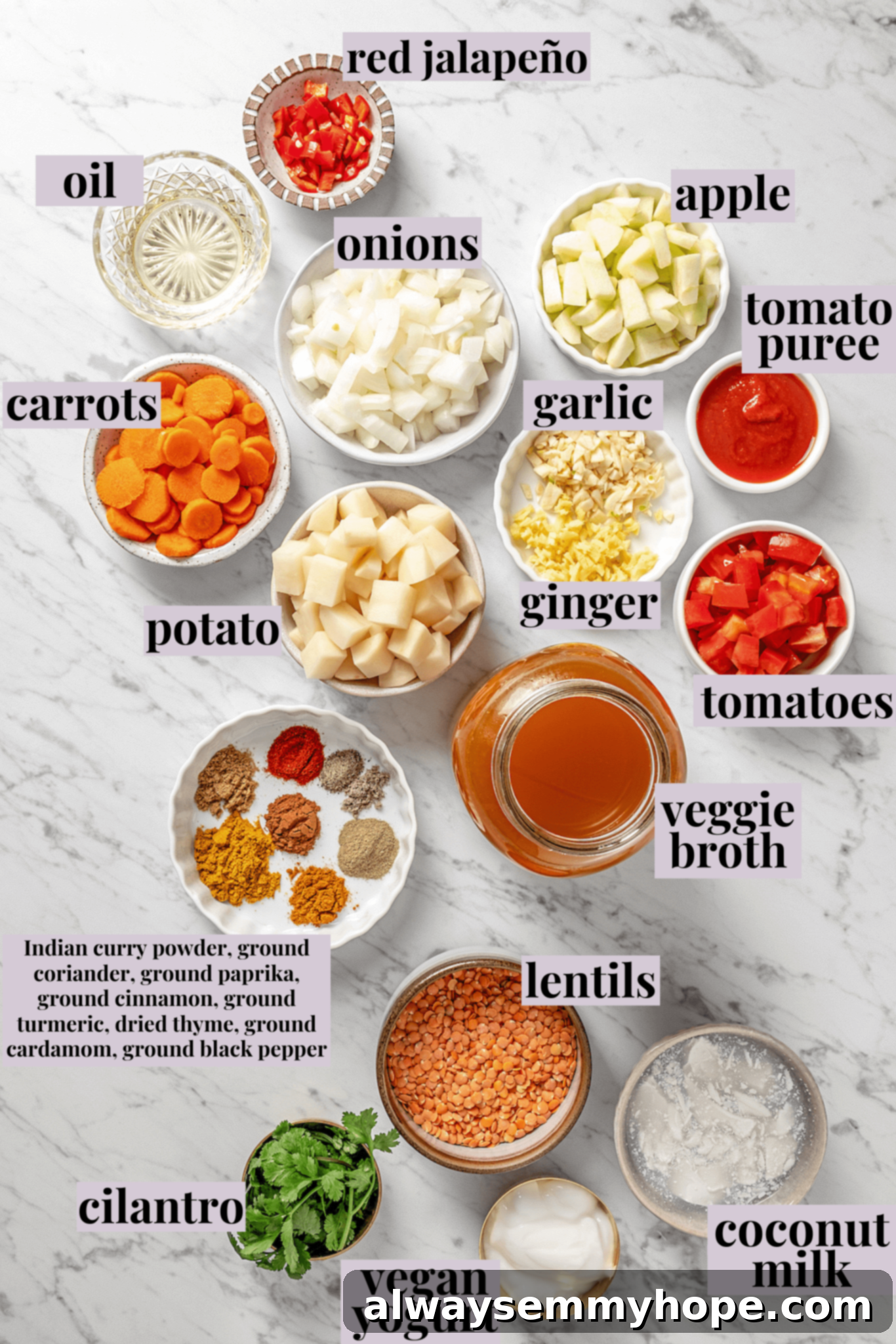
Crafting the perfect vegan mulligatawny begins with selecting the right ingredients. Each component plays a crucial role in building the layers of flavor, achieving that wonderfully creamy and hearty texture, and ensuring a truly authentic taste. Below, you’ll find a detailed breakdown of what you’ll need, along with some helpful notes on substitutions and flavor contributions. For specific quantities and precise step-by-step instructions, please refer to the complete recipe card further down this page.
Fresh & Flavorful Vegetables:
- Vegetable Oil: This versatile oil serves as the initial base for sautéing our aromatic vegetables, helping to extract and develop their flavors. You can easily substitute it with other neutral oils like corn, canola, or even a good quality light olive oil.
- Yellow Onion: Diced yellow onion provides a foundational sweetness and a pungent depth of flavor that is essential to many Indian dishes. White onions are also suitable, but it’s generally best to avoid red onions as their stronger flavor can significantly alter the soup’s delicate balance.
- Carrot: Shredded or finely diced carrots add natural sweetness and a lovely vibrant color to the soup, contributing to its overall richness and nutritional value.
- Potato: Diced potatoes not only add satisfying bulk and a comforting texture to the soup, but their skins are cleverly repurposed to create an amazing crispy topping! Remember to carefully peel them and save those skins – they’re a delicious bonus you won’t want to miss.
- Red Jalapeño: Included for that essential hint of heat and a subtle fruity note. If a red jalapeño is hard to find, any fresh red chili, like a Serrano or even a deseeded bird’s eye chili, will work beautifully. Adjust the amount based on your preferred spice level to control the warmth of your mulligatawny.
- Garlic Cloves: Fresh garlic is indispensable for its pungent, aromatic qualities that are central to Indian cuisine. If fresh garlic isn’t available, 3 teaspoons of garlic powder can be used as a convenient alternative, though fresh is always recommended for the best flavor.
- Fresh Ginger: Adds a warm, zesty, and distinctly spicy note that is a hallmark of authentic Indian flavors. If fresh ginger is unavailable, you can substitute it with 1 1/2 teaspoons of ground ginger, though the fresh version offers a more vibrant kick.
- Granny Smith or Royal Gala Apple: This might seem like an unusual addition to a savory soup, but a slightly tart apple provides a crucial counterpoint to the rich spices and creamy coconut milk. It adds a subtle sweetness and a bright, refreshing acidity that balances the overall flavor profile. Avoid overly sweet varieties like Red Delicious, which can make the soup too cloying.
- Roma Tomatoes: Known for their meaty texture and lower water content, diced Roma tomatoes contribute both to the soup’s body and a tangy, slightly sweet flavor. Seeding them helps reduce excess liquid.
- Tomato Purée: Deepens the concentrated tomato flavor and helps thicken the soup, adding another layer of richness and a beautiful color.
Our Signature Aromatic Spice Blend:
The heart and soul of any good mulligatawny soup lie in its spices. This carefully balanced blend delivers the complex, warming, and deeply aromatic flavors you expect from an authentic Indian-inspired dish:
- Indian Curry Powder: This is the cornerstone of this soup, providing a rich, savory, and aromatic foundation. Its blend of various spices creates an immediate depth of flavor.
- Ground Coriander: Earthy, sweet, and slightly citrusy, ground coriander is a staple in Indian cooking and adds a vital layer of aromatic complexity.
- Ground Paprika: Adds a mild, sweet pepper flavor and a beautiful reddish hue to the soup. Be sure to use sweet paprika unless you specifically desire an extra spicy kick to your mulligatawny!
- Ground Cinnamon: Contributes warmth and a subtle, sweet fragrance, perfectly balancing the savory and spicy notes of the other ingredients.
- Ground Turmeric: Known for its vibrant golden color and earthy, slightly bitter flavor, turmeric is also celebrated for its anti-inflammatory properties and distinctive aroma.
- Dried Thyme: An unexpected but wonderful addition that lends a subtle herbaceous depth and an intriguing savory counterpoint to the warmer spices.
- Ground Cardamom: Offers a unique, highly aromatic, and slightly floral-sweet flavor that truly elevates the soup, adding a sophisticated dimension.
- Ground Black Pepper: Freshly cracked black pepper is always recommended for the best flavor and a touch of piquant warmth that complements the other spices.
Key Soup Components for Creaminess & Body:
- Dried Red Lentils: These are absolutely essential for this recipe! Unlike brown or green lentils, which tend to hold their shape, red lentils break down beautifully when cooked. This natural disintegration creates the signature thick and creamy texture of mulligatawny soup without needing any dairy or heavy cream, making it perfectly plant-based. Do not substitute other lentil varieties if you want to achieve the desired creaminess.
- Low-Sodium Veggie Broth: Forms the flavorful liquid base of the soup. Using low-sodium broth allows you to control the saltiness more precisely, adjusting it to your preference at the end. For an even richer and more nuanced flavor, consider making your own homemade vegetable broth.
- Unsweetened Full-Fat Coconut Milk: This is what gives the soup its luxurious creaminess, velvety mouthfeel, and a subtle tropical sweetness that beautifully complements the Indian spices. While lite coconut milk can be used for a lighter version, it will result in a noticeably thinner soup, so full-fat is highly recommended for the best texture.
- Salt: A fundamental seasoning, salt is essential for enhancing and balancing all the other intricate flavors in the soup. You’ll add this to taste as the soup simmers.
- Unsweetened Vegan Yogurt: (Optional) A dollop of plain, unsweetened vegan yogurt makes for a beautiful and tangy garnish. It adds a cool, refreshing contrast to the warm spices and enhances the creamy texture upon serving.
- Chopped Cilantro: Fresh cilantro is a classic garnish for Indian-inspired dishes. It adds a burst of freshness, a vibrant herbal note, and a pop of color to the finished soup.
Delving Deeper: What is Indian Curry Powder Made Of?
Indian curry powder is not a single spice, but rather a versatile and aromatic blend of numerous individual spices, each contributing to its distinctive aroma and complex flavor profile. Common ingredients typically found in Indian curry powder include earthy cumin, fragrant coriander, vibrant turmeric, zesty ginger, slightly bitter fenugreek, sweet cardamom, and various types of chili for heat. However, the exact composition and proportions can vary significantly from one brand or region to another, as do the resulting spice levels and flavor nuances. For instance, some blends might emphasize more chili for a hotter profile, while others might focus on sweeter, more aromatic spices. If you prefer a milder vegan mulligatawny, it’s advisable to steer clear of Madras curry powder, which is generally known for its robust and distinctly spicy kick. For those who enjoy a bit more adventure, a Madras blend can certainly elevate the heat. Experiment with different brands to find your preferred blend that complements the delicate balance of this deeply flavorful soup.
Step-by-Step Guide: How to Craft The Perfect Vegan Mulligatawny Soup
Ready to transform these fantastic ingredients into a restaurant-quality vegan mulligatawny right in your own kitchen? Follow these detailed, easy-to-understand steps to achieve a perfectly spiced, thick, and creamy soup that will impress everyone. Paying attention to each stage will ensure a rich and flavorful result.
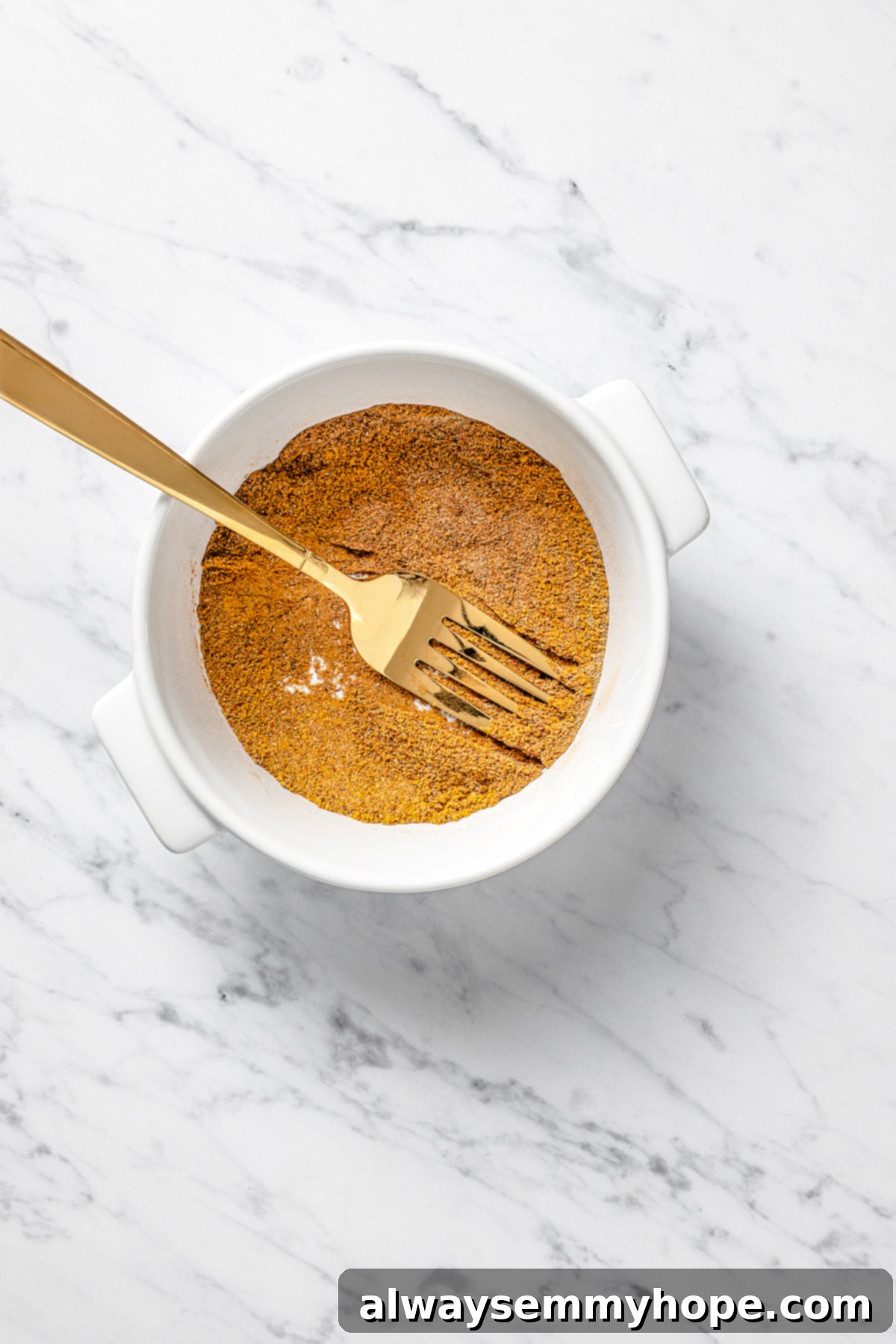
1. Prepare Your Spice Mix: Begin by combining all the dry spices – Indian curry powder, ground coriander, paprika, cinnamon, turmeric, dried thyme, ground cardamom, and freshly ground black pepper – in a small bowl. Whisk them thoroughly to ensure they are well integrated and evenly distributed. This crucial step ensures an even distribution of flavor throughout your soup, preventing pockets of uneven spice. Set this aromatic blend aside, ready for action.
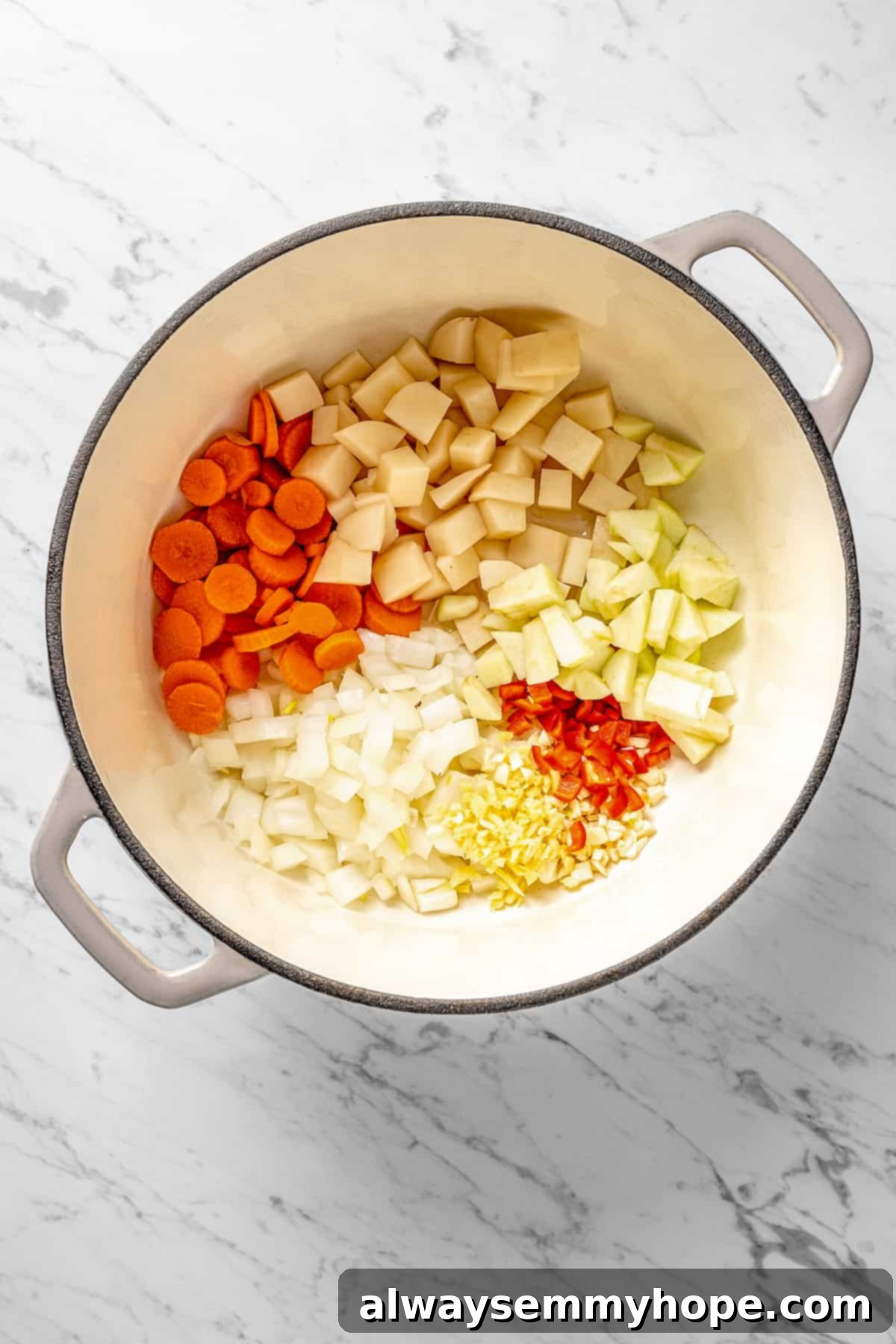
2. Sauté the Foundation Vegetables: Heat the vegetable oil in a large, sturdy pot (a Dutch oven works perfectly here) over low heat for 1-2 minutes until it shimmers gently. Add the diced onion, carrots, potatoes, jalapeño, minced garlic, finely chopped ginger, and diced apple to the pot. Increase the heat to medium. Stir the vegetables occasionally, allowing them to cook for about 10 minutes. This slow sautéing process helps to soften the vegetables, develop their natural sweetness, and build the foundational flavors of your soup.
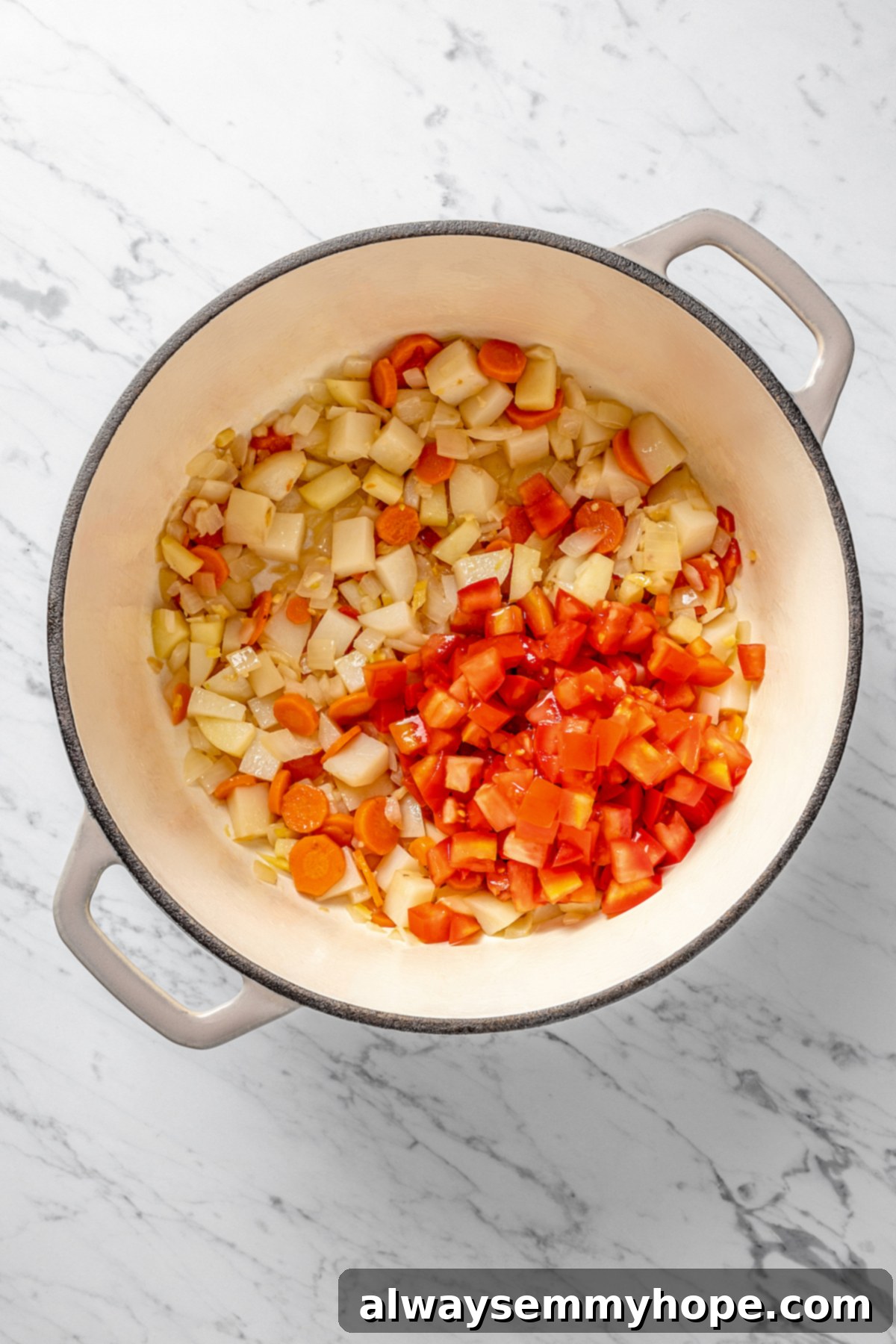
3. Introduce the Tomatoes: Stir the diced Roma tomatoes into the pot with the sautéed vegetables. Continue to cook for another 5 to 7 minutes, stirring occasionally, until the potatoes are fork-tender when pierced with a fork, and the other vegetables have achieved a slight browning. This browning indicates deep flavor development. If at any point the pot seems dry or the vegetables start sticking, don’t hesitate to add a little more oil to prevent scorching.
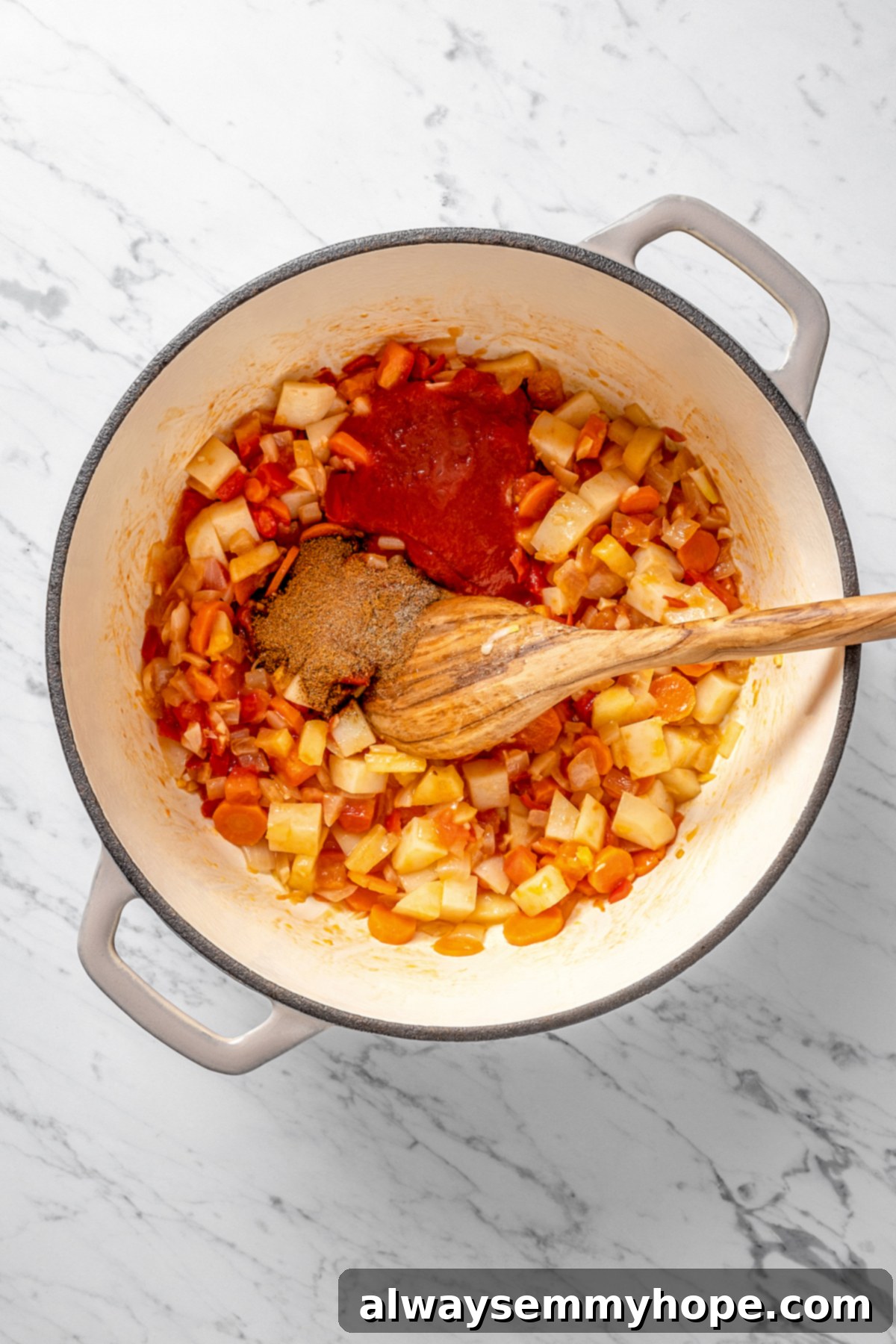
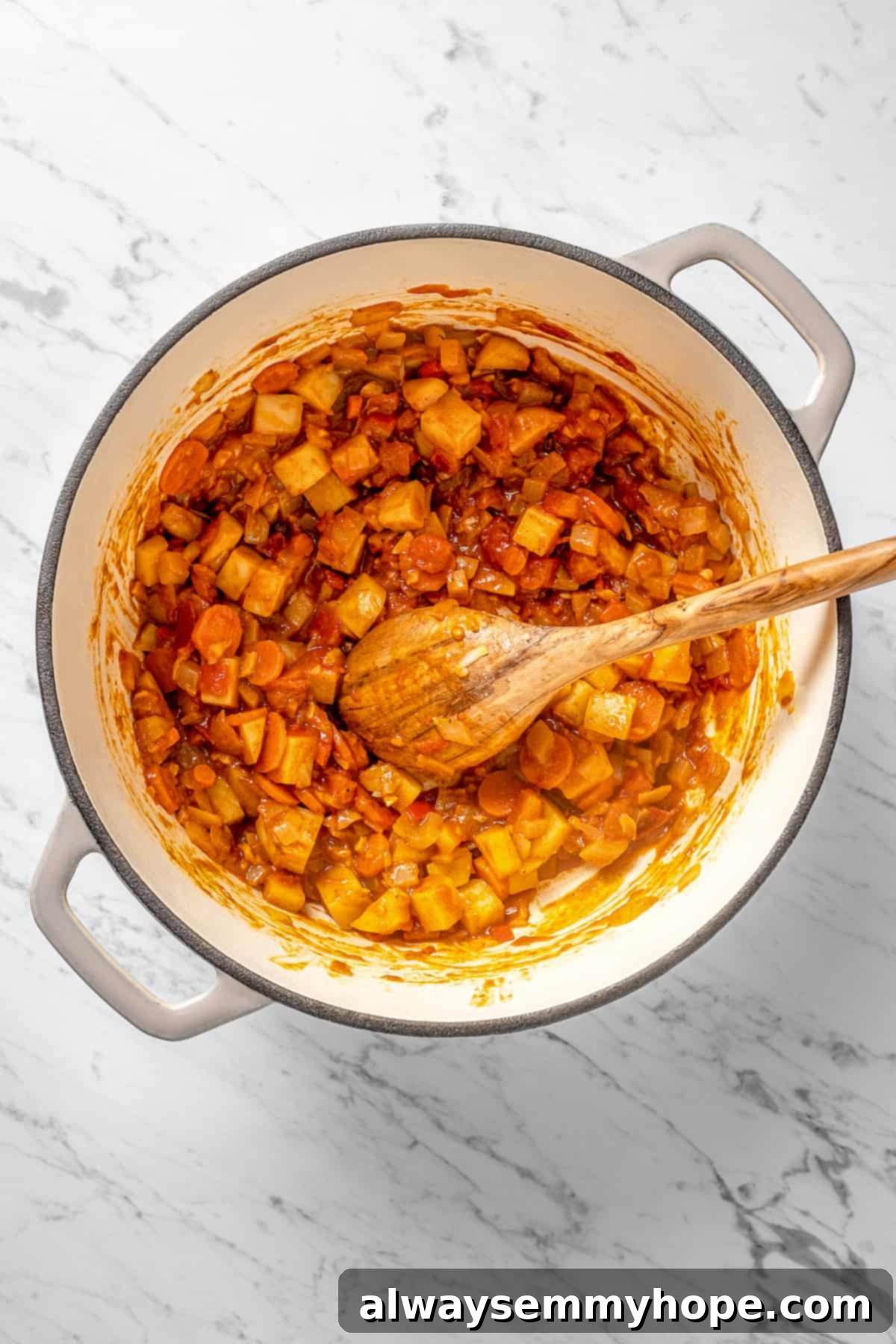
4. Season with Spices and Purée: Now for the magic that defines mulligatawny! Stir your pre-mixed aromatic spices into the cooked vegetables, ensuring every piece is coated with the vibrant blend. Allow this to cook for about a minute, stirring constantly, letting the spices toast slightly and release their full, intoxicating aroma. This “blooming” of spices is key to a flavorful curry. Then, add the tomato purée and stir well to combine. Continue cooking for another 5 minutes, allowing all these rich, savory, and tangy flavors to meld together beautifully.
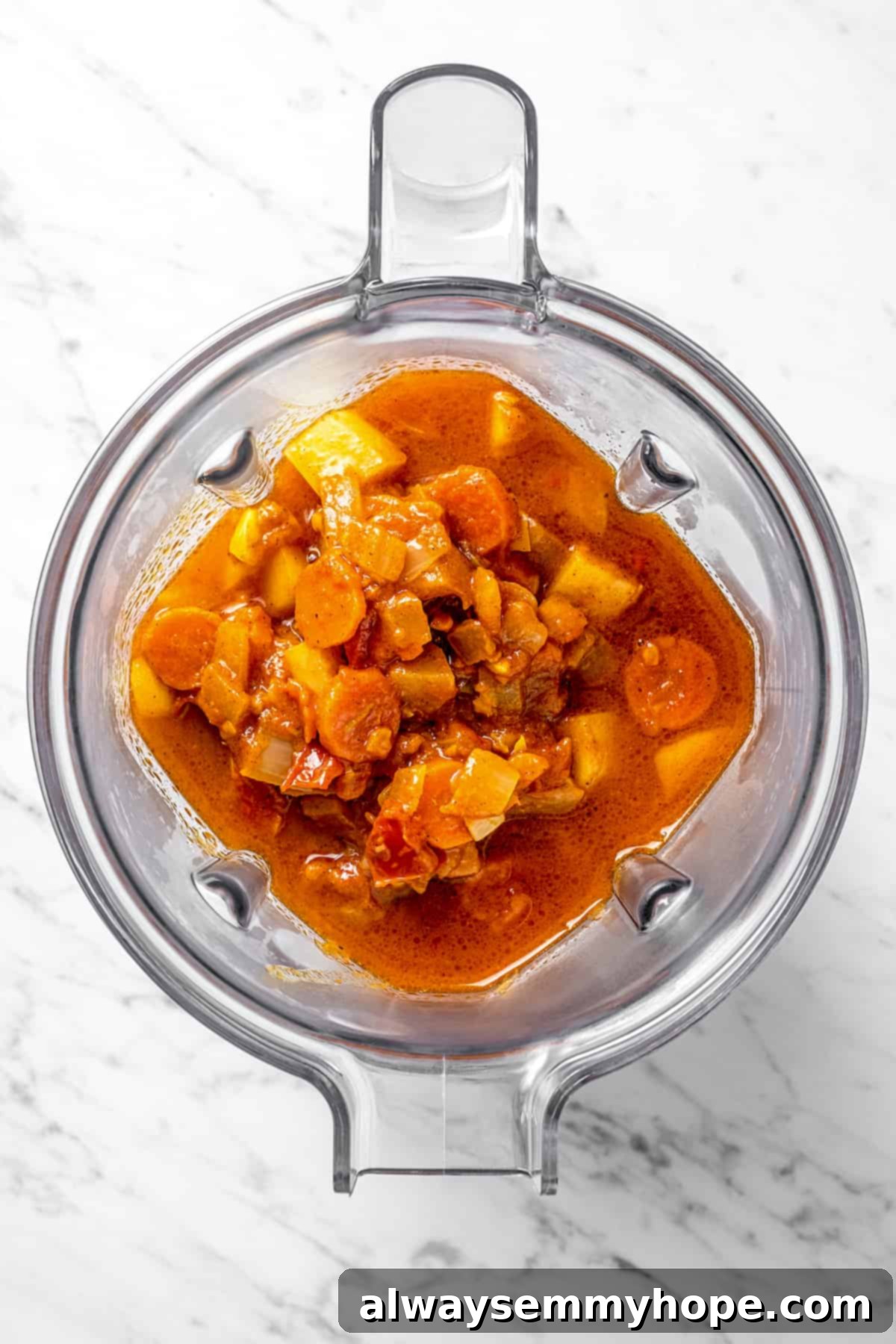
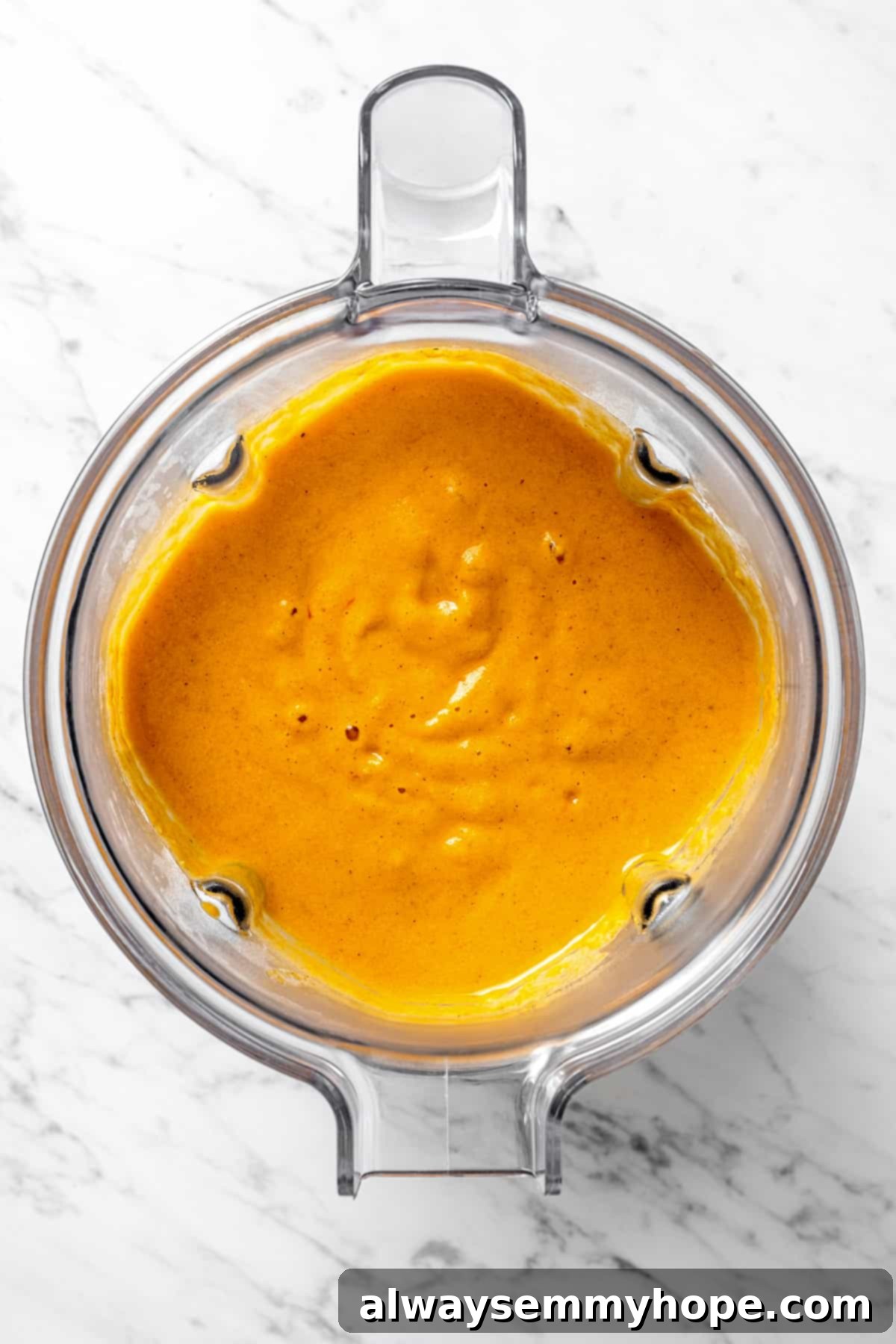
5. Blend the First Batch of Vegetables for Smoothness: Carefully remove the pot from the heat. Transfer all the cooked vegetables into your blender. Add 1 cup of vegetable broth to facilitate blending and ensure a smooth consistency. Process until the mixture is completely smooth and creamy, without any discernible chunks. This initial blending creates a rich and thick base for your soup, allowing the cooked vegetable and spice flavors to fully integrate.
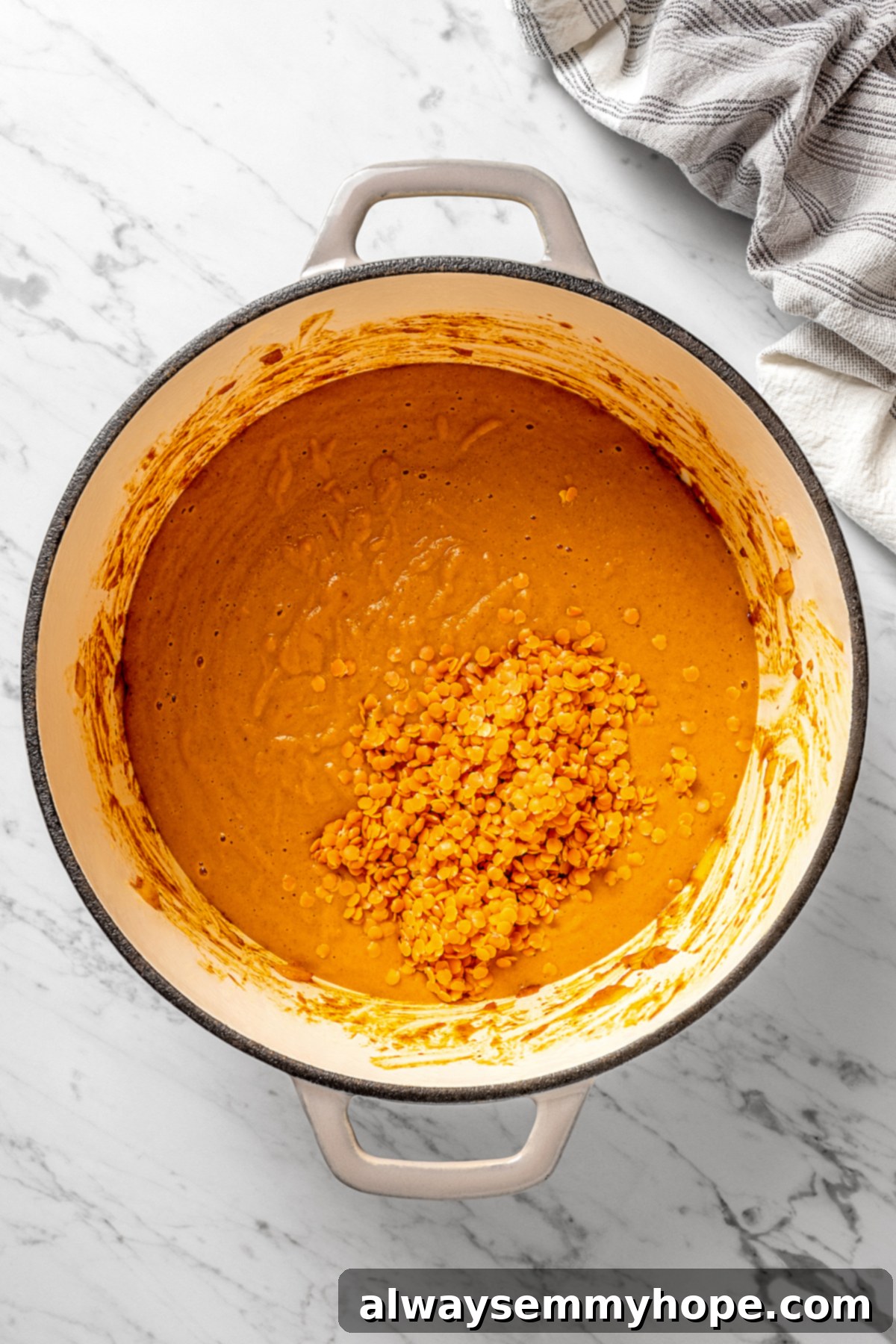

6. Incorporate Lentils and Remaining Broth: Pour the smooth, blended vegetable mixture back into your large pot. Stir in the dried red lentils and the remaining vegetable broth. Give it a good stir to ensure everything is thoroughly combined and the lentils are evenly dispersed. Bring this entire mixture to a rolling boil over high heat, initiating the cooking process for the lentils.
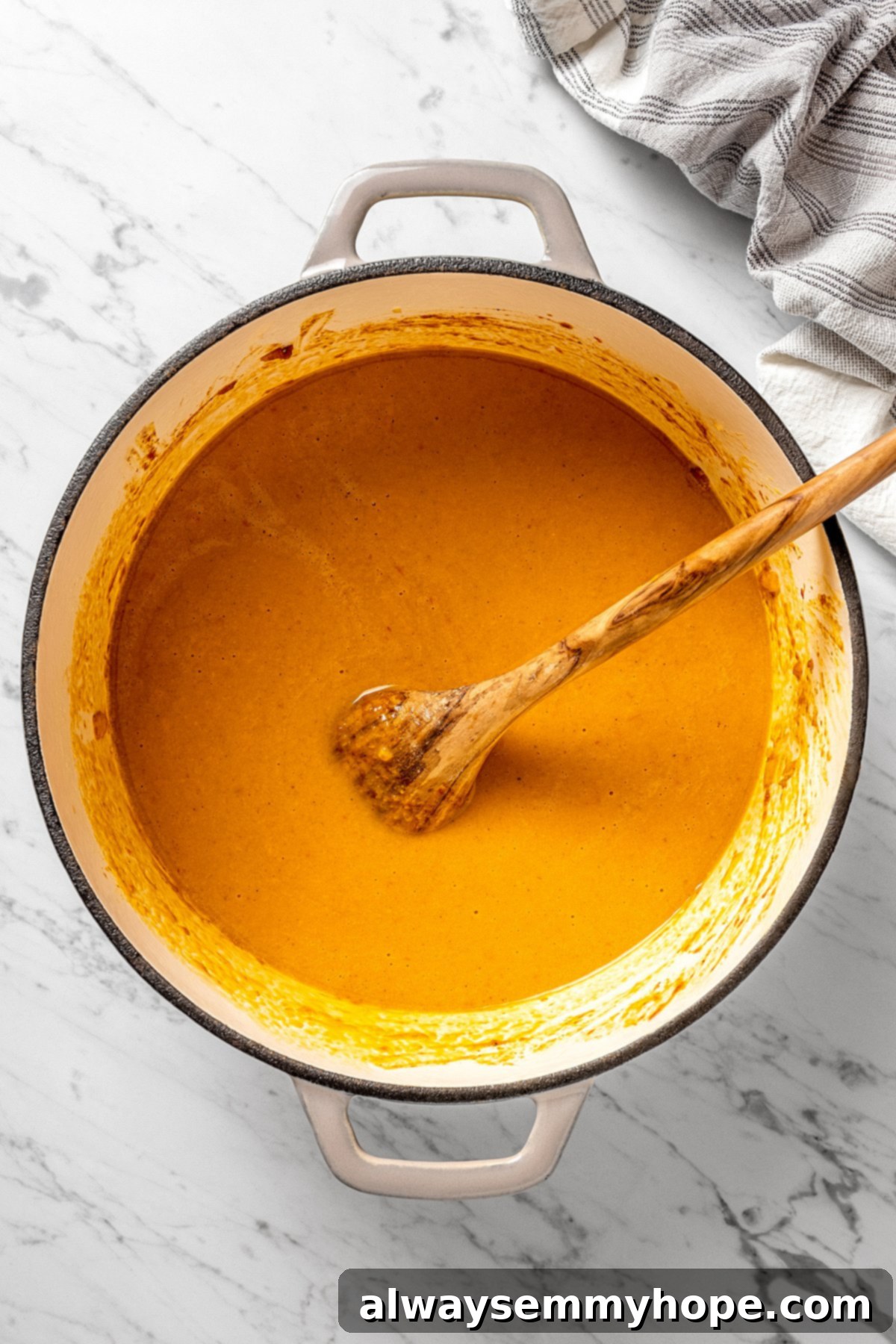
7. Simmer to Perfection: As soon as the soup reaches a boil, immediately reduce the heat to medium-low to maintain a gentle simmer. Allow the soup to cook for approximately 30 minutes, stirring occasionally to prevent the lentils from sticking to the bottom of the pot. The lentils should become tender and begin to break down, naturally thickening the soup and creating its signature creamy texture. Once tender, season the soup generously with salt to taste, adjusting until the flavors are perfectly balanced and sing.

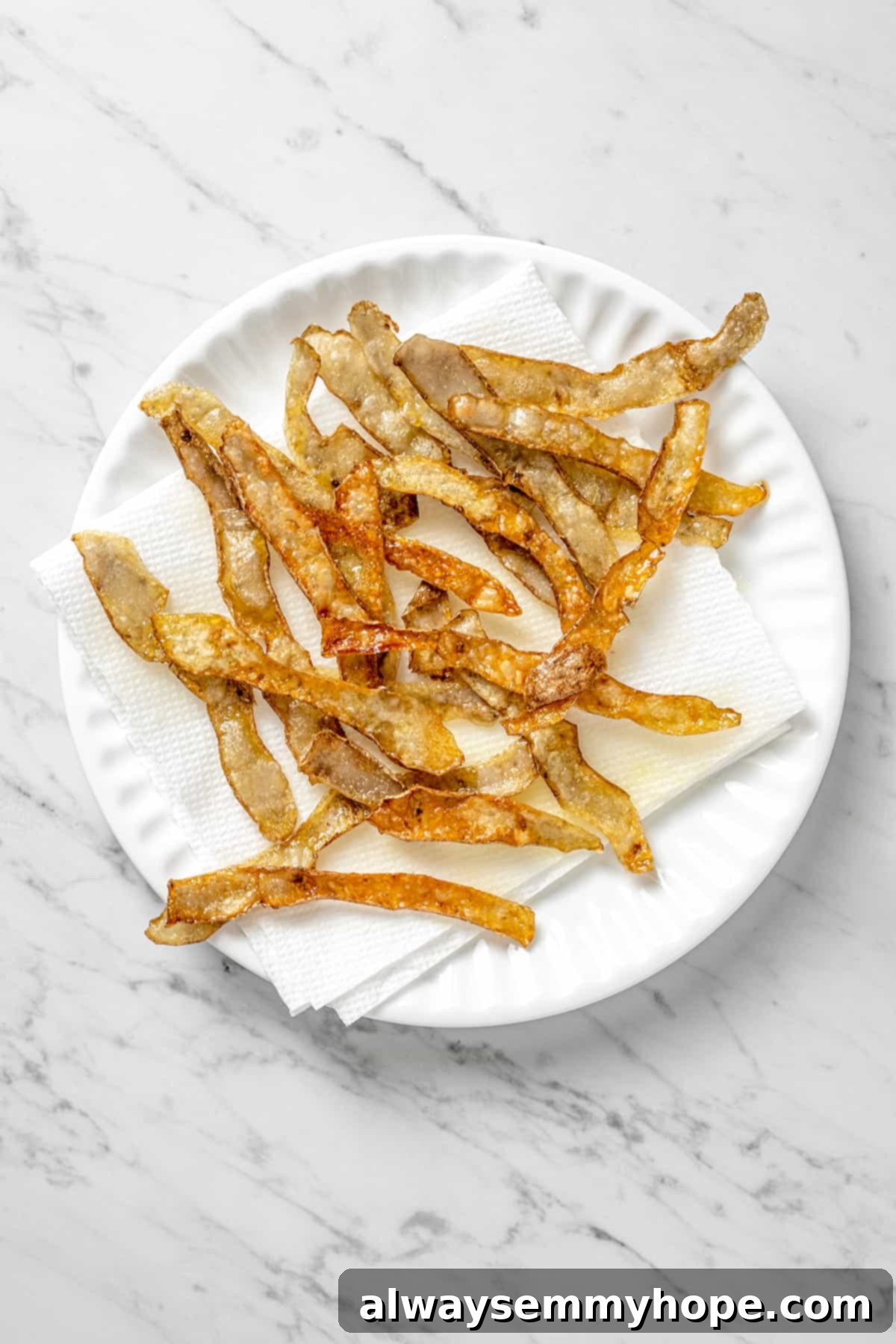
8. Prepare the Crispy Potato Skins Garnish: While the soup is simmering, let’s create our delightful garnish. Thoroughly pat the reserved potato skins dry with a paper towel; this step is crucial for achieving crispiness. In a small pot or deep skillet, heat about ¼ cup of vegetable oil over medium heat. Once the oil is hot and shimmering (you can test with a small piece of skin), carefully add the potato peels to the oil in batches if necessary, being careful not to overcrowd the pan. Fry for 1-2 minutes, or until they turn a beautifully golden brown and become wonderfully crispy. Remove them from the oil using a slotted spoon and place them on a paper-towel-lined plate to drain any excess oil. Season them immediately with salt and pepper while they are still hot to ensure the seasoning adheres well. These crispy skins add an incredible textural contrast and an extra layer of flavor to the smooth soup.
9. Final Blend for Ultimate Creaminess: After the lentils are tender and the soup has simmered, transfer about 1/2 to 3/4 of the soup into the blender. Process until it’s incredibly smooth and velvety. This second blending step enhances the soup’s creamy consistency even further, creating that luxurious mouthfeel characteristic of a perfect mulligatawny. Pour the pureed portion back into the pot with the remaining chunky soup. Stir everything together until well combined and allow it to cook for another 5 minutes, ensuring a consistent texture and temperature throughout.

10. Finish with Coconut Milk: As the final step in preparing the soup base, pour in the unsweetened full-fat coconut milk. Stir gently until it’s thoroughly combined and the soup has a uniform, luscious consistency. Immediately remove the pot from the heat once the coconut milk is incorporated; this prevents the coconut milk from curdling and ensures a perfectly smooth finish.
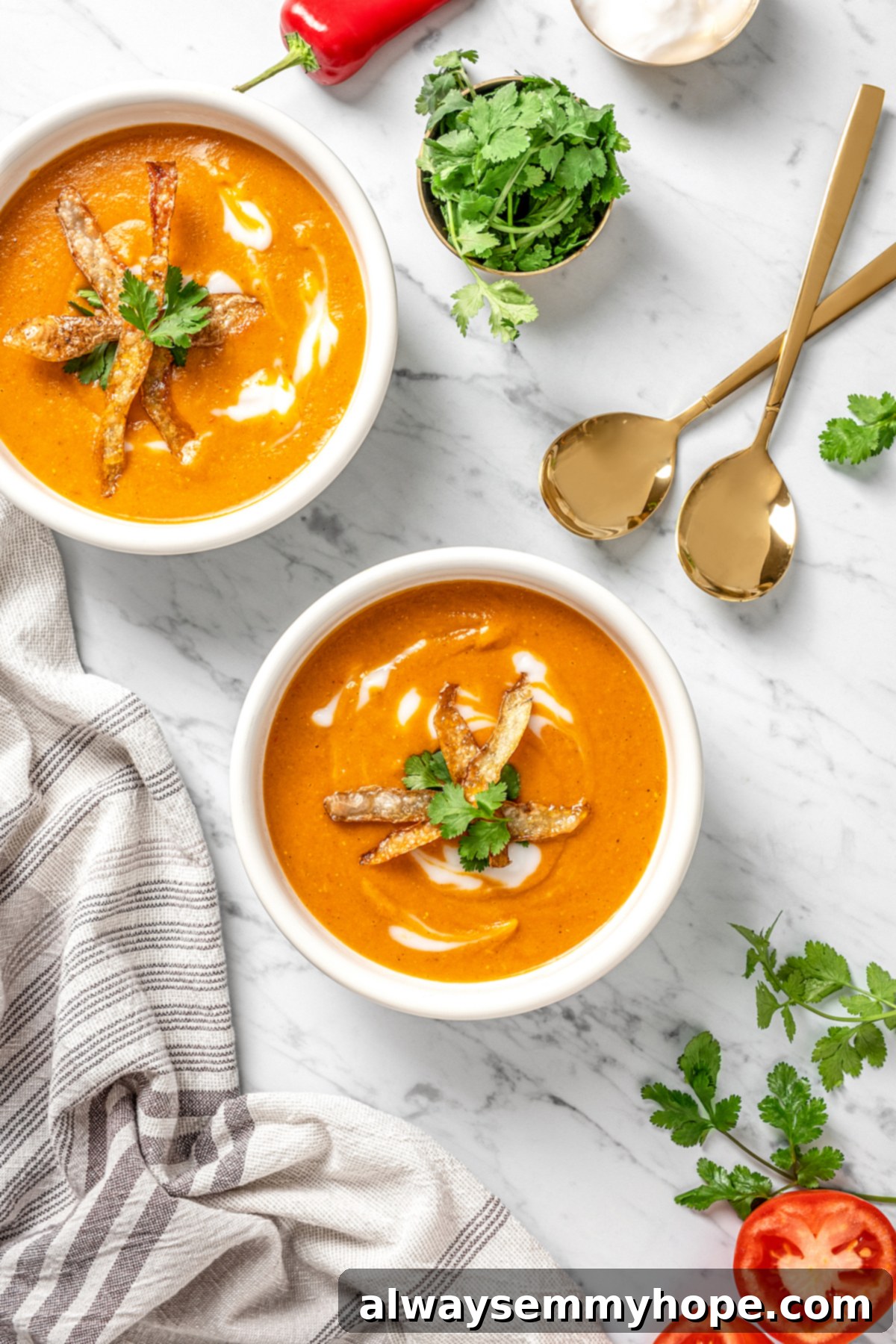
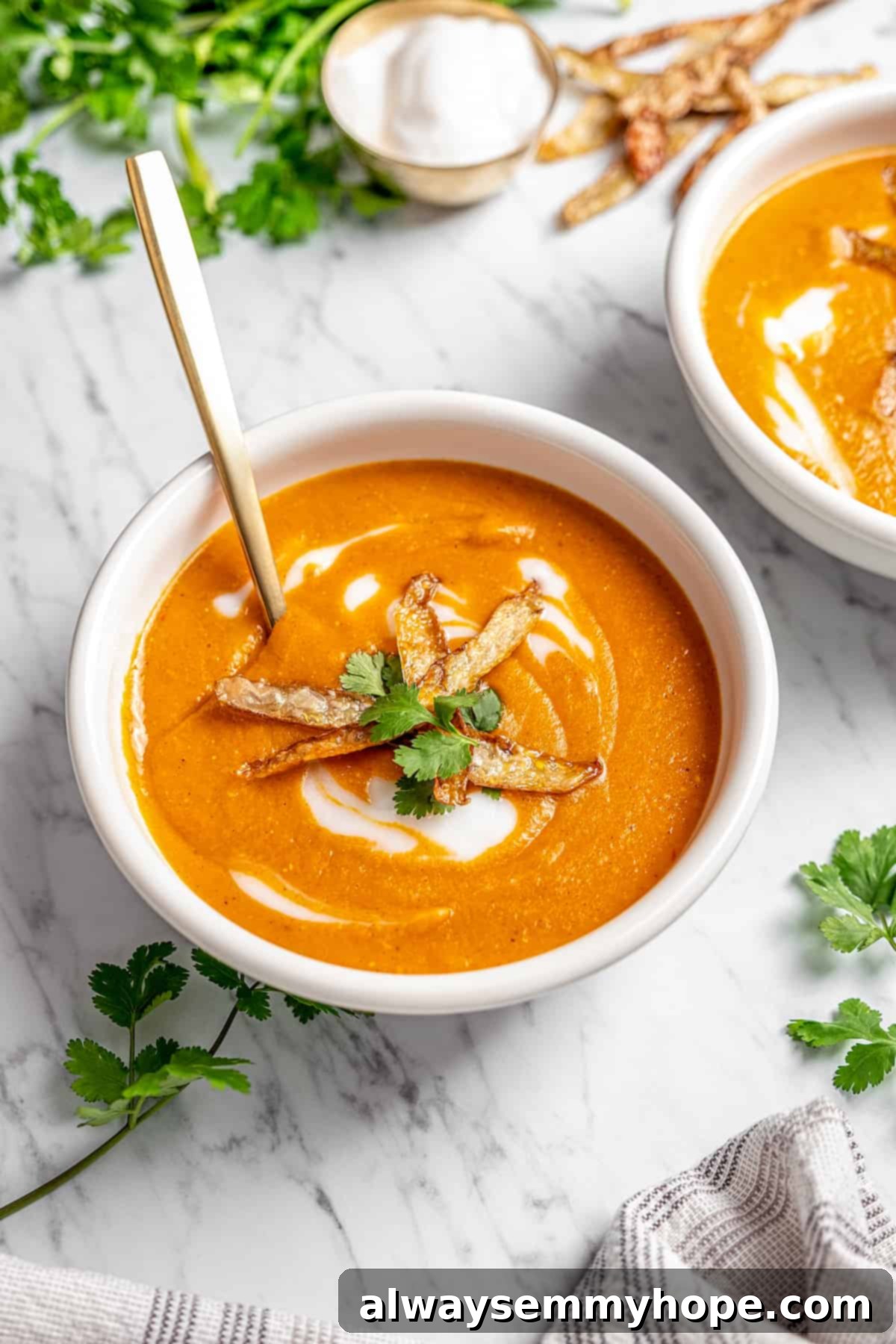
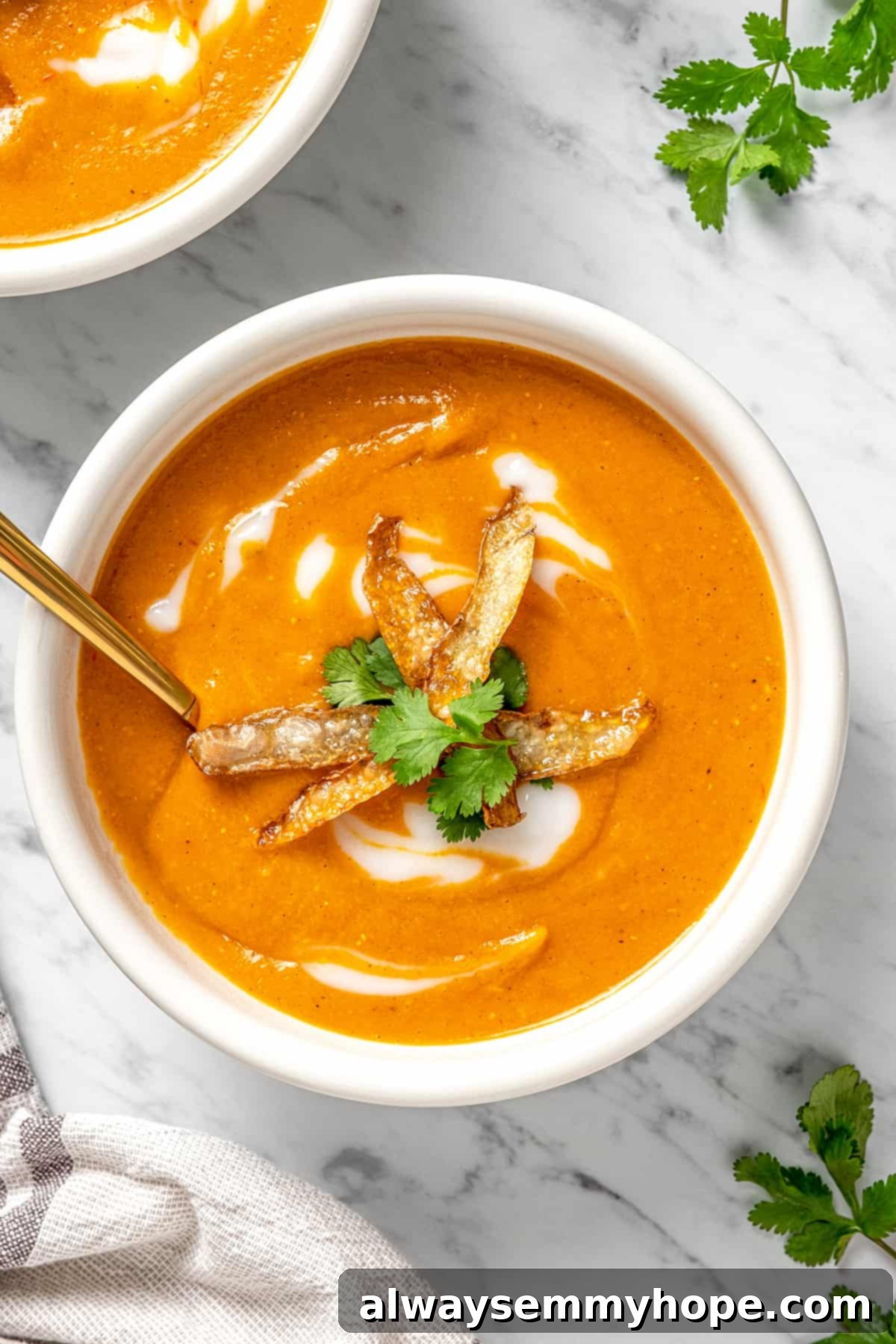
11. Serve and Garnish for Enjoyment: Ladle the hot, fragrant mulligatawny soup into individual serving bowls. For an extra touch of creamy tang and a beautiful presentation, add a swirl of unsweetened vegan yogurt on top. Generously crumble your freshly made crispy potato skins over the top for an irresistible crunch, and finish with a sprinkle of freshly chopped cilantro for a burst of vibrant color and refreshing herbal notes. Serve immediately and savor every delicious, comforting spoonful!
Expert Tips for Crafting a Perfect Vegan Mulligatawny
Achieving a truly outstanding vegan mulligatawny is easier than you think when you keep these helpful hints and best practices in mind. These tips will ensure your soup is perfectly spiced, wonderfully creamy, and incredibly satisfying:
- Monitor Oil Levels Diligently: While sautéing the vegetables, it’s important to keep a close eye on the oil in the pot. If it appears to have been fully absorbed and the vegetables start sticking to the bottom or browning too quickly, don’t hesitate to add a splash more vegetable oil. This ensures even cooking, prevents scorching (which can impart an unpleasant bitter taste), and allows the vegetables to caramelize gently, building deeper flavors.
- Customize Your Preferred Heat Level: Mulligatawny is traditionally known for its “pepper water” origins, but you have full control over the spice intensity in this vegan version. For a spicier kick, you can opt for a robust Madras curry powder instead of a milder blend, or add an extra pinch of cayenne pepper along with the other spices during step 4. If you prefer a milder soup, you can reduce the amount of fresh jalapeño or select a less potent chili variety. Always taste as you go and adjust to your personal preference!
- Embrace the Lentil Breakdown: This is a key characteristic of authentic mulligatawny. Unlike other lentil recipes where you might aim for al dente, with red lentils in this soup, the goal is for them to cook until they completely break down and become mushy. This natural disintegration is what contributes significantly to the soup’s signature thick and creamy texture, creating a smooth and luscious mouthfeel. So, if your red lentils seem to be “falling apart,” you’re doing it exactly right – don’t think you’ve overcooked them!
- Seasoning is Key – Taste as You Go: The flavors of a soup can deepen and change significantly as it simmers and ingredients meld. Always taste your soup before the final serving and adjust the seasoning. You might find it needs a little more salt to brighten all the other flavors, or perhaps a tiny squeeze of fresh lemon or lime juice to add a tart, refreshing note that balances the richness of the spices and coconut milk.
Perfect Pairings: Delicious Serving Suggestions for Your Mulligatawny
This heartwarming vegan mulligatawny soup is utterly delightful and completely satisfying on its own, offering a full and nourishing meal. However, you can elevate your dining experience even further and truly make it a feast with a few thoughtfully chosen complementary side dishes:
- Accompaniments with Bread: A side of warm, fluffy vegan naan bread is absolutely perfect for soaking up every last drop of the rich, creamy broth. For an extra burst of flavor, try it with garlic naan! You could also serve it with some rustic, crusty sourdough bread or a simple, homemade flatbread for a different textural contrast.
- Grains for Substance: For a more substantial and filling meal, pair your mulligatawny with a generous serving of fluffy basmati rice. The delicate aroma and separate grains of basmati rice beautifully absorb the complex, aromatic flavors of the soup. If you’re looking for a lighter, low-carb option, cauliflower rice makes an excellent and equally delicious accompaniment.
- Creative Toppings and Garnishes: Beyond the crispy potato skins and fresh cilantro that are already included, consider adding other creative garnishes to customize each bowl. Toasted cashews or almonds can provide extra crunch and a nutty flavor. Sweet and tangy pomegranate seeds offer a burst of freshness and color. A drizzle of chili crisp can add an exciting layer of heat and texture for those who love extra spice. Don’t forget that a final squeeze of fresh lime juice just before serving can truly brighten all the flavors and add a zesty finish!
Storage and Freezing Instructions: Keep Your Mulligatawny Fresh
One of the best qualities of this incredibly delicious vegan mulligatawny soup is how well it stores, making it a fantastic option for meal prepping and ensuring you always have a comforting meal on hand!
How to Store Leftovers in the Refrigerator:
Once your vegan mulligatawny soup has completely cooled to room temperature, transfer any leftovers into an airtight container. It will keep beautifully in the refrigerator for up to 3 days. When you’re ready to enjoy it again, simply reheat it gently. You can warm the soup over medium heat on the stovetop, stirring occasionally to prevent sticking, until it’s heated through evenly. Alternatively, for a quick and convenient option, individual portions can be easily warmed in the microwave until piping hot.
Can This Vegan Mulligatawny Recipe Be Frozen?
Absolutely! This vegan mulligatawny soup freezes exceptionally well, allowing you to enjoy this delicious comfort food for up to several months. To freeze, ensure the soup is completely cooled first. Then, transfer it into airtight freezer-safe containers, leaving a little headspace for expansion, or into heavy-duty freezer bags (laying them flat for easier storage). It can be stored in the freezer for up to 3 months without compromising its rich flavor or creamy texture. When you’re ready to enjoy it, simply thaw the soup overnight in the refrigerator. Once fully thawed, reheat it on the stovetop or in the microwave until it’s piping hot and delicious, ready to offer warmth and comfort once more.
We truly hope you absolutely love this hearty, flavorful, and incredibly comforting vegan mulligatawny soup! If you give this delightful recipe a try, please be sure to snap a photo and tag #jessicainthekitchen on Instagram! Your culinary creations inspire us and our community. We’d also be absolutely thrilled if you would take a moment to leave a comment below, sharing your experience and giving the recipe a rating! Thank you so much for cooking with us and enjoying plant-based deliciousness!

Mulligatawny Soup
Ingredients
For the veggies:
- ¼ cup vegetable oil
- 1 small yellow onion, diced
- 1 medium carrot, diced
- 1 medium potato, peeled and diced; reserve the peels
- ¼–½ red jalapeño, seeded and diced
- 2 medium garlic cloves, roughly chopped
- 2 teaspoons fresh ginger, finely chopped
- ½ large Granny Smith, or Royal Gala apple, peeled and diced
- 1 cup diced Roma tomatoes, seeded and diced
- ¼ cup tomato purée
For the spice mix:
- ½ tablespoon Indian curry powder
- ¼ teaspoon ground coriander
- ¼ teaspoon ground paprika
- ¼ teaspoon ground cinnamon
- ¼ teaspoon ground turmeric
- ¼ teaspoon dried thyme
- ⅛ teaspoon ground cardamom
- ⅛ teaspoon ground black pepper
For the soup:
- ½ cup dried red lentils
- 3 ½ cups low-sodium veggie broth
- ½ cup full fat coconut milk, unsweetened
- Salt, to taste
- Plain vegan yogurt, unsweetened, for garnish
- Chopped cilantro, for garnish
Instructions
- Make the spice mix. Whisk the curry powder, ground coriander, paprika, cinnamon, turmeric, thyme, cardamom, and black pepper in a small bowl. Set it aside.
- Cook the veggies. Heat a large pot over low heat. Add the vegetable oil. Let it heat for 1-2 minutes. Add the onion, carrots, potatoes, jalapeño, garlic, ginger, and apple. Raise the heat to medium. Mix well. Stir occasionally and let the veggies cook for 10 minutes.
- Add the tomatoes. Place the tomatoes in the pot and stir well. Stir and cook everything for another 5-7 minutes or until the potatoes are fork-tender. Add more oil as needed. The veggies will be slightly browned.
- Season it. Throw the spice mix into the pot and stir to combine. Add the tomato purée and stir well. Let the mixture cook for another 5 minutes.
- Blend the veggies. Remove the pot from the heat. Transfer the veggies to the blender and add 1 cup of veggie broth. Process until you get a smooth mixture.
- Add the lentils. Transfer the blended mixture back into the pot. Add the red lentils and the remaining veggie broth. Stir to combine and bring the mixture to a boil over high heat.
- Let it simmer. Immediately reduce the heat to medium. Let the soup simmer for 30 minutes or until the lentils are tender. Stir occasionally so the lentils don’t stick to the pot. Season with salt to taste.
- Make the crispy skin. As the soup simmers, make the skin by patting the potato skins dry. Add vegetable oil to a small pot over medium heat. Gently lower the potato peels into the oil. Let them fry for 1-2 minutes or until golden and crispy. Remove them from the oil and set them on a paper-towel lined plate to drain excess oil. Set them aside. Season with salt to taste.
- Blend. Transfer 1/2-3/4 of the soup into the blender. Process it until you get a smooth mixture. Pour it back into the pot. Stir well and let the soup cook for another 5 minutes.
- Add the coconut milk. Pour in the coconut milk. Stir unti it’s completely combined. Remove from the heat.
- Serve. Ladle hot soup into serving bowls. Swirl in unsweetened vegan yogurt to taste. Crumble crispy potato skins on top and garnish with chopped cilantro.
Notes
Disclaimer: Although jessicainthekitchen.com attempts to provide accurate nutritional information, kindly note that these are only estimates. Nutritional information may be affected based on the product type, the brand that was purchased, and in other unforeseeable ways. Jessicainthekitchen.com will not be held liable for any loss or damage resulting for your reliance on nutritional information. If you need to follow a specific caloric regimen, please consult your doctor first.