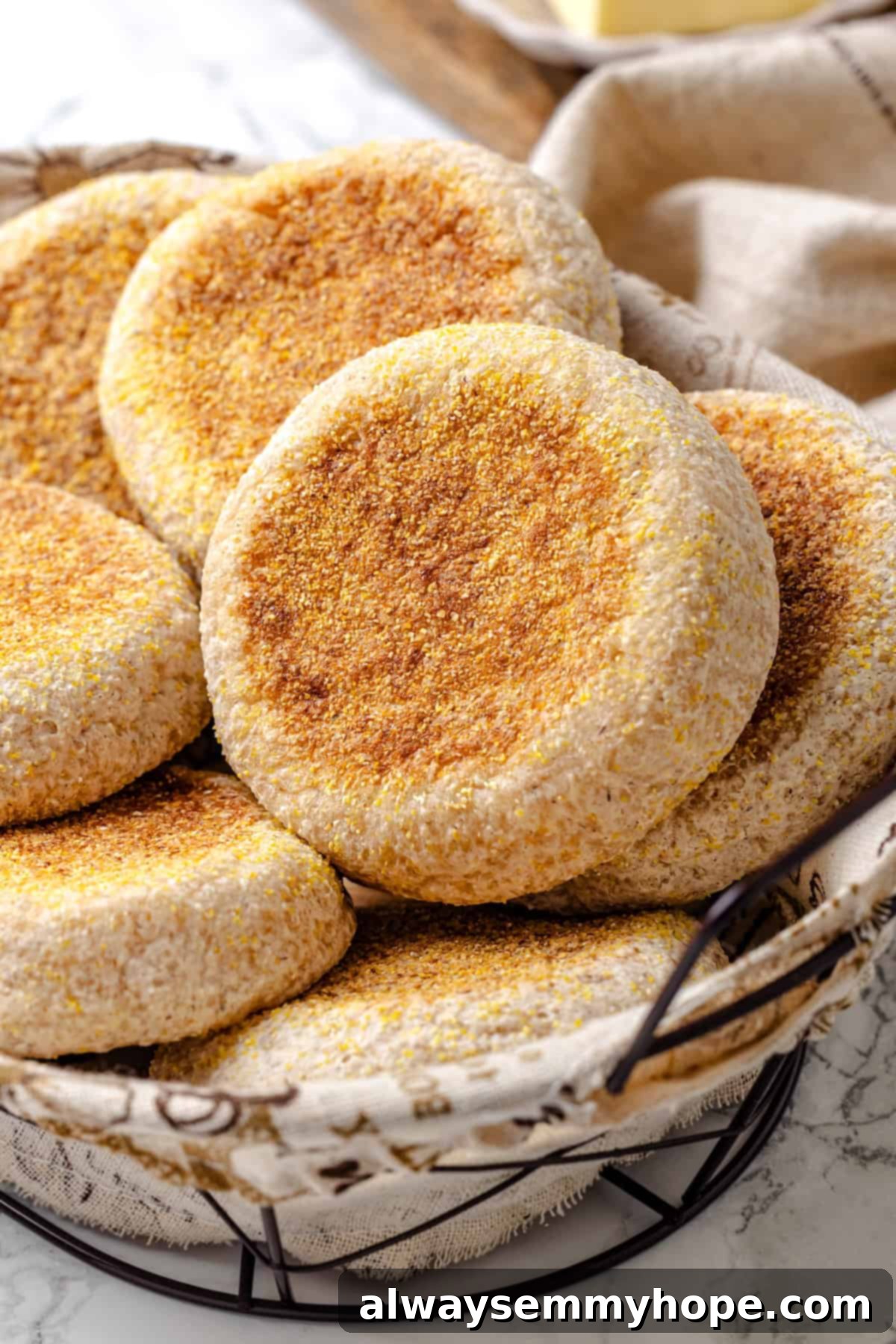
Homemade Vegan Gluten-Free English Muffins: Tender, Golden & Delicious!
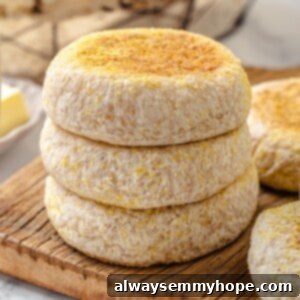
There’s nothing quite like a freshly baked English muffin, but finding a truly satisfying vegan and gluten-free version in stores can be a real challenge. That’s why I took matters into my own hands and created this incredible homemade recipe! These English muffins are wonderfully tender, beautifully golden, and boast that classic chewy texture with all the signature nooks and crannies, making them absolutely perfect for your favorite jams, plant-based butter, or savory toppings. Get ready to elevate your breakfast game with these delightful muffins!
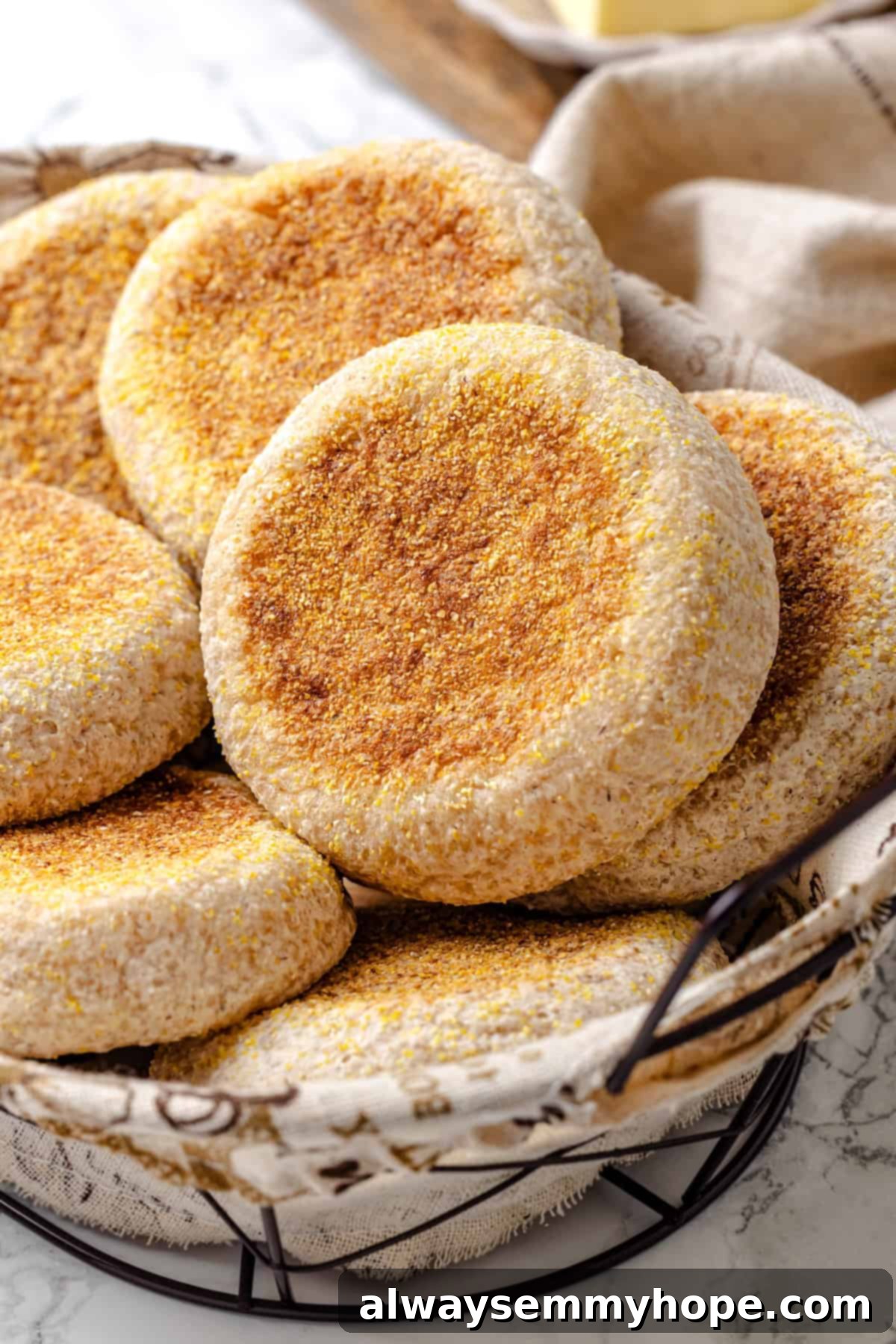
Before embarking on my journey as a food blogger, I ran my own bakery, so I have a deep appreciation for the science and art of baking. Just like my popular Gluten-Free Sandwich Bread, this recipe for gluten-free English muffins has undergone extensive testing and meticulous refinement. My goal was to ensure you achieve consistent, perfect results every time: that coveted chewy interior, a beautifully golden exterior, and plenty of those wonderful nooks and crannies just waiting to be filled with creamy plant-based butter and your favorite fruit jam. Prepare to fall in love with these muffins – they are truly a game-changer!
Why You’ll Love This Vegan & Gluten-Free English Muffin Recipe
Crafting delicious gluten-free baked goods requires more than just a simple flour swap. After countless experiments, I discovered that a custom blend and traditional techniques were key to unlocking the true potential of these English muffins. Here’s what makes this recipe a standout:
- Perfected Custom Flour and Starch Blend: Forget generic 1:1 gluten-free flour mixes for this one. I’ve carefully selected a precise combination of tapioca starch, potato starch, and millet flour to create the ideal texture and subtle flavor profile for these English muffins. While it might seem like a bit more effort than using a pre-made blend, the results are undeniably worth it. This unique blend ensures the muffins are wonderfully chewy yet remain soft and tender, mirroring the best qualities of traditional English muffins. Tapioca starch contributes to that desirable chewiness, potato starch provides a light and fluffy crumb, and millet flour offers a mild, slightly nutty taste that beautifully complements the overall flavor.
- Authentic Griddle Cooking Method: Unlike conventional muffins that are baked in an oven, true English muffins are traditionally cooked on a griddle or in a skillet. This recipe embraces that time-honored technique, cooking the muffins on a cast-iron skillet or griddle. This method is crucial for developing their signature golden-brown crust and a slightly crisp exterior, which contrasts perfectly with the soft, airy interior. This isn’t just a detail; it’s what gives them their unique character and makes them truly “English muffins.”
- Psyllium Husk for Structure: In gluten-free baking, achieving structure and elasticity is paramount. Psyllium husk plays a vital role here, acting as a natural binder that mimics the properties of gluten. It helps the dough hold its shape, provides the necessary chew, and creates those delightful air pockets that define an English muffin. Without it, gluten-free doughs can often be crumbly or dense, but psyllium husk ensures these muffins are light and pliable.
Essential Ingredients for Your Gluten-Free English Muffins
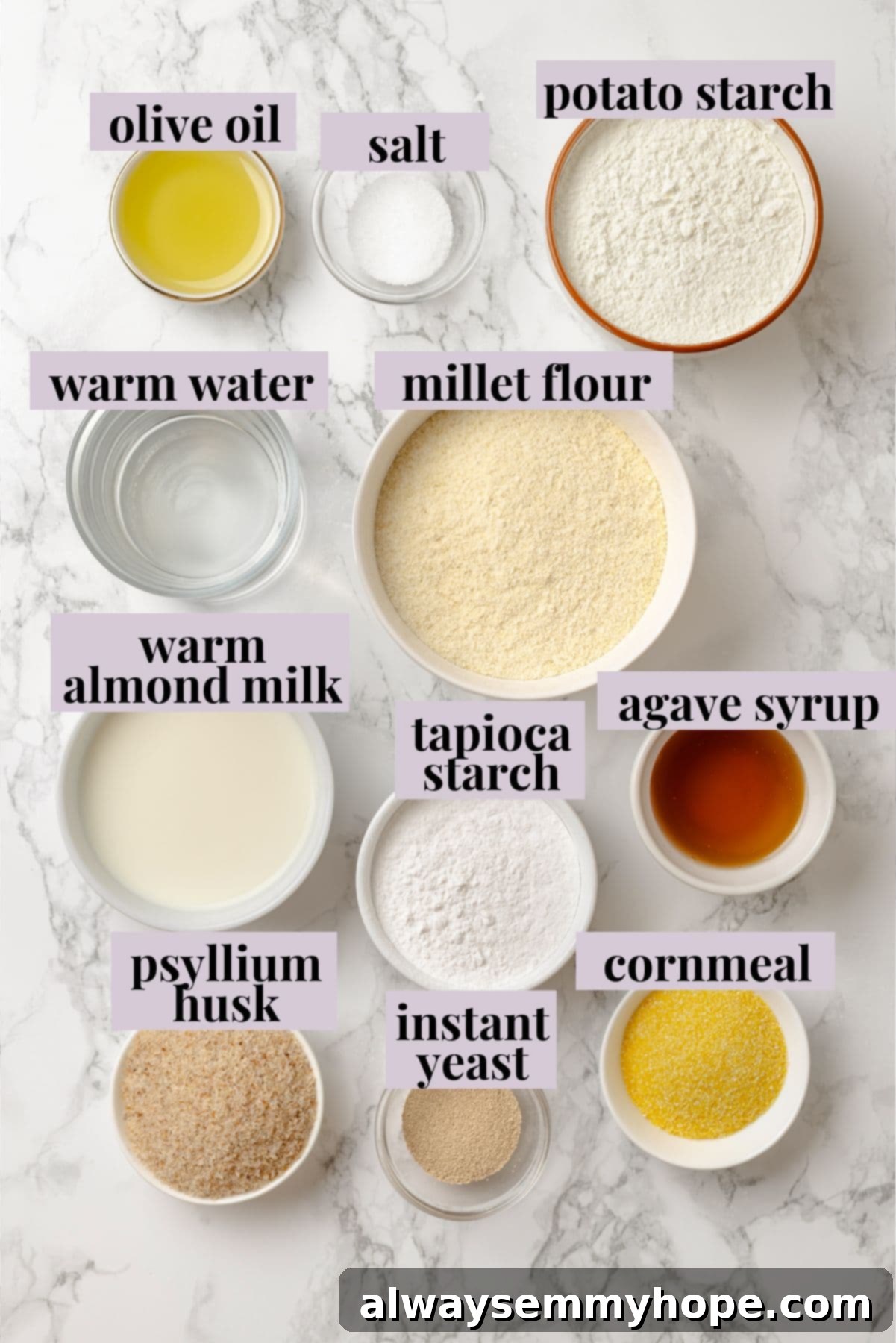
Understanding the role of each ingredient is key to successful baking, especially in gluten-free recipes. This section provides insights into the essential components needed for your homemade English muffins. For precise quantities and detailed instructions, please refer to the comprehensive recipe card below.
- Warm Water (approx. 110°F/43°C): This is critical for activating the instant yeast. The water should feel warm to the touch, not hot. If it’s too hot, it will kill the yeast, preventing your muffins from rising. If it’s too cold, the yeast will activate slowly, but it’s always safer to err on the side of cooler than hotter.
- Agave Syrup: Used as a natural sweetener and, more importantly, to “feed” the yeast. The yeast consumes the sugars in the agave, producing carbon dioxide that helps the dough to rise. It’s a wonderful vegan alternative to honey.
- Instant Yeast: The leavening agent that gives these English muffins their characteristic airy texture. Instant yeast is convenient as it doesn’t require proofing before being mixed with other ingredients, though we’ll still activate it with warm water and agave to ensure it’s lively. For more on yeast, check out: Is Yeast Vegan?
- Psyllium Husk: A star ingredient in gluten-free baking. Psyllium husk acts as a binding agent, providing the necessary structure and elasticity that gluten-free flours often lack. It helps create a dough that can be shaped and prevents the muffins from becoming crumbly, giving them that satisfying chew.
- Warm Almond Milk: Adds moisture and a delicate richness to the dough. Using warm milk (not hot) also contributes to the ideal environment for yeast activity. Any plain, unsweetened plant-based milk can work, but almond milk is my preferred choice for its neutral flavor.
- Olive Oil: Contributes to the tenderness and moisture of the English muffins, and adds a subtle depth of flavor. A good quality extra virgin olive oil can enhance the overall taste.
- Potato Starch: This fine, powdery starch is essential for achieving a light and fluffy interior. It helps to tenderize the dough and contributes to a softer crumb, balancing the chewiness from the tapioca starch.
- Tapioca Starch: A key player for texture, tapioca starch is responsible for much of the characteristic chewiness found in these gluten-free English muffins. It also helps bind the ingredients, preventing a dry or crumbly result.
- Millet Flour: One of my absolute favorite gluten-free flours! Millet flour has a mild, slightly nutty flavor that enhances the overall taste of the muffins. It provides structure without being too heavy, making it a perfect component of our custom flour blend.
- Salt: A small but mighty ingredient, salt enhances all the flavors in the muffins and also plays a role in regulating yeast activity, preventing it from rising too quickly.
- Cornmeal: Used for dusting the baking sheet and the muffins themselves. This not only prevents sticking but also adds a rustic texture and visual appeal, giving them the authentic English muffin look.
How to Make Gluten-Free English Muffins: A Step-by-Step Guide
Making gluten-free English muffins at home is a rewarding and enjoyable baking project for anyone who loves spending time in the kitchen. The process, while specific, is straightforward and yields delicious results. Here’s a quick overview of the essential steps involved, accompanied by visual cues.
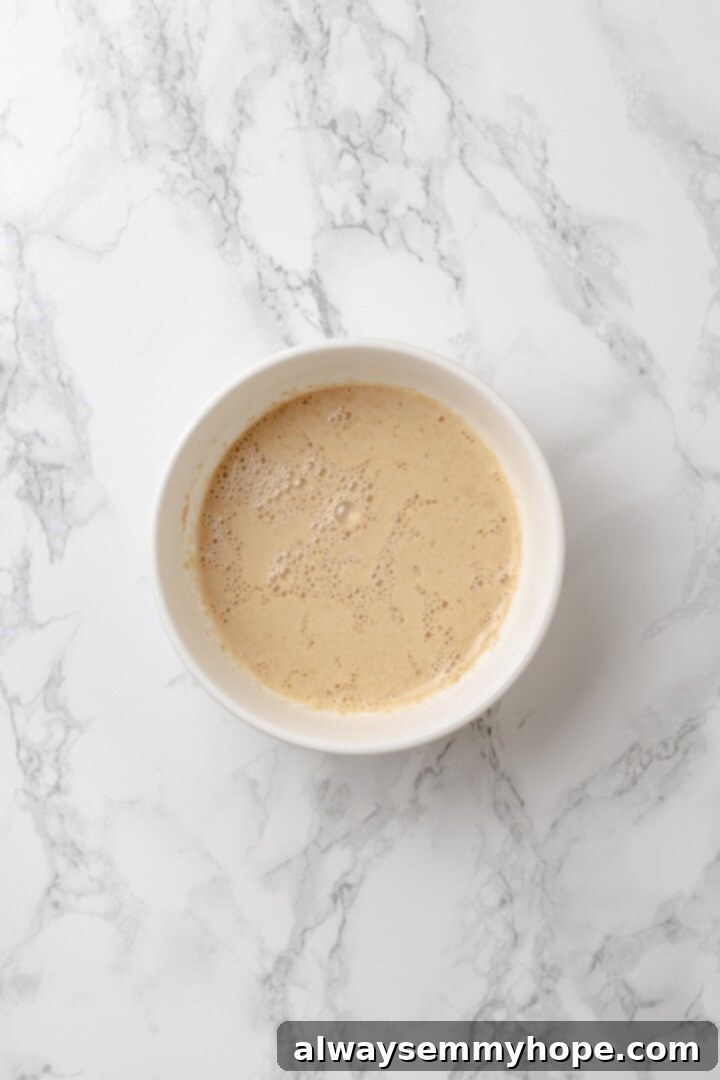
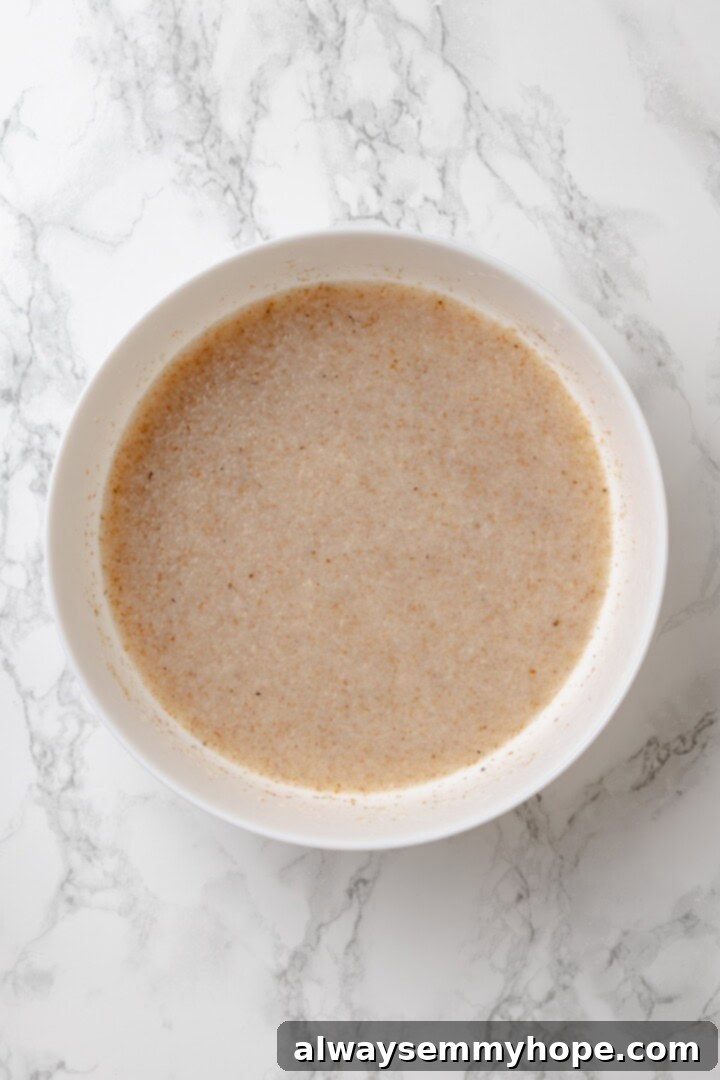
- Activate the Yeast: In a small bowl, combine the agave syrup, instant yeast, and a portion of the warm water. Stir gently to mix, then set it aside for 5-10 minutes. You’ll know it’s activated and ready when a foamy layer appears on the surface, indicating the yeast is alive and active.
- Hydrate the Psyllium Husk: In a separate, larger bowl, whisk the remaining warm water with the psyllium husk until fully combined. Let this mixture sit for about 5 minutes. During this time, the psyllium will absorb the water and form a thick, gelatinous consistency, which is crucial for the dough’s structure.
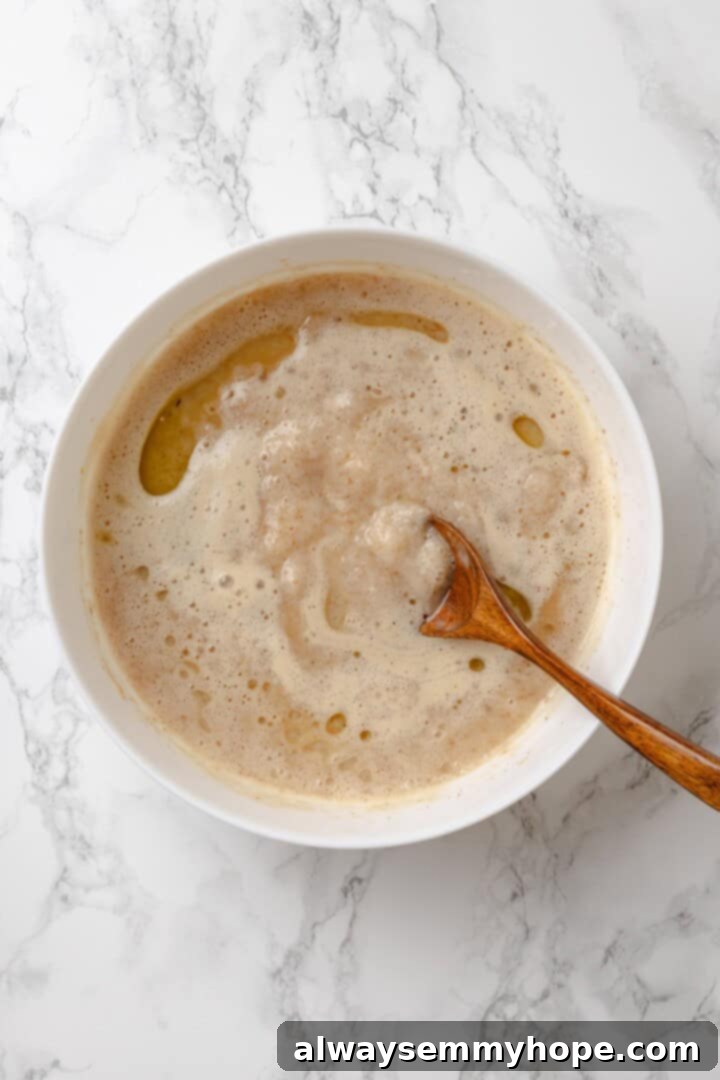
- Combine the Wet Ingredients: Once the psyllium has gelled and the yeast is foamy, stir the activated yeast mixture, warm almond milk, and olive oil into the large bowl containing the psyllium gel. Mix until all these wet components are thoroughly incorporated.
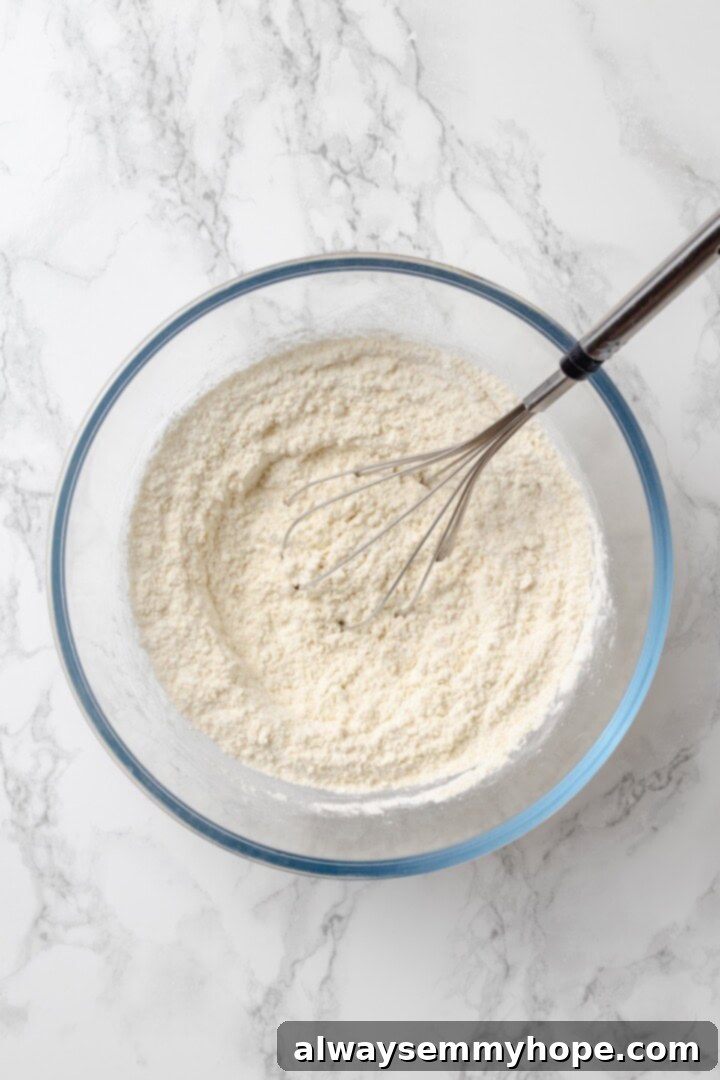
- Whisk the Dry Ingredients: In a separate medium-sized bowl, combine the potato starch, tapioca starch, millet flour, and salt. Whisk them together thoroughly. This ensures even distribution of the flours and leavening throughout the dough.
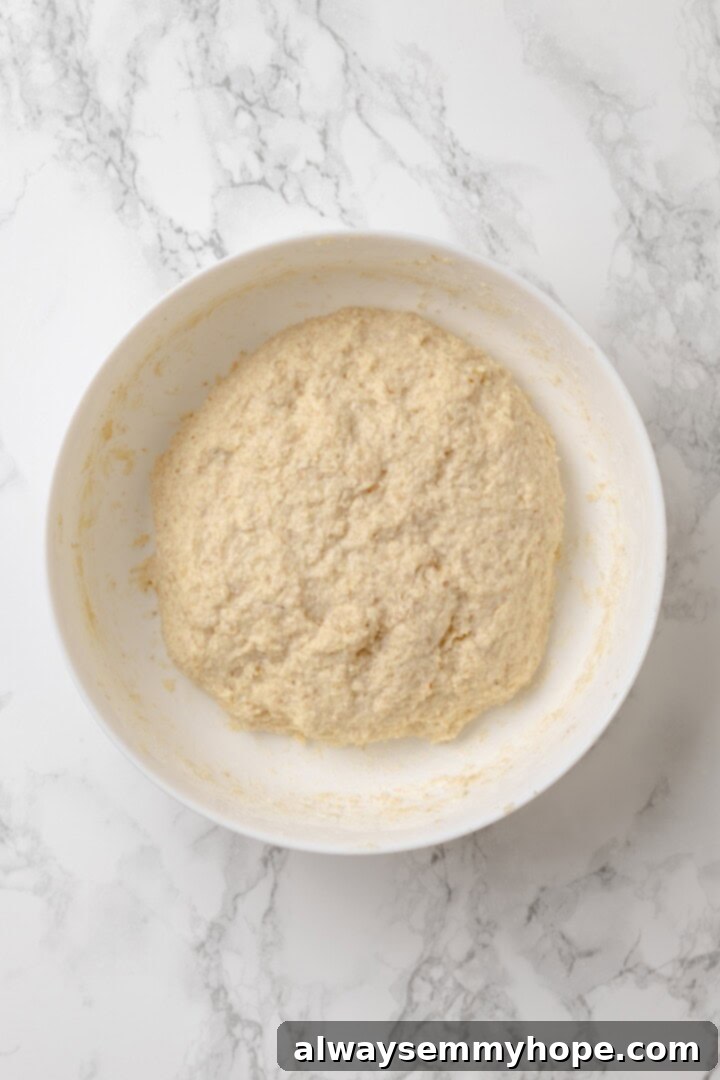
- Finish the Dough: Gradually add the whisked dry ingredients to the wet mixture. Mix by hand with a sturdy spoon or spatula, or use a stand mixer fitted with a paddle attachment on medium speed for about 2 minutes. Continue mixing until a thick, somewhat sticky dough forms. Avoid overmixing, but ensure all ingredients are fully incorporated.
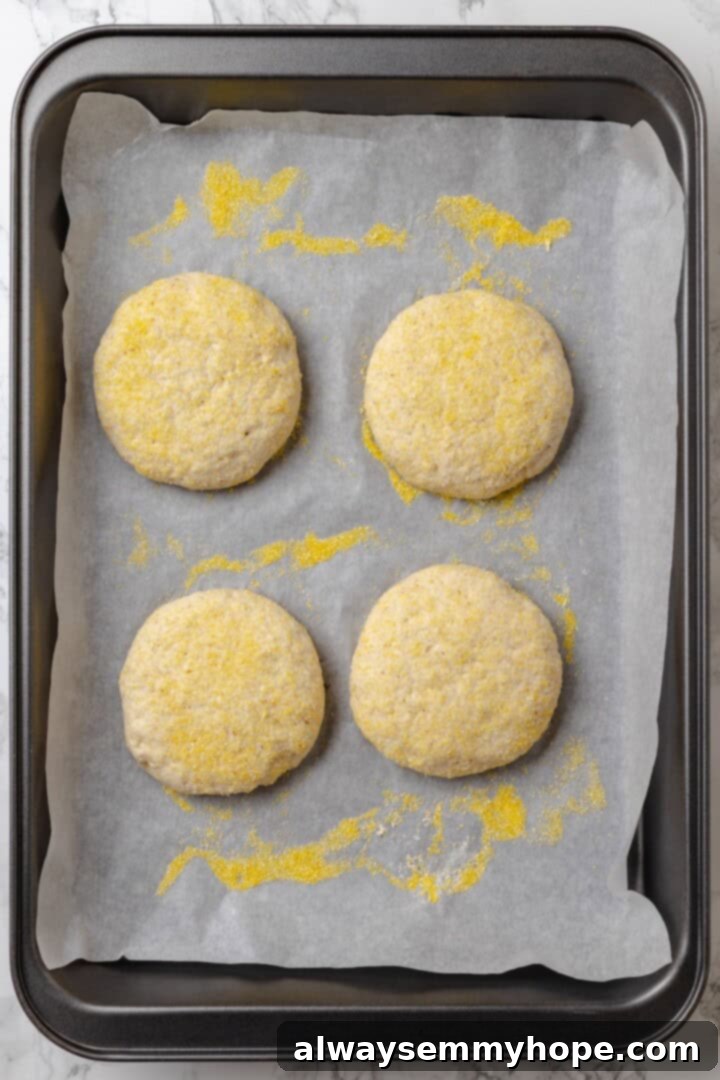
- Shape the English Muffins: Lightly dust a baking sheet with cornmeal to prevent sticking. With lightly oiled hands (this helps tremendously with sticky dough), divide the dough into 8 equal portions. Roll each portion into a round shape, about 3 inches in diameter, and gently flatten them to about 1 inch thick. Place them on the cornmeal-dusted baking sheet, sprinkling a bit more cornmeal on top of each muffin for that classic finish.
- Proof the Muffins: Loosely cover the shaped English muffins with a clean kitchen towel. Allow them to rise in a warm place for 1 to 1½ hours, or until they appear slightly puffy. Don’t expect a dramatic rise like traditional bread; gluten-free doughs typically have a more subtle expansion during proofing.
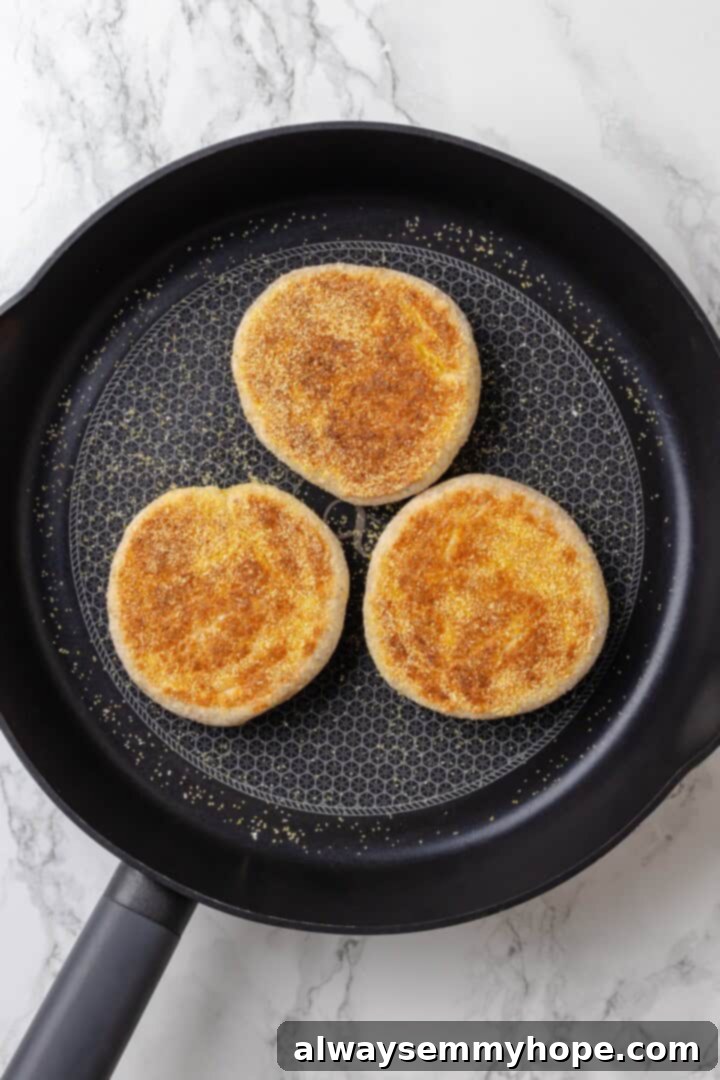
- Cook the Muffins on a Griddle: Preheat a dry nonstick or cast iron skillet over medium-low heat. It’s crucial not to oil the skillet. Carefully transfer 2 to 3 muffins at a time to the hot skillet, ensuring they aren’t overcrowded. Cook for 7–8 minutes per side, flipping only once, until they are beautifully golden brown and the internal temperature reaches 200°F (93°C). You may need to adjust the heat slightly to prevent burning while ensuring they cook through evenly.
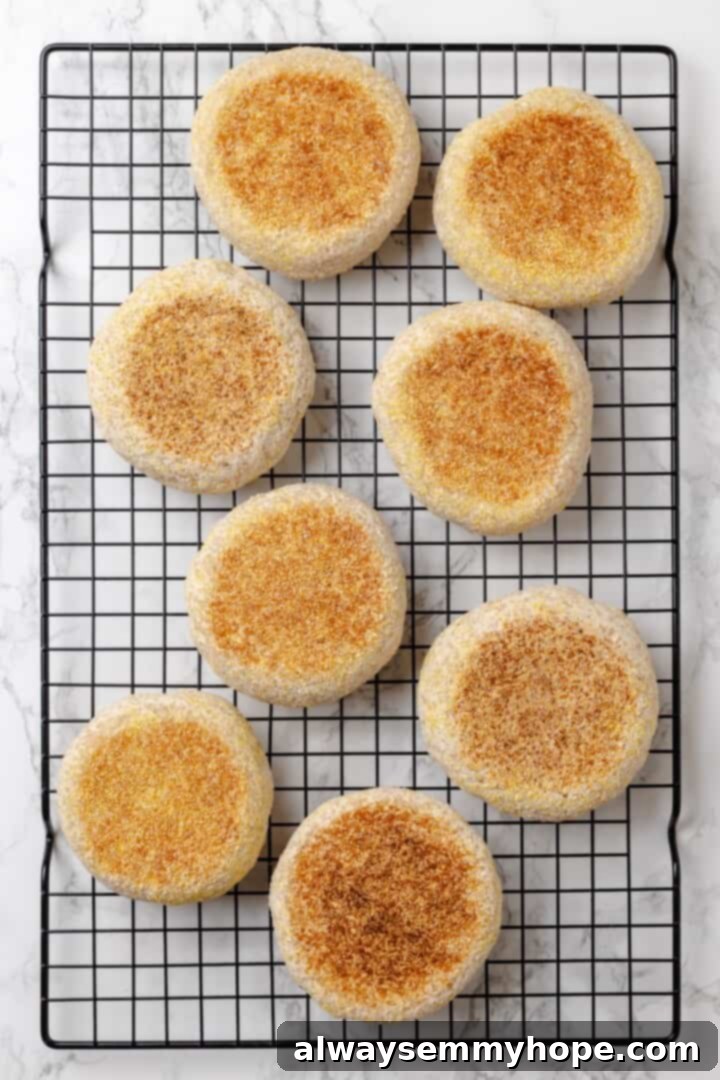
- Cool Before Serving: Once cooked, transfer the English muffins to a wire rack to cool for at least 20 minutes. This cooling period is essential for the internal structure to set, resulting in the best texture when sliced.
Expert Tips for English Muffin Perfection
Achieving bakery-quality gluten-free English muffins at home is easier with these essential tips:
- Embrace Sticky Dough: Don’t be alarmed if your dough feels sticky; this is perfectly normal and expected for gluten-free dough, especially with the psyllium husk. Resist the urge to add more millet flour, as this can lead to a dry, dense muffin. Lightly oiling your hands before shaping is the best way to handle it.
- Avoid Overcooking for Optimal Texture: The ideal internal temperature for these English muffins is 200°F (93°C). Using a food thermometer is the most reliable way to check for doneness. If you notice the exteriors are browning too quickly or starting to burn before reaching the target internal temperature, simply reduce the heat on your stove. Cooking low and slow is key to thorough cooking without charring.
- Consider English Muffin Rings (Optional): I designed this recipe to be accessible for home bakers without specialized equipment. However, if you happen to own English muffin rings, they are excellent for creating perfectly uniform, circular muffins. Place the rings in the preheated skillet, place the dough inside, and cook as directed. They’ll help maintain the shape beautifully.
- The “Low and Slow” Cooking Method is Non-Negotiable: Cooking the muffins on medium-low heat is vital. This gentle heat ensures they cook evenly all the way through, allowing the interior to become fully cooked and airy while simultaneously developing that characteristic golden-brown crust without burning. Patience here truly pays off. Increasing the heat will only lead to burnt exteriors and raw centers.
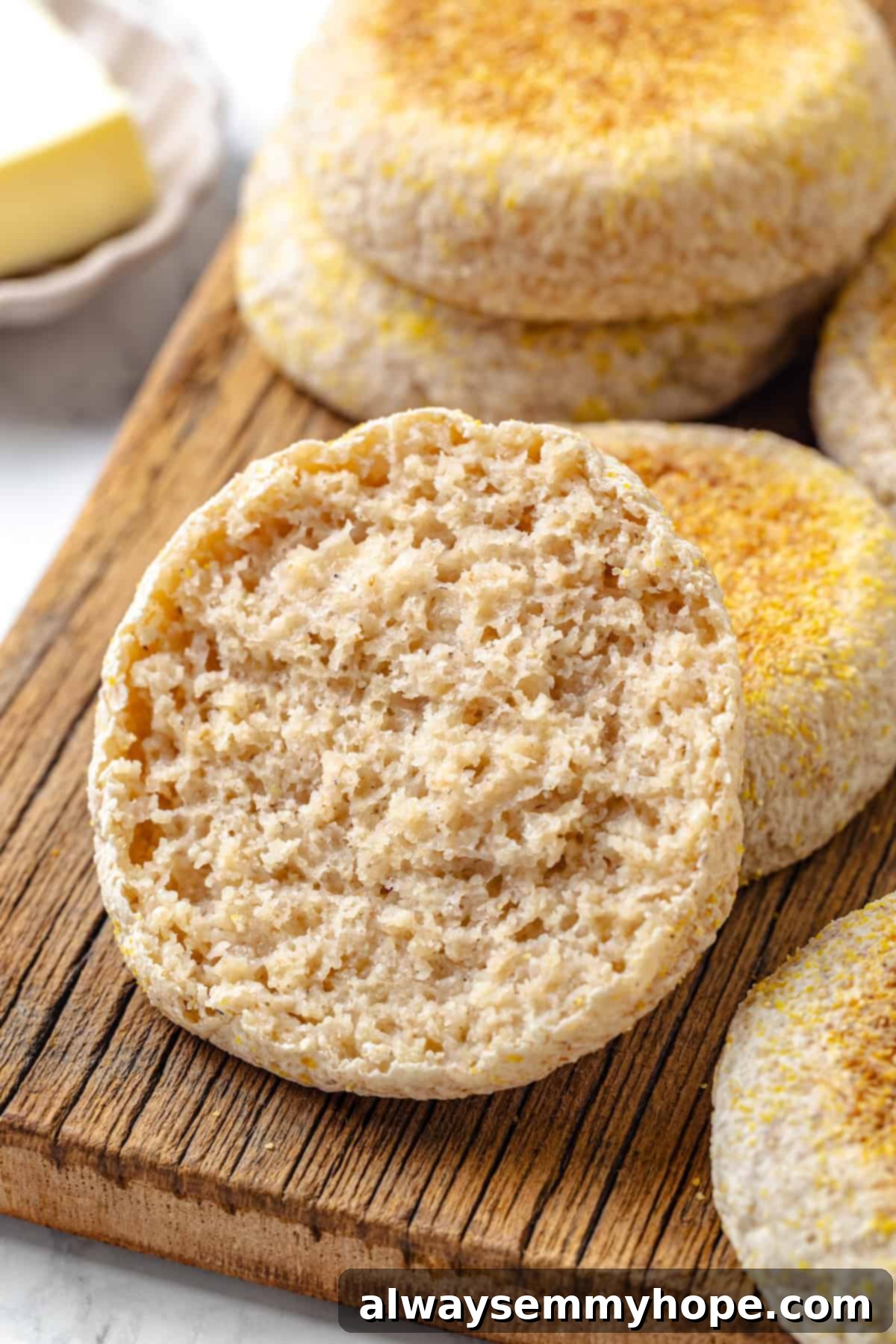
- Always Split with a Fork: For that signature “nooks and crannies” texture that makes English muffins so ideal for holding butter, jam, or other toppings, always split them open with a fork rather than a knife. A fork gently tears the interior, exposing all those wonderful uneven pockets, whereas a knife cuts through them, resulting in a flatter surface.
Delicious Serving Suggestions
Once your homemade vegan gluten-free English muffins are ready, the possibilities for enjoyment are endless! Go classic or get creative with your toppings:
- Classic Sweet Toppings: Slather them with rich Vegan Butter and a generous dollop of your favorite fruit jam. My Strawberry Jam is particularly delightful with these! A sprinkle of cinnamon sugar or a drizzle of maple syrup also makes for a comforting treat.
- Savory Breakfast Delights: Turn them into hearty breakfast sandwiches. Top with creamy avocado slices, a vibrant Tofu Scramble, or even some savory Carrot Lox for an elevated brunch experience.
- English Muffin Pizzas: For a quick and fun meal or snack, use them as a base for individual pizzas. Top with your favorite vegan cheese, tomato sauce, and plant-based toppings, then toast until bubbly.
- Open-Faced Sandwiches: Load them with hummus, fresh vegetables, or a vegan cream cheese spread for a satisfying lunch.
Storing Your Homemade English Muffins
Proper storage ensures your delicious English muffins stay fresh and enjoyable for as long as possible:
- Room Temperature Storage: Once completely cooled, gluten-free English muffins can be stored at room temperature for up to 3 days. Place them in an airtight container or a zip-top bag to prevent them from drying out.
- Freezer Storage for Longer Freshness: To significantly extend their shelf life, these English muffins freeze beautifully for up to 3 months. For the best results, wrap each muffin individually in plastic wrap, then transfer them into an airtight freezer-safe container or a large freezer bag. When you’re ready to enjoy one, simply remove it from the freezer, thaw at room temperature or in the microwave, and then toast until golden and warm.
Frequently Asked Questions (FAQ)
- Why is my gluten-free dough sticky? This is completely normal for gluten-free doughs, especially those using psyllium husk. Psyllium absorbs liquid and helps create elasticity, but it also makes the dough feel sticky. Avoid adding more flour, as this will result in a dry and dense muffin. Lightly oiling your hands when shaping is the best approach.
- Can I use a different gluten-free flour? This recipe is specifically developed with a precise blend of tapioca starch, potato starch, and millet flour. Substituting these with other gluten-free flours or a 1:1 blend may drastically change the texture and result. For best results, stick to the specified flours.
- My English muffins didn’t rise much during proofing. Is that normal? Yes, it is! Gluten-free doughs generally don’t show as dramatic a rise as traditional wheat-based doughs. As long as they’ve become slightly puffy, your yeast is working, and they’ll expand more during cooking.
- Can I bake these in the oven instead of on a griddle? For that authentic English muffin texture with a crispy exterior and soft, airy interior, cooking on a griddle or cast iron skillet is essential. Baking them in an oven won’t achieve the same results, as the direct, even heat of the griddle is what develops their unique crust and internal structure.
- How do I get those perfect nooks and crannies? The secret lies in how you open the muffin! Always use a fork to gently pry apart the cooked muffin halves. This creates those desirable, uneven surfaces perfect for soaking up butter and jam, unlike a knife which cuts cleanly through them.
More Delicious Gluten-Free Baking Recipes
If you’ve enjoyed making these English muffins, you’ll love exploring more of my favorite gluten-free baking creations:
- Soft & Chewy Gluten-Free Naan
- Flavorful Gluten-Free Focaccia with Garlic & Rosemary
- Perfectly Pillowy Gluten-Free Dinner Rolls
- Rich & Fudgy Gluten-Free Vegan Brownies
Enjoy, friends! If you try this recipe for homemade vegan gluten-free English muffins, please make sure to snap a photo and tag #jessicainthekitchen on Instagram! I would absolutely love to see your creations. Also, please consider leaving a comment below and giving the recipe a rating. Your feedback means so much! Thanks for baking with me!
Gluten-Free English Muffins
Pin Recipe
Leave a Review
Ingredients
- 1 cup warm water, about 110°F – 240 millilitres
- 2 tablespoons agave syrup, 40 grams
- 2 ½ teaspoons instant yeast, 8 grams
- 2 tablespoons psyllium husk, 20 grams
- ½ cup warm almond milk, 120 millilitres
- 1 tablespoon olive oil, 15 grams
- ½ cup potato starch, 80 grams
- ½ cup tapioca starch, 60 grams
- 1 ¼ cups millet flour, 155 grams
- 1 ½ teaspoons salt, 10 grams
- Cornmeal, for dusting
Instructions
- In a small bowl, combine the agave syrup, instant yeast, and 3 tablespoons of the warm water (from the total). Stir gently and let sit for 5–10 minutes until foamy.
- In a large mixing bowl, whisk the remaining warm water with the psyllium husk until fully combined. Let sit for 5 minutes to form a gel.
- Once the yeast is activated, stir it into the psyllium gel along with the almond milk and olive oil.
- In a separate bowl, combine the potato starch, tapioca starch, millet flour and salt. Mix well.
- Gradually add the dry ingredients to the wet mixture. Mix by hand or with a stand mixer fitted with a paddle attachment on medium speed for about 2 minutes until a thick, sticky dough forms.
- Lightly dust a baking sheet with cornmeal. With oiled hands, divide the dough into 8 equal portions and shape into rounds about 3 inches wide. Place them on the baking sheet, sprinkle tops with more cornmeal, and gently flatten each to about 1 inch thick.
- Cover loosely with a clean kitchen towel and let rise in a warm place for 1 to 1 ½ hours until puffy, they won’t rise much .
- Preheat a non-stick or cast iron skillet over medium-low heat. No need to oil it. Carefully transfer 2–3 muffins at a time to the skillet. Cook for 7–8 minutes per side, flipping once, until golden brown and the internal temperature reaches 200°F (93°C). Adjust heat as needed to avoid burning.
- Transfer to a wire rack and cool for at least 20 minutes before slicing. Use a fork to split for the best texture.
Notes
- Room temperature: Gluten-free English muffins can be stored at room temperature for up to 3 days. Let them cool completely, then store them in an airtight container or zip-top bag.
- Freezer: To extend their shelf life even further, you can freeze these English muffins for up to 3 months. For best results, wrap them individually in plastic wrap, then pop them into an airtight container or freezer bag.
Disclaimer: Although jessicainthekitchen.com attempts to provide accurate nutritional information, kindly note that these are only estimates. Nutritional information may be affected based on the product type, the brand that was purchased, and in other unforeseeable ways. Jessicainthekitchen.com will not be held liable for any loss or damage resulting for your reliance on nutritional information. If you need to follow a specific caloric regimen, please consult your doctor first.