
Roasted Cabbage Steaks: Your New Favorite Easy & Flavorful Vegan Side Dish
Cabbage steaks offer a remarkably delicious and entirely new way to experience this humble vegetable. This straightforward cooking method is not only incredibly easy and quick but also completely transforms ordinary cabbage into a sophisticated, mouthwatering side dish that will surprise and delight even the most skeptical eaters. Forget everything you thought you knew about cabbage – these roasted steaks are a game-changer!

If you’ve ever claimed not to be a fan of cabbage, prepare for a delightful revelation. Cabbage steaks are nothing like the pungent, crunchy bite of raw cabbage, nor do they possess the often bland and watery texture of boiled or steamed versions. Instead, roasting cabbage slices unlocks a deep, natural sweetness as they caramelize beautifully. The result is a vegetable that is meltingly tender in the center with irresistibly crispy, browned edges – a textural and flavor contrast that makes them truly exceptional. They are the perfect accompaniment to virtually any main course, adding a wholesome and incredibly tasty component to your meal.
What truly sets these roasted cabbage steaks apart is their incredible versatility. While the recipe below features an all-purpose seasoning blend of garlic powder, onion powder, and a bright squeeze of fresh lemon juice, the possibilities for customization are endless. You can easily adapt the spices and herbs to complement whatever cuisine you’re serving, making this recipe a go-to for diverse meals. Whether you’re craving something smoky, spicy, or herbaceous, cabbage steaks can effortlessly rise to the occasion, offering a fresh canvas for your culinary creativity.
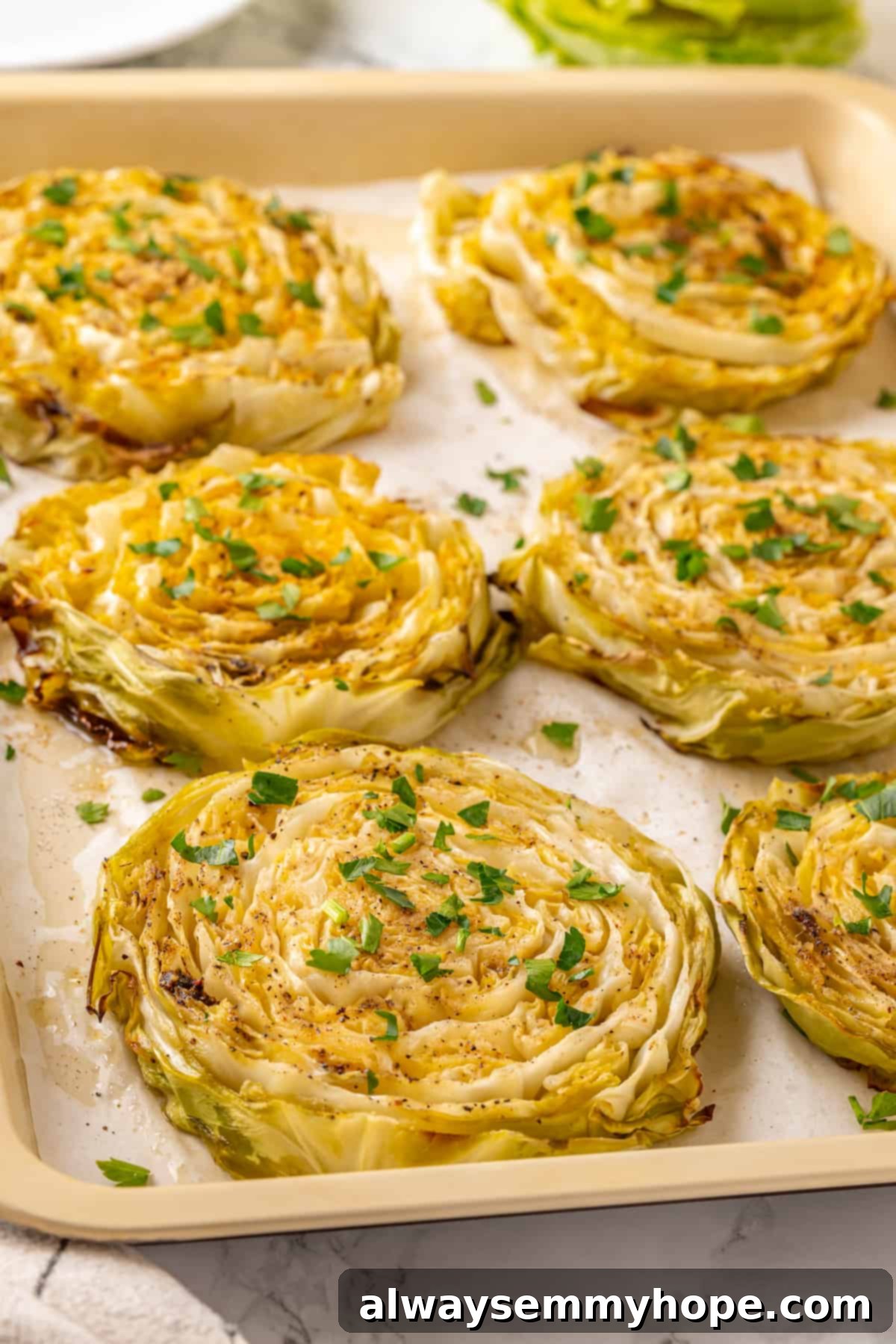
Why You’ll Love This Roasted Cabbage Steaks Recipe
This recipe for roasted cabbage steaks isn’t just another way to cook a vegetable; it’s a culinary experience that brings out the best in cabbage. Here’s why you’ll be adding this to your regular meal rotation:
- Cabbage Like You’ve Never Had It Before: Prepare to be amazed! Unlike raw cabbage in slaw or the often-mushy texture of boiled versions, these cabbage steaks undergo a magical transformation in the oven. The high heat caramelizes the natural sugars, resulting in a sweet, savory, and incredibly tender interior. Simultaneously, the outer leaves and edges become wonderfully crisp and deeply browned, offering a delightful crunch that contrasts beautifully with the soft center. It’s a sophisticated flavor profile that truly redefines how you perceive this cruciferous vegetable.
- Quick, Easy, and Minimal Effort: Perfect for busy weeknights or when you need a simple yet impressive side dish. This recipe requires just a few basic ingredients and minimal hands-on prep time. Slice, season, and roast – that’s it! The oven does most of the work, freeing you up to focus on your main course or simply relax. From start to finish, you can have a gourmet-tasting side on your table in under 40 minutes.
- Incredibly Versatile for Any Meal: The neutral yet delicious base of roasted cabbage means it can be flavored to match almost any cuisine. Our suggested seasoning blend is universally appealing, but you can easily swap it for smoky paprika, spicy chili, zesty herbs like rosemary and thyme, or a vibrant Asian-inspired glaze. Beyond flavor, these steaks are versatile in their role; serve them as a hearty side dish, or transform them into a satisfying main course by pairing them with a protein like crispy tofu or lentils, or even layering them over creamy polenta or grains.
- Budget-Friendly and Nutritious: Cabbage is one of the most economical vegetables available, making this recipe a fantastic choice for anyone looking to enjoy more plant-based meals without overspending. Despite its low cost, cabbage is packed with vitamins (C and K), fiber, and antioxidants, offering significant health benefits. It’s a smart way to boost your vegetable intake while sticking to a budget.
- Naturally Vegan and Gluten-Free: This recipe is inherently plant-based and gluten-free, making it suitable for a wide range of dietary preferences and restrictions. It’s a wonderful option for catering to guests with different needs, ensuring everyone can enjoy a delicious and wholesome dish.
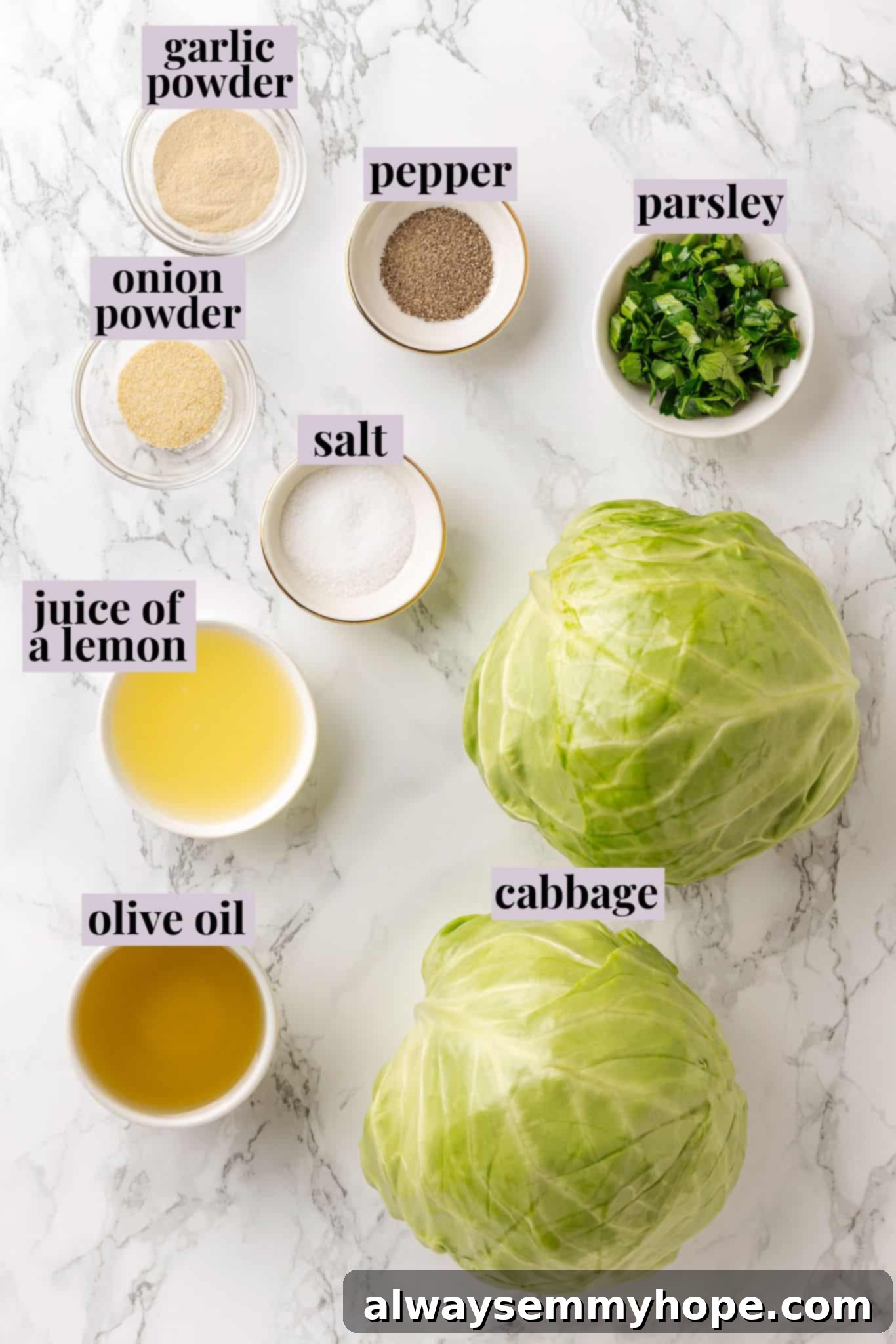
Notes on Ingredients
Creating these delightful cabbage steaks requires just a handful of simple ingredients. Each component plays a crucial role in developing the rich flavors and perfect texture:
Scroll down to the recipe card to find the precise ingredient quantities and detailed recipe instructions.
- Cabbage – For this recipe, we typically use standard green cabbage. When selecting your cabbage, look for a head that feels heavy for its size and has tightly packed leaves. A firm cabbage will be much easier to slice into uniform “steaks” and hold together better during roasting. While green cabbage is traditional, you can also experiment with red cabbage for a pop of color, though it tends to have a slightly bolder flavor and may require a touch more acid to maintain its vibrant hue.
- Olive oil – A good quality olive oil is essential here. It acts as the vehicle for our seasonings, helps create those desirable crispy edges, and facilitates the caramelization process, contributing to the rich, roasted flavor. Extra virgin olive oil adds a pleasant fruity note, but any standard olive oil will work well.
- Seasonings – Our all-purpose blend includes:
- Salt: Crucial for enhancing all the natural flavors of the cabbage. Don’t be shy with the salt; it’s key to bringing out the vegetable’s sweetness.
- Ground black pepper: Adds a subtle warmth and a gentle aromatic kick, balancing the overall seasoning.
- Garlic powder: Provides a savory, umami depth that becomes incredibly addictive when roasted. It’s a foundational flavor in many delicious dishes.
- Onion powder: Complements the garlic powder, offering a sweeter, more mellow allium flavor that deepens the savory profile without the moisture content of fresh onion.
- Lemon – Freshly squeezed lemon juice is a must. Added at the end, it brightens the entire dish, cutting through the richness of the roasted cabbage and adding a much-needed zing that elevates the flavors. Bottled lemon juice can be used in a pinch, but fresh is always superior for its vibrant aroma and taste.
- Fresh parsley – Used as a garnish, fresh chopped parsley adds a beautiful splash of color and a fresh, herbaceous note that provides a lovely finish to the dish. If you don’t have parsley, fresh chives or even a sprinkle of dried herbs like oregano or thyme could work, but parsley offers a unique freshness.
What’s the Best Way to Cut Cabbage for Cabbage Steaks?
Properly cutting your cabbage is crucial for achieving perfect cabbage steaks. The goal is to keep the core intact in each slice, which acts as a natural binder, holding the leaves together during the roasting process. Here’s how to do it:
- Start by placing the whole head of cabbage on a sturdy cutting board with the root end facing down. This provides a stable base.
- Using a sharp chef’s knife, carefully cut the cabbage into 1-inch-thick slices. Begin from one side and work your way across the head. It’s important to aim for uniform thickness, as this ensures even cooking for all your “steaks.”
- As you slice, ensure that a portion of the core remains in each piece. This is the key to preventing the cabbage leaves from falling apart as they cook.
- Don’t fret if a few outer leaves or smaller pieces fall off during cutting! These can be roasted right alongside your larger steaks. They’ll crisp up beautifully and make for delicious, crunchy little bites, often becoming a favorite snack straight from the pan.
A sharp knife is your best friend here, making the task safer and easier, resulting in cleaner cuts and more intact steaks.
How to Make Roasted Cabbage Steaks
Making these flavorful cabbage steaks is incredibly simple, with just a few steps standing between you and a wonderfully satisfying side dish. Follow these instructions for perfect results every time:
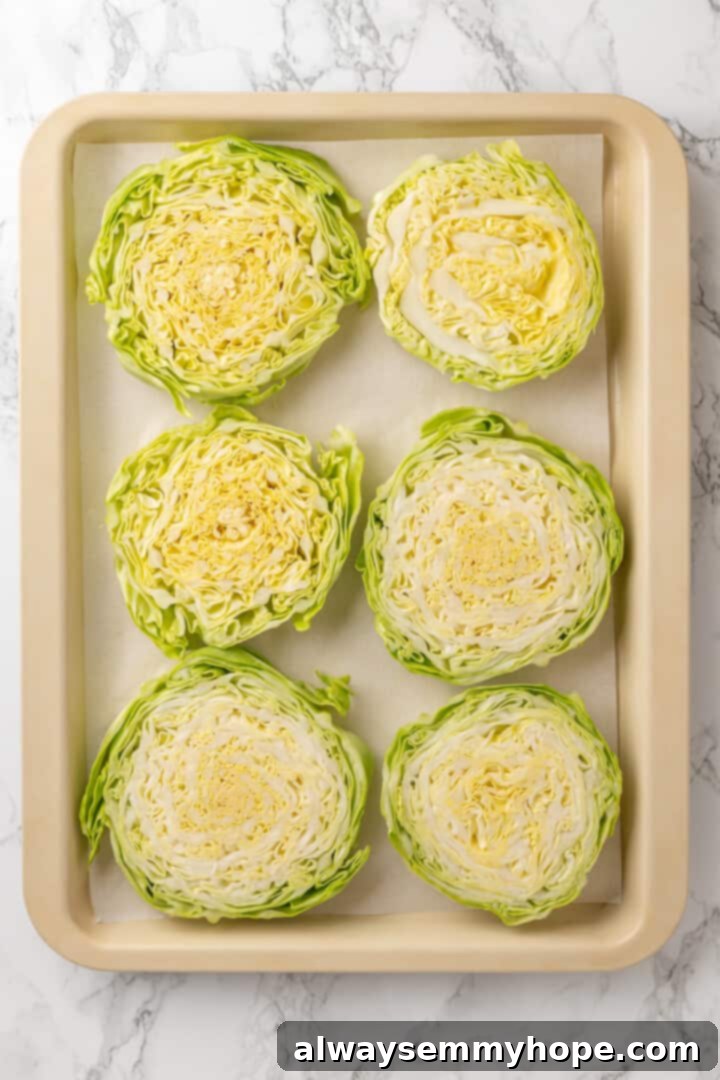
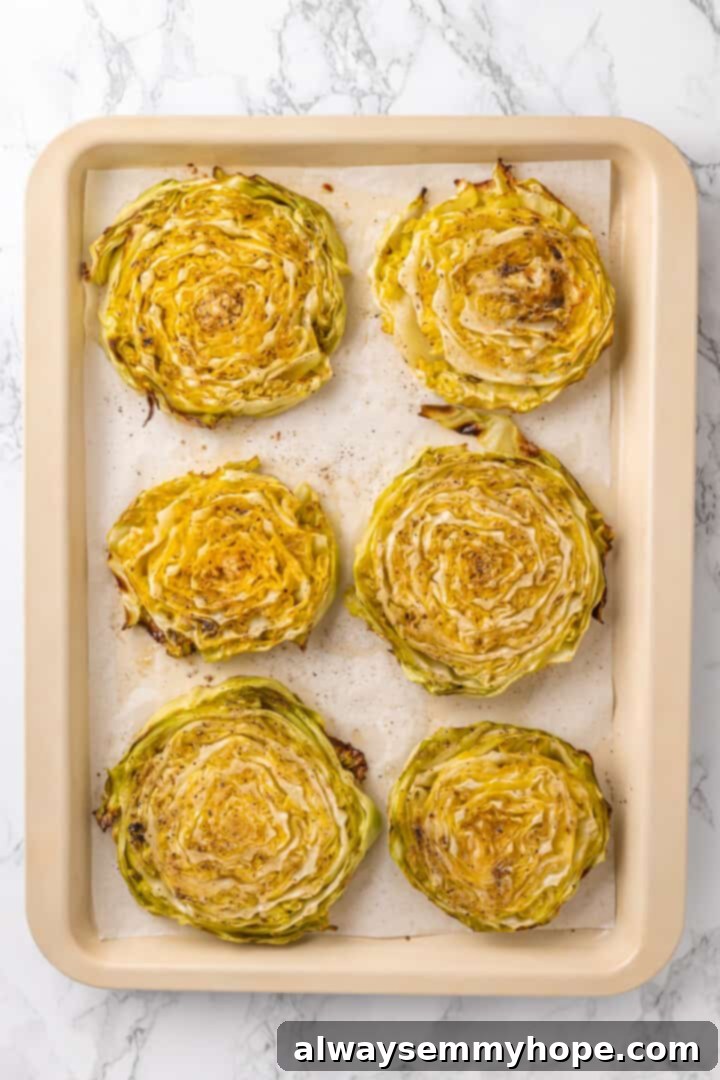

- Prepare Your Oven and Baking Sheet. Begin by preheating your oven to 400°F (200°C). This high temperature is key to achieving that perfect caramelization and crispiness. While the oven heats, line a large baking sheet with parchment paper. Parchment paper prevents sticking, ensures easy cleanup, and helps in achieving even browning. Arrange your carefully cut cabbage steaks on the prepared baking sheet in a single layer, ensuring they have enough space between them.
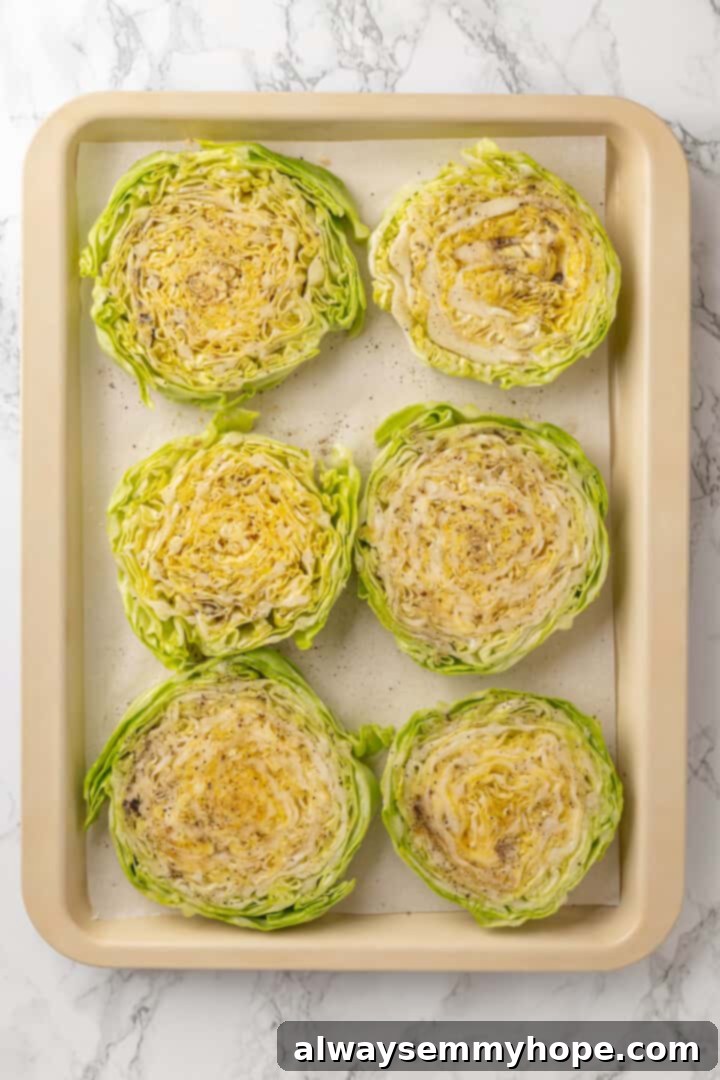
- Season the Cabbage Steaks. In a small bowl, whisk together the olive oil, salt, ground black pepper, garlic powder, and onion powder until well combined. This creates a flavorful coating. Using a pastry brush or the back of a spoon, generously brush this aromatic mixture onto both sides of each cabbage steak. Make sure every surface is well-coated to infuse maximum flavor and encourage browning. Don’t forget any loose leaves you’ve saved!
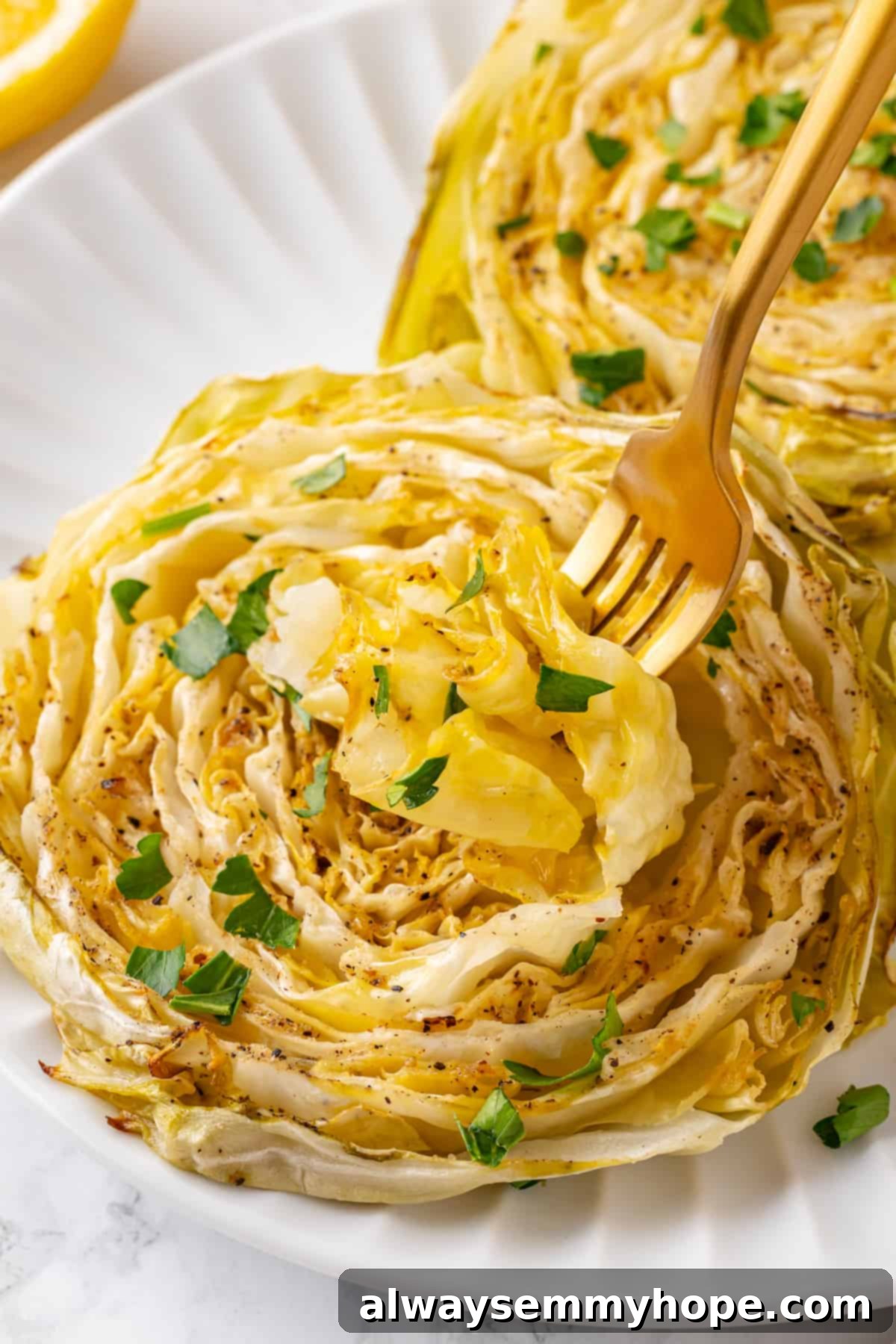
- Cook to Perfection. Transfer the baking sheet with the seasoned cabbage steaks to your preheated oven. Roast for approximately 25 minutes. The exact cooking time may vary slightly depending on your oven and the thickness of your cabbage slices. You’ll know they’re ready when they are beautifully tender when pierced with a fork, and the edges have turned a lovely golden brown and become delightfully crispy. Keep an eye on them towards the end to prevent over-browning.
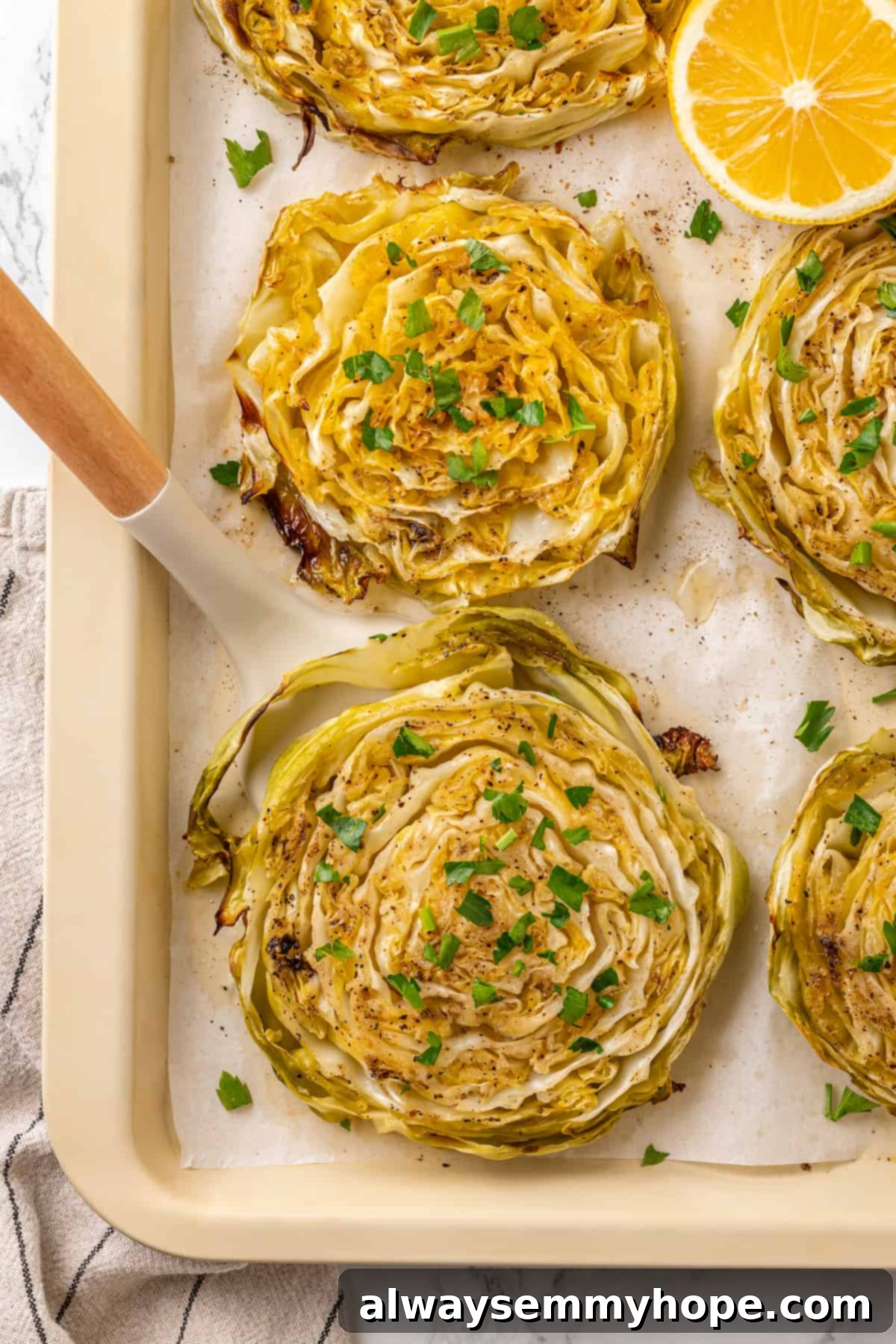
- Garnish and Serve. Once cooked, carefully remove the tender and caramelized cabbage steaks from the oven. For a burst of freshness and acidity, immediately drizzle them with freshly squeezed lemon juice. Finally, sprinkle generously with chopped fresh parsley for a vibrant color contrast and an herbaceous finish. Serve these delicious cabbage steaks warm and enjoy them as a fantastic side dish or a light main course.
Tips for Success
Achieving perfectly roasted cabbage steaks is straightforward, but a few key tips can elevate your results from good to absolutely outstanding:
- Don’t Crowd the Cabbage: This is perhaps the most critical tip for crispy, caramelized cabbage. If you pack too many cabbage steaks onto a single baking sheet, they will release moisture and effectively steam instead of roast. This prevents the edges from browning and becoming deliciously crisp. For best results, arrange the steaks in a single layer with ample space around each piece for air to circulate. If necessary, use two baking sheets to ensure proper spacing.
- Choose a Firm, Fresh Cabbage: The quality of your cabbage directly impacts the ease of preparation and the final texture. Opt for a head of cabbage that feels dense and heavy for its size, with tightly wrapped, vibrant green leaves. A firm cabbage will be significantly easier to slice into uniform, intact “steaks” because the leaves are less likely to separate. Freshness also contributes to a sweeter flavor profile when roasted.
- Monitor and Remove Browned Parts as Needed: As the cabbage roasts, some smaller, thinner leaves or edges might brown faster than the thicker parts of the steaks. To prevent these delicate pieces from burning and turning bitter, don’t hesitate to remove any overly browned or crispy loose leaves from the baking sheet as they cook. You can then return the remaining steaks to the oven to finish roasting. This ensures that every part of your dish is cooked to perfection, avoiding any burnt bits.
- Consistent Slice Thickness: Aim for roughly 1-inch thick slices. This thickness allows the cabbage to become tender and caramelized without becoming mushy, while still retaining enough structure to be called a “steak.” Thinner slices might cook too quickly and become overly crispy, while thicker slices might take too long to tenderize.
- High Heat is Your Friend: Roasting at 400°F (200°C) is essential. This high temperature helps to quickly brown the exterior and develop those coveted crispy edges and sweet caramelization, which are the hallmarks of a great roasted vegetable.
Flavorful Variations to Try
While our classic garlic and onion seasoned cabbage steaks are undeniably delicious, their mild flavor makes them incredibly adaptable to a variety of culinary styles. Don’t hesitate to get creative with your seasonings!
- Asian-Inspired Cabbage Steaks: For a vibrant, umami-rich twist, brush your cabbage steaks with a mixture of soy sauce (or tamari for gluten-free), toasted sesame oil, a touch of agave or maple syrup for sweetness, and a pinch of chili flakes for a subtle heat. Once roasted, garnish these savory steaks with a sprinkle of sesame seeds and sliced green onions. They pair wonderfully with rice dishes or stir-fries.
- Simple & Savory Cabbage Steaks: If you’re looking for an even quicker preparation, simply brush the cabbage with olive oil and then sprinkle generously with your favorite seasoning salt or a blend of salt, pepper, and a dash of smoked paprika. This minimalist approach allows the natural sweetness of the caramelized cabbage to truly shine.
- Cheesy Cabbage Steaks: For a comforting and rich flavor, after brushing the steaks with olive oil, sprinkle them with a generous amount of vegan Parmesan cheese before roasting. The cheese will melt and crisp up, creating a delicious crust. If you’re using homemade vegan Parmesan that’s more powder-like, it’s best to add it towards the last 5-10 minutes of roasting, or even after the cabbage has finished roasting, to prevent it from burning.
- Spicy Cabbage Steaks: Add a kick by incorporating a pinch of cayenne pepper, red pepper flakes, or even a smoky chipotle powder into your olive oil mixture. This adds a delightful warmth that complements the sweetness of the roasted cabbage.
- Herby Cabbage Steaks: Elevate the aromatic profile by adding finely chopped fresh rosemary, thyme, or oregano to your seasoning blend. These herbs infuse the cabbage with a fragrant, earthy depth that’s particularly lovely in cooler months.
Serving Suggestions
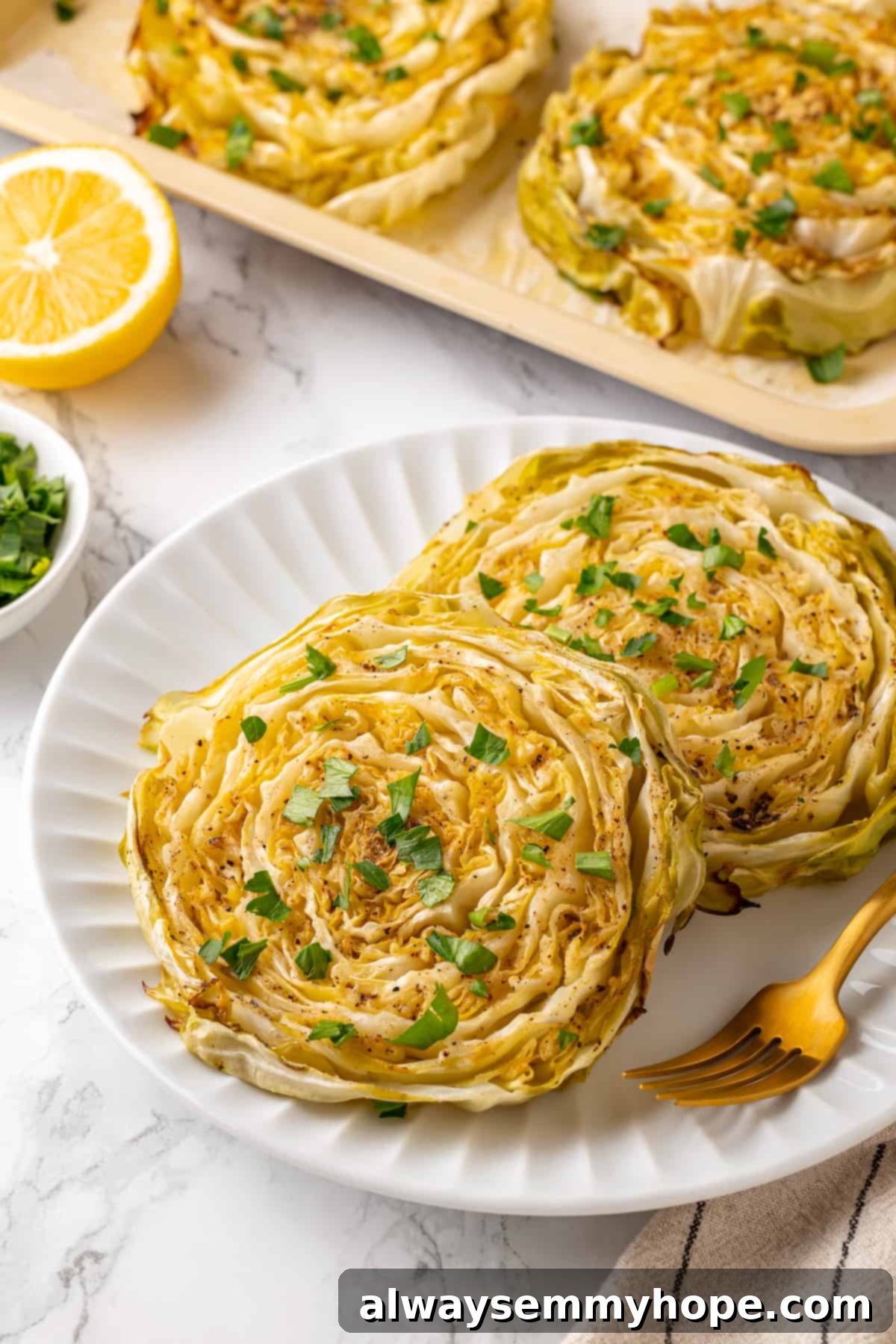
Roasted cabbage steaks are incredibly versatile and can enhance a wide array of meals. Whether you choose to serve them as a stellar side or elevate them to a main dish, their delicious flavor and satisfying texture make them a fantastic addition to your table.
As an excellent side dish, they pair beautifully with hearty main courses such as vegan chicken, bright and zesty lemon pepper tofu, or savory lentil balls with zesty rice. Their tender, caramelized nature and crispy edges offer a delightful contrast to many protein-rich dishes. They also make a surprisingly great companion to classic roasted vegetables like carrots or potatoes, adding another layer of flavor and texture to a larger veggie feast.
To transform these flavorful cabbage steaks into a satisfying main dish, consider serving them atop a bed of creamy polenta or a rich Instant Pot risotto. The tender cabbage with its crispy bits provides a wonderful textural contrast to the soft grains. For added protein and crunch, scatter some crispy roasted chickpeas over the top. You could even serve them alongside another kind of veggie steak, like cauliflower steaks, for a plant-powered entrée that’s both substantial and full of flavor. Don’t forget a dollop of your favorite vegan sour cream or a drizzle of a creamy tahini sauce to complete the meal.
How to Store and Reheat Leftovers
Should you be lucky enough to have any leftover cabbage steaks, proper storage and reheating will ensure they remain delicious for future meals.
To store leftovers, allow the roasted cabbage steaks to cool completely to room temperature. Then, transfer them to an airtight container and refrigerate for up to 3-4 days. Storing them in an airtight container helps maintain their freshness and prevents them from absorbing other odors in the fridge.
When you’re ready to enjoy them again, reheating methods vary based on your preference for texture:
- Oven: For the best results and to help restore some of their original crispiness, reheat the cabbage steaks in the oven. Place them on a baking sheet and warm them at 350°F (175°C) for about 10-15 minutes, or until heated through and the edges have crisped up again.
- Air Fryer: The air fryer is another excellent option for quick reheating and achieving a crispy texture. Reheat at 375°F (190°C) for 5-7 minutes, shaking the basket halfway through, until hot and crispy.
- Microwave: If time is of the essence and crispiness isn’t your top priority, you can reheat cabbage steaks in the microwave. Heat on high for 1-2 minutes, or until warmed through. Be aware that this method will result in a softer texture.
It’s generally not recommended to freeze cabbage steaks. Due to cabbage’s high water content, freezing and thawing will cause the texture to become very mushy, losing the desirable firm-yet-tender consistency that makes this dish so appealing. It’s best to enjoy them fresh or as refrigerated leftovers.
More Delicious Cabbage Recipes to Explore
If you’ve discovered a new love for cabbage through these steaks, there are many other fantastic ways to incorporate this versatile vegetable into your diet. Here are some more of our favorite cabbage-centric recipes:
- Hearty Cabbage Roll Soup: All the flavors of traditional cabbage rolls in a comforting, easy-to-make soup.
- Crispy Zucchini Tacos with Crunchy Cabbage Slaw & Lime Crema: A vibrant and textural taco experience, highlighting fresh cabbage slaw.
- Quick Pickled Cabbage (+ How To Pickle Any Vegetable): Add a tangy, crunchy element to sandwiches, salads, or tacos with this simple pickling method.
- BBQ Chickpea Tacos with Kale Cabbage Slaw: A flavorful and satisfying taco recipe featuring a hearty slaw.
Enjoy these delightful recipes, friends! If you make this roasted cabbage steaks recipe, we would absolutely love to see your creations. Please snap a photo and tag #jessicainthekitchen on Instagram! Your feedback means the world to us, so we’d also love it if you would leave a comment below and give the recipe a rating! Thanks so much for being here!

Roasted Cabbage Steaks
Pin Recipe
Leave a Review
Ingredients
- 2 large heads of green cabbage
- ⅓ cup olive oil, 78 ml
- 1 teaspoon salt, 6 grams
- ½ teaspoon ground black pepper, 1 gram
- 2 teaspoons garlic powder, 6 grams
- 1 teaspoon onion powder, 2.4 grams
- Juice of 1 fresh lemon
- ¼ cup chopped fresh parsley, 15 grams, for garnish
Instructions
- Preheat the oven to 400°F (200°C). Line a large baking sheet with parchment paper to prevent sticking and ensure easy cleanup.
- Carefully trim the very bottom of the stem ends of the cabbage heads, then place each cabbage head on your cutting board with the root end down. Using a sharp chef’s knife, cut each cabbage into 1-inch thick slices, creating “steaks.” Ensure the core remains intact in each slice to hold the leaves together. Place the cabbage steaks in a single layer on the prepared baking sheet, making sure not to overcrowd the pan.
- In a small bowl, whisk together the olive oil, salt, black pepper, garlic powder, and onion powder until well combined. Using a pastry brush, generously brush this seasoning mixture onto both sides of each cabbage steak, ensuring they are thoroughly coated.
- Roast the cabbage steaks in the preheated oven for 25 minutes, or until they are tender when pierced with a fork, and the edges are beautifully golden brown and slightly crispy. Cooking time may vary based on oven and thickness.
- Once roasted, remove the steaks from the oven. Immediately drizzle them with the fresh lemon juice for a bright finish, and garnish generously with chopped fresh parsley before serving warm.
Notes
Disclaimer: Although jessicainthekitchen.com attempts to provide accurate nutritional information, kindly note that these are only estimates. Nutritional information may be affected based on the product type, the brand that was purchased, and in other unforeseeable ways. Jessicainthekitchen.com will not be held liable for any loss or damage resulting for your reliance on nutritional information. If you need to follow a specific caloric regimen, please consult your doctor first.