
Nourishing Gentle Morning Kitchari: An Energizing Vegan Breakfast Recipe for Holistic Wellness
Start your day with a warm, comforting hug in a bowl: this incredible Gentle Morning Kitchari recipe. This traditional Ayurvedic dish is not just a meal; it’s a soothing ritual that perfectly balances your body and mind, setting a harmonious tone for the hours ahead. Rich, creamy, and brimming with aromatic Indian spices, this vegan kitchari offers sustained energy and deep satisfaction, making it an ideal breakfast choice that will leave you feeling fully revitalized and ready to conquer your day!

There’s something truly special about starting the day with a savory, wholesome meal, and this gentle morning kitchari stands out as one of my absolute favorites. Imagine a delightful blend of protein-rich lentils and fluffy rice, infused with authentic Indian spices and fresh vegetables, all cooked together in a single pot. Its texture is beautifully reminiscent of a creamy porridge, making it an incredibly comforting and easy-to-digest breakfast dish. Beyond its delicious taste, this kitchari is designed to nourish your body from the inside out, providing a genuine kickstart to your day without the usual sugar crash.
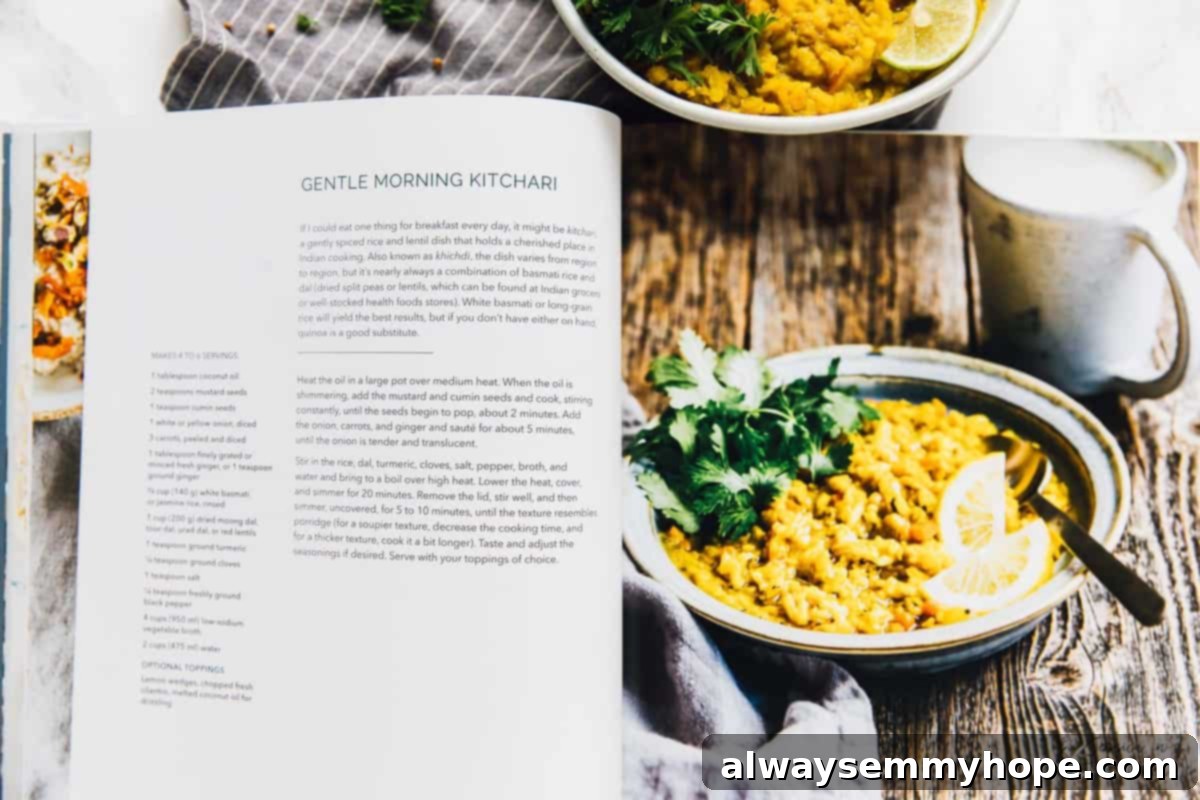
My introduction to the wonderful world of kitchari came through the insightful cookbook “Power Plates,” authored by my talented friend, Gena. This ancient Indian dish, deeply rooted in Ayurvedic healing traditions, has a profound impact on well-being, and it’s easy to see why. Kitchari is renowned for its ability to gently cleanse and rejuvenate the body, often used during detox periods, yet it tastes so incredibly delicious and satisfying that you’ll want to incorporate it into your regular meal rotation. It’s a truly restorative meal that feels like a reset button for your digestive system while delighting your taste buds with its rich, aromatic flavors.
Why You’ll Adore This Gentle Morning Kitchari Recipe
This isn’t just another recipe; it’s an invitation to elevate your morning routine with a meal that truly makes a difference. Here’s why this gentle morning kitchari will quickly become a cherished favorite in your kitchen:
- A Refreshing Alternative for Breakfast. In a culinary landscape often dominated by sweet breakfast options like pancakes, pastries, and sugary cereals, finding savory alternatives can be a challenge, especially for those following a vegan diet. This kitchari breaks the mold, offering a uniquely satisfying and flavorful start to your day. Its warm, spiced profile is something genuinely exciting to look forward to each morning, providing a welcome change from the usual.
- Sustained Fuel for Optimal Performance. Forget the temporary energy spikes and inevitable crashes that come with carb-heavy bagels, donuts, or sweetened cereals. This vegan kitchari recipe is a powerhouse of nutrition, thanks to the harmonious blend of fiber-rich lentils, complex carbohydrates from the rice, and nutrient-dense vegetables. This combination ensures a slow and steady release of energy, keeping you feeling full, satisfied, and focused for hours. You’ll be surprised how effectively it can replace your usual morning coffee habit, providing natural, sustained vitality!
- Perfect for Efficient Meal Prep. Life gets busy, but nourishing yourself shouldn’t be a chore. This kitchari recipe is an absolute dream for meal prepping. Dedicate a little time to make a larger batch over the weekend, and you’ll have delicious, comforting, and healthy breakfasts (or lunches!) ready to go for the entire week. It reheats beautifully, making busy mornings incredibly simple and stress-free.
- A Boost for Digestive Health. Rooted in Ayurvedic principles, kitchari is specifically designed to be gentle on the digestive system. The combination of split lentils and rice, along with warming, anti-inflammatory spices like ginger and turmeric, aids digestion, reduces bloating, and promotes gut health. It’s a nourishing meal that helps balance your internal system.
- Hearty, Wholesome & Vegan. This recipe is naturally vegan and packed with plant-based protein, making it incredibly hearty and satisfying. It’s a complete meal that provides essential nutrients without any animal products, perfect for anyone seeking a compassionate and healthy lifestyle.

Essential Ingredients for Your Vegan Kitchari
Creating this nourishing gentle morning kitchari requires a thoughtful selection of ingredients, each playing a vital role in its flavor, aroma, and nutritional profile. Below is a detailed breakdown of what you’ll need. For precise measurements, please refer to the comprehensive recipe card at the bottom of the page.
- Coconut oil: This provides a wonderfully rich, slightly sweet base for sautéing our spices and vegetables. It imparts a subtle tropical hint that complements the Indian flavors beautifully.
- Mustard seeds: When tempered in hot oil, these tiny seeds pop and release a distinct, pungent, and earthy flavor that is characteristic of many Indian dishes.
- Cumin seeds: Offering a warm, slightly bitter, and earthy aroma, cumin seeds are essential for building the aromatic foundation of the kitchari.
- Yellow onion: Diced yellow onion provides a sweet and savory base. If you don’t have a yellow onion on hand, a white onion, red onion, or even a couple of shallots can be used as suitable substitutes.
- Carrots: Adding a touch of natural sweetness, vibrant color, and an extra layer of nutrients, diced carrots blend seamlessly into the porridge-like texture.
- Fresh ginger: Grated or minced fresh ginger is paramount for this recipe. Its pungent, warming, and slightly spicy notes are crucial for both flavor and its well-known digestive benefits in Ayurveda. While fresh is always superior, ground ginger (about 1 teaspoon) can be used in a pinch, though the fresh zing will be missed.
- Basmati rice: Known for its fragrant aroma and long, slender grains, basmati rice cooks up light and fluffy, contributing to the comforting texture of kitchari. Jasmine rice is a perfectly acceptable alternative, offering a similar soft consistency and subtle fragrance. Remember to rinse your rice thoroughly to remove excess starch.
- Dal: The heart of kitchari! You can choose between moong dal, toor dal, urad dal, or red lentils. Each offers a slightly different texture and mild flavor profile, all perfect for this dish. More on dal below!
- Ground turmeric: This golden spice is a cornerstone of Indian cooking, revered for its vibrant color, earthy flavor, and powerful anti-inflammatory properties. It’s a key player in kitchari’s health benefits.
- Ground cloves: A small amount of ground cloves adds a warm, sweet, and aromatic depth, elevating the overall spice blend without overpowering it.
- Salt: Essential for enhancing all the other flavors in the dish.
- Ground pepper: Make sure to use freshly-ground black pepper. Not only does it add a sharp, pungent kick, but it also significantly boosts the absorption of turmeric’s beneficial compounds, making your kitchari even healthier.
- Vegetable broth: Using a high-quality vegetable broth adds a foundational layer of savory flavor. Opt for a low-sodium variety to control the salt content. Better yet, consider using my homemade vegetable broth recipe for an unparalleled depth of flavor.
- Water : To achieve the perfect creamy, porridge-like consistency.
Unpacking “What is Dal?”
In the vast and diverse world of Indian cuisine, “dal” is a wonderfully comprehensive term. It refers broadly to dried, split pulses – which include lentils, peas, and beans – that have been husked. These legumes are a staple in Indian households, prized for their nutritional value, versatility, and ability to create comforting, wholesome dishes like kitchari.
For our gentle morning kitchari, several types of dal are excellent choices:
- Moong Dal: Also known as split yellow mung beans or green gram beans, these are yellow lentils that come from green mung beans once the skin is removed and they are split. Moong dal is incredibly easy to digest, which is why it’s often preferred in Ayurvedic cooking and for kitchari specifically. It cooks quickly and yields a very creamy, soft texture.
- Toor Dal: Also called pigeon peas, toor dal is a popular yellow split pea with a slightly nutty flavor. It creates a thicker, heartier kitchari and is widely used in South Indian dishes.
- Urad Dal: These are black lentils, often used whole with their skins or split (dhuli urad dal) where they appear white. Urad dal gives a distinct, somewhat earthy flavor and a wonderfully smooth, creamy texture to kitchari.
- Red Lentils (Masoor Dal): These are perhaps the most common and easiest to find. Red lentils cook very quickly and break down beautifully, creating a naturally thick and creamy consistency perfect for a comforting kitchari. Their mild flavor makes them a versatile choice.
Each of these dal varieties offers a unique flavor and texture profile that is perfectly suited for kitchari, contributing to its comforting, nourishing, and deeply satisfying character. They are all rich in plant-based protein and fiber, making this kitchari an incredibly wholesome meal.
Crafting Your Gentle Morning Kitchari: A Simple Step-by-Step Guide
Making this comforting kitchari is a straightforward process, largely a one-pot wonder that minimizes cleanup and maximizes flavor. Follow these easy steps to bring this nourishing dish to life:
- Temper the Spices (Tadka). Begin by heating the coconut oil in a large, heavy-bottomed pot or Dutch oven over medium heat. Once the oil is shimmering, carefully add the mustard seeds and cumin seeds. Cook, stirring continuously, for about 1-2 minutes until you hear the mustard seeds begin to pop and the cumin seeds release their fragrant aroma. This process, known as tempering or “tadka,” is crucial for unlocking the full flavor potential of the spices.
- Sauté the Aromatics and Veggies. Immediately after tempering the spices, add the diced onion, carrots, and grated fresh ginger to the pot. Sauté these ingredients for approximately 5-7 minutes, stirring occasionally, until the onion becomes soft and translucent, and the carrots begin to tenderize slightly. This step builds the savory base of your kitchari.
- Combine All Ingredients. Once the vegetables are softened, stir in the rinsed basmati or jasmine rice, your chosen dal (moong, toor, urad, or red lentils), ground turmeric, ground cloves, salt, freshly ground black pepper, vegetable broth, and water. Give everything a good stir to ensure all ingredients are well combined and the spices are evenly distributed throughout the liquid.
- Simmer to Perfection. Increase the heat to high and bring the mixture to a rolling boil. As soon as it boils, reduce the heat to low, cover the pot tightly with a lid, and let it simmer gently for 20 minutes. After 20 minutes, remove the lid and stir well. Continue to simmer uncovered for an additional 5-10 minutes, or until the kitchari reaches your desired creamy, porridge-like texture. If you prefer a soupier consistency, you can reduce the uncovered simmering time or add a splash more broth or water. For a thicker kitchari, cook a little longer.
- Serve and Garnish. Once your kitchari has reached its ideal consistency, taste and adjust any seasonings if necessary. Ladle it hot into bowls and finish with your favorite optional toppings. Fresh lemon or lime wedges, a sprinkle of chopped cilantro, or a drizzle of melted coconut oil are wonderful additions that brighten the flavors and add an extra layer of enjoyment.
Mastering Your Kitchari: Expert Tips for the Best Results
While kitchari is a humble dish, a few simple techniques can elevate it from good to absolutely outstanding. Here are my top tips for achieving perfect results every time:
- Embrace Homemade Broth for Superior Flavor. While store-bought vegetable broth is certainly convenient, nothing quite compares to the depth and richness of a homemade broth. In a dish like kitchari, where the liquid forms the base of the flavor, a homemade broth truly shines, adding layers of savory complexity that elevate the entire meal. If you have the time, I highly recommend using your own.
- Customize the Texture to Your Preference. Kitchari is much like oatmeal in that personal preference dictates the ideal consistency. Some enjoy a very thick, almost solid kitchari, while others prefer it looser and more soup-like. If you lean towards a thicker consistency, simply cook it a little longer during the uncovered simmering stage. For a runnier, more liquid gentle morning kitchari, reduce the cooking time or add an extra splash of water or broth until it reaches your desired fluidity. Don’t be afraid to experiment!
- Layer on the Toppings for Maximum Flavor and Fun. While this kitchari is fantastic on its own, a generous array of toppings can transform it into an even more exciting and visually appealing dish. Beyond the classic fresh lemon or lime wedges, chopped cilantro, and a drizzle of melted coconut oil, consider these delicious additions:
- Toasted Nuts: Crushed toasted cashews or almonds add a delightful crunch and nutty flavor.
- Fresh Herbs: Mint, parsley, or green onions provide a fresh burst of flavor.
- Spicy Kick: A dash of your favorite hot sauce, a sprinkle of red pepper flakes, or finely diced green chilies.
- Creaminess: A dollop of dairy-free yogurt or a swirl of cashew cream.
- Sweet & Savory: A small spoonful of mango chutney or a sprinkle of toasted coconut flakes for a hint of sweetness.
- Extra Veggies: Sautéed spinach, roasted bell peppers, or steamed greens can be stirred in at the end.
- Rinse Your Rice and Dal Thoroughly. Rinsing your basmati rice and dal under cold running water until the water runs clear is a crucial step. This removes excess starch, which prevents the kitchari from becoming overly gummy and ensures a lighter, fluffier texture.
- Consider Soaking Your Dal. For certain types of dal (especially harder varieties like toor or urad), a pre-soak of 30 minutes to an hour can significantly reduce cooking time and improve digestibility. While not strictly necessary for quick-cooking red or moong dal, it can still lead to a creamier result.
- Don’t Rush the Spices. The initial tempering of the mustard and cumin seeds is not just about adding them to hot oil. Allow them to fully bloom and pop. This step is essential for building a deep, aromatic flavor base for your kitchari.

Storing and Reheating Your Kitchari for Future Enjoyment
One of the many benefits of this gentle morning kitchari is how wonderfully it stores and reheats, making it an ideal candidate for meal prep. Properly stored, you can enjoy its comforting flavors throughout the week.
Leftover kitchari will maintain its deliciousness and freshness in the fridge for up to 4 days. Always store it in an airtight container to preserve its flavor and prevent it from drying out. When you’re ready to enjoy it again, reheating is simple:
- Stovetop Method: Transfer the kitchari to a saucepan or small pot. Reheat it over medium heat for 3-5 minutes, stirring occasionally, until it’s warmed through to your liking. As kitchari can thicken significantly as it cools, you will likely want to add a splash or two of water or vegetable broth during reheating to restore its original creamy consistency.
- Microwave Method: For a quicker option, reheat individual portions in the microwave on medium heat. Cook in 30-second increments, stirring after each, until the kitchari is piping hot. Again, don’t forget to add a splash of water or broth before heating to prevent it from becoming too dry.
Can I Freeze This Gentle Morning Kitchari?
Absolutely, you can! This kitchari recipe is remarkably freezer-friendly, making it an excellent option for long-term meal planning. Stored in a properly sealed airtight container, it will last beautifully in the freezer for up to 6 months. This is perfect for having a healthy, comforting meal ready for those days when you have no time to cook.
To enjoy frozen kitchari, simply transfer it to the fridge to thaw overnight. Alternatively, you can use your microwave’s defrost setting before proceeding with the stovetop or microwave reheating methods described above. Remember to add a bit of liquid during reheating to achieve that perfect creamy consistency.

Explore More Indian & Lentil Recipes to Savor
If you’ve fallen in love with the comforting flavors of this kitchari, you’re in for a treat! The world of Indian cuisine and lentil-based dishes offers an incredible array of tastes and textures. Here are some more fantastic recipes you might enjoy trying:
- Homemade Garlic Naan: The perfect fluffy bread to accompany any Indian meal.
- Vegan Butter Chicken with Tofu: A rich and creamy plant-based take on a classic.
- Easy Chickpea Tikka Masala: A hearty and flavorful vegan curry that’s simple to make.
- Coconut Curry Lentil Soup: A warming and aromatic soup, perfect for any season.
- Butter Cauliflower: Another delightful vegan adaptation, showcasing tender cauliflower in a rich sauce.

Gentle Morning Kitchari (Vegan & Gluten-Free)
Ingredients
- 1 tablespoon coconut oil
- 2 teaspoons mustard seeds
- 1 teaspoon cumin seeds
- 1 white or yellow onion, diced
- 3 carrots, peeled and diced
- 1 tablespoon finely grated or minced fresh ginger, or 1 teaspoon ground ginger
- ¾ cup white basmati or jasmine rice, rinsed, (140g)
- 1 cup dried moong dal, toor dal, urad dal, or red lentils, (200g)
- 1 teaspoon ground turmeric
- ¼ teaspoon ground cloves
- 1 teaspoon salt
- ¼ teaspoon freshly ground black pepper
- 4 cups low-sodium vegetable broth, (950ml)
- 2 cups water, (475ml)
Optional Toppings
- lemon wedges
- chopped fresh cilantro
- melted coconut oil, for drizzling
Instructions
- Heat the coconut oil in a large, heavy-bottomed pot or Dutch oven over medium heat. Once the oil is shimmering, carefully add the mustard seeds and cumin seeds. Cook, stirring constantly, until the seeds begin to pop and release their aroma, typically about 2 minutes. Then, add the diced onion, carrots, and finely grated fresh ginger. Sauté for about 5-7 minutes, until the onion is tender and translucent.
- Stir in the rinsed basmati or jasmine rice, your chosen dal, ground turmeric, ground cloves, salt, freshly ground black pepper, vegetable broth, and water. Bring the mixture to a boil over high heat. Once boiling, reduce the heat to low, cover the pot tightly, and simmer for 20 minutes. After 20 minutes, remove the lid, stir everything well, and then continue to simmer, uncovered, for an additional 5 to 10 minutes. Cook until the kitchari reaches your desired creamy, porridge-like texture (decrease cooking time for a soupier texture, or cook longer for a thicker consistency). Taste and adjust seasonings as needed. Serve hot with your favorite optional toppings.
Notes
Disclaimer: Although jessicainthekitchen.com attempts to provide accurate nutritional information, kindly note that these are only estimates. Nutritional information may be affected based on the product type, the brand that was purchased, and in other unforeseeable ways. Jessicainthekitchen.com will not be held liable for any loss or damage resulting for your reliance on nutritional information. If you need to follow a specific caloric regimen, please consult your doctor first.