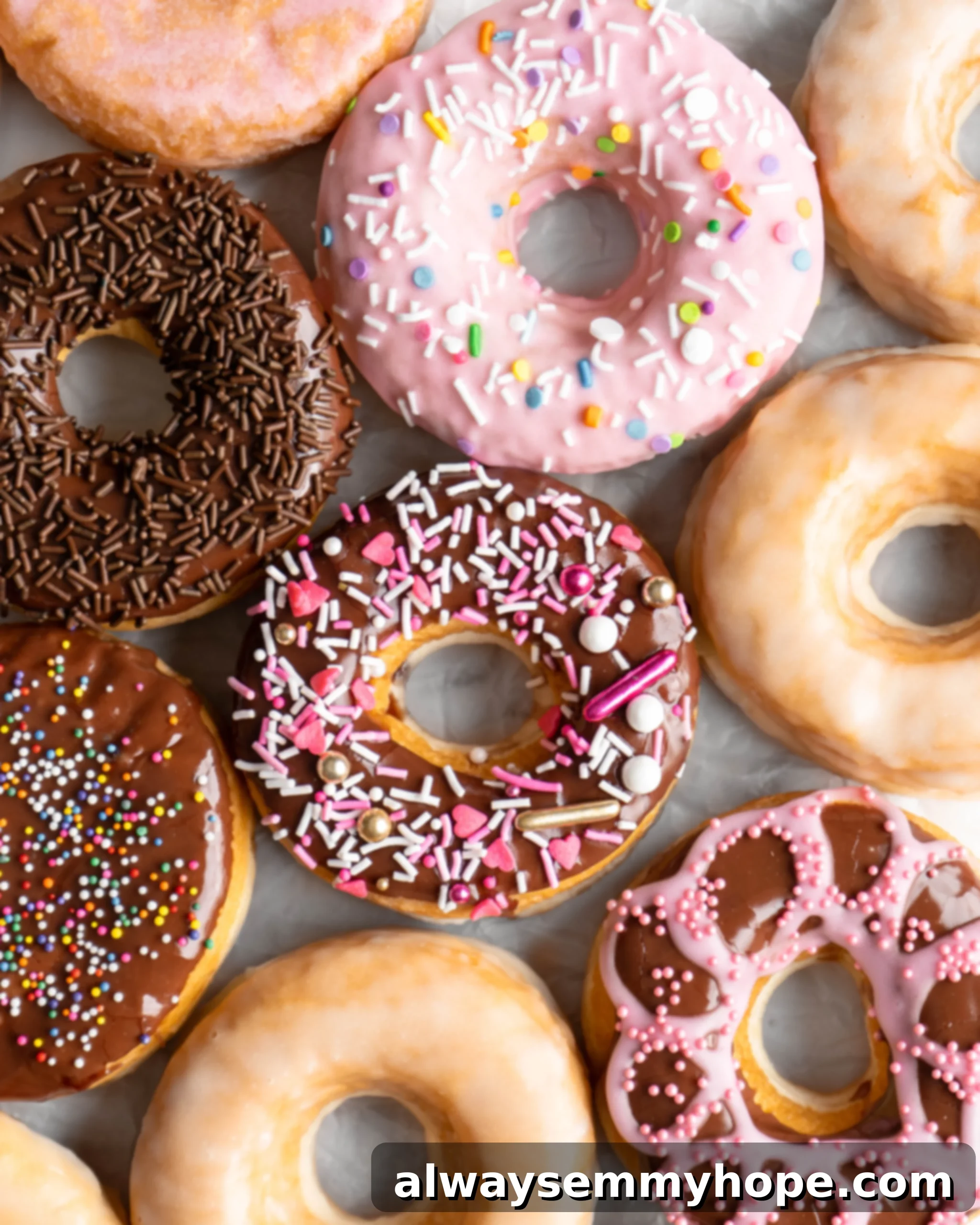
Irresistibly Soft & Sweet: The Ultimate Homemade Vegan Glazed Donuts (Krispy Kreme Copycat!)
Imagine biting into a donut that is incredibly soft, wonderfully warm, and perfectly coated in a shimmering, sweet glaze. Now imagine that delicious treat is entirely plant-based! These homemade vegan donuts are truly a dream come true for anyone who loves classic glazed donuts, delivering that melt-in-your-mouth experience reminiscent of your favorite donut shop, like Krispy Kreme. They’re the ideal indulgence for a special morning occasion, a delightful weekend project, or simply a spontaneous treat when the craving strikes.
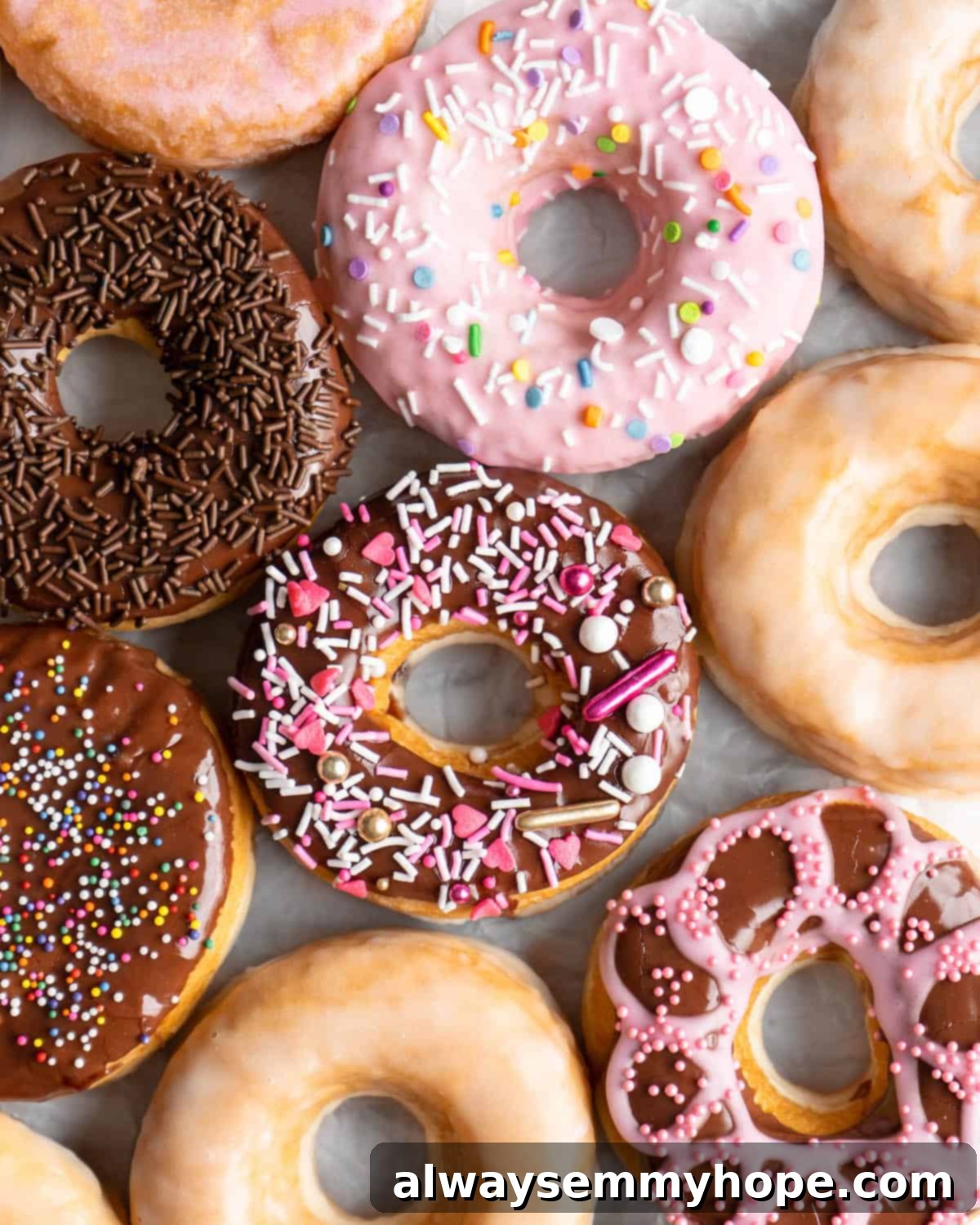
For years, I’ve enjoyed sharing a wide array of delicious breakfast ideas on Jessica in the Kitchen, from wholesome Banana Oatmeal Breakfast Cookies and refreshing Strawberry Coconut Overnight Oats to vibrant Coconut Kiwi Green Smoothie Bowls. But today, we’re diving into something a little more luxurious and utterly satisfying: classic vegan donuts. This recipe captures the nostalgic essence of traditional glazed donuts – light, airy, and coated in a perfect sugary sheen – but without any animal products. They truly are puffy, tender, and deliver a delightful crunch with every bite, making them practically impossible to resist. Because, let’s be honest, donuts are pure joy, and vegan donuts are even better!
As these are yeast-leavened donuts, they do require a bit of time for the dough to develop and rise, but I promise you, the effort is incredibly rewarding. There’s nothing quite like the experience of taking that first bite into a warm, freshly glazed homemade donut. The aroma alone is enough to transport you to your happiest memories, and the taste is pure bliss. This recipe transforms simple ingredients into an extraordinary treat, proving that vegan baking can be just as, if not more, delicious than its traditional counterparts.
Is It Better to Bake or Fry Donuts? The Deep-Frying Advantage
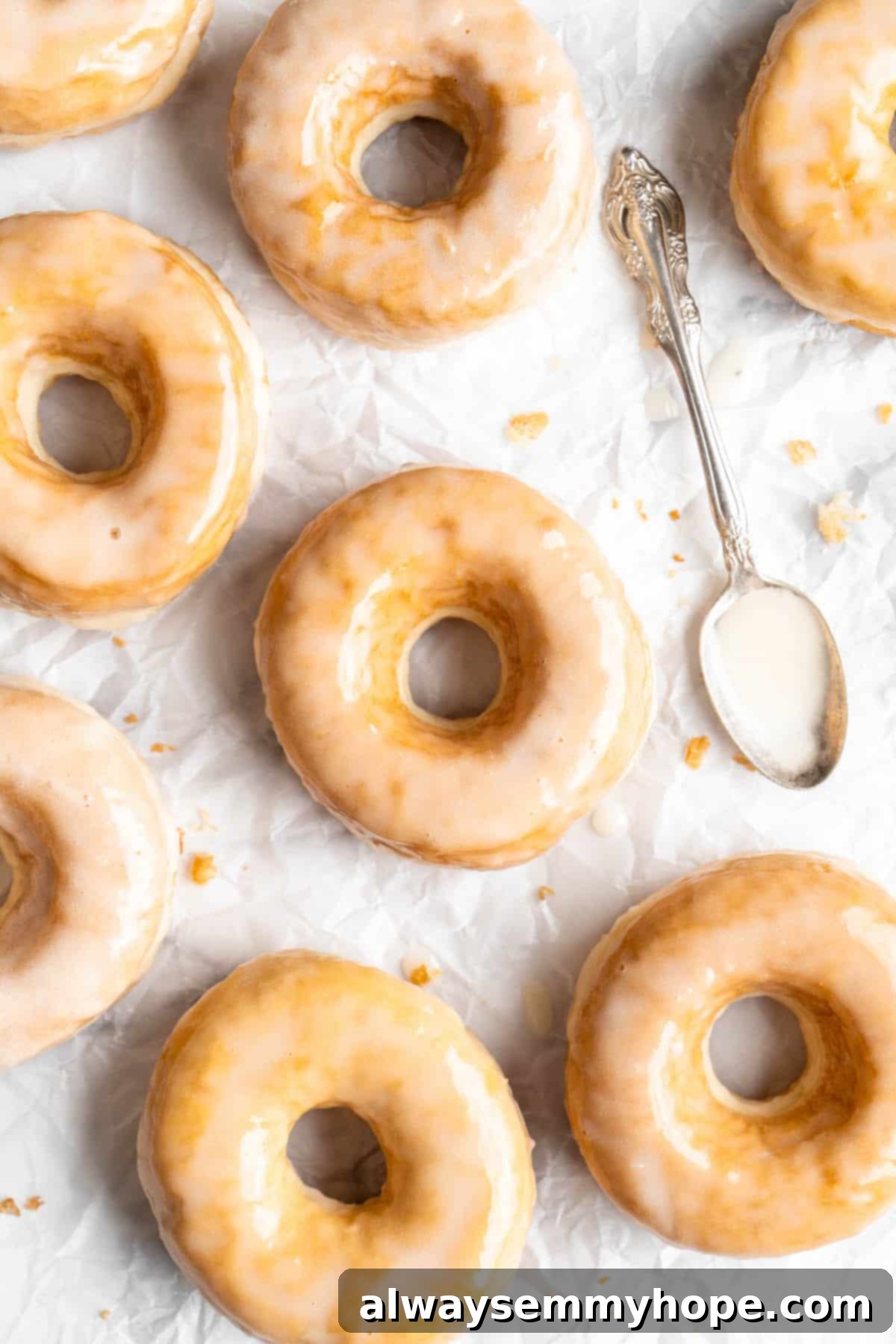
When it comes to crafting truly authentic yeast-leavened donuts, deep frying is undeniably the superior method. It’s the secret to achieving that coveted combination of a slightly crispy, golden-brown exterior and a remarkably soft, pillowy interior that melts in your mouth. While baked donuts have their place and can be delicious in their own right, they simply cannot replicate the unique texture and profound satisfaction that comes from a properly deep-fried donut.
I understand if the idea of deep frying feels a bit daunting at first. Many people are apprehensive about it, but rest assured, it’s much simpler than you might think. With a little care and attention to detail, you’ll master it in no time. For those who embrace an “everything in moderation” philosophy, enjoying a deep-fried donut or two as an occasional special treat is certainly not a big deal. The key lies in doing it correctly to ensure the best results and a delicious experience.
Crucially, maintaining the correct oil temperature is paramount for successful deep frying. When the oil is heated to the ideal temperature (around 350°F/180°C for donuts), it quickly sears the outside of the dough, forming a protective barrier. This barrier prevents the oil from soaking into the donut, resulting in a perfectly cooked, light, and non-greasy treat. If the oil isn’t hot enough, the dough will absorb too much oil, leading to a heavy, greasy, and unpleasantly textured donut. Conversely, if the oil is too hot, the outside will burn before the inside cooks through. A reliable deep-fry thermometer is your best friend in this process, ensuring consistent and delicious results every time.
Essential Ingredients for Perfect Vegan Donuts
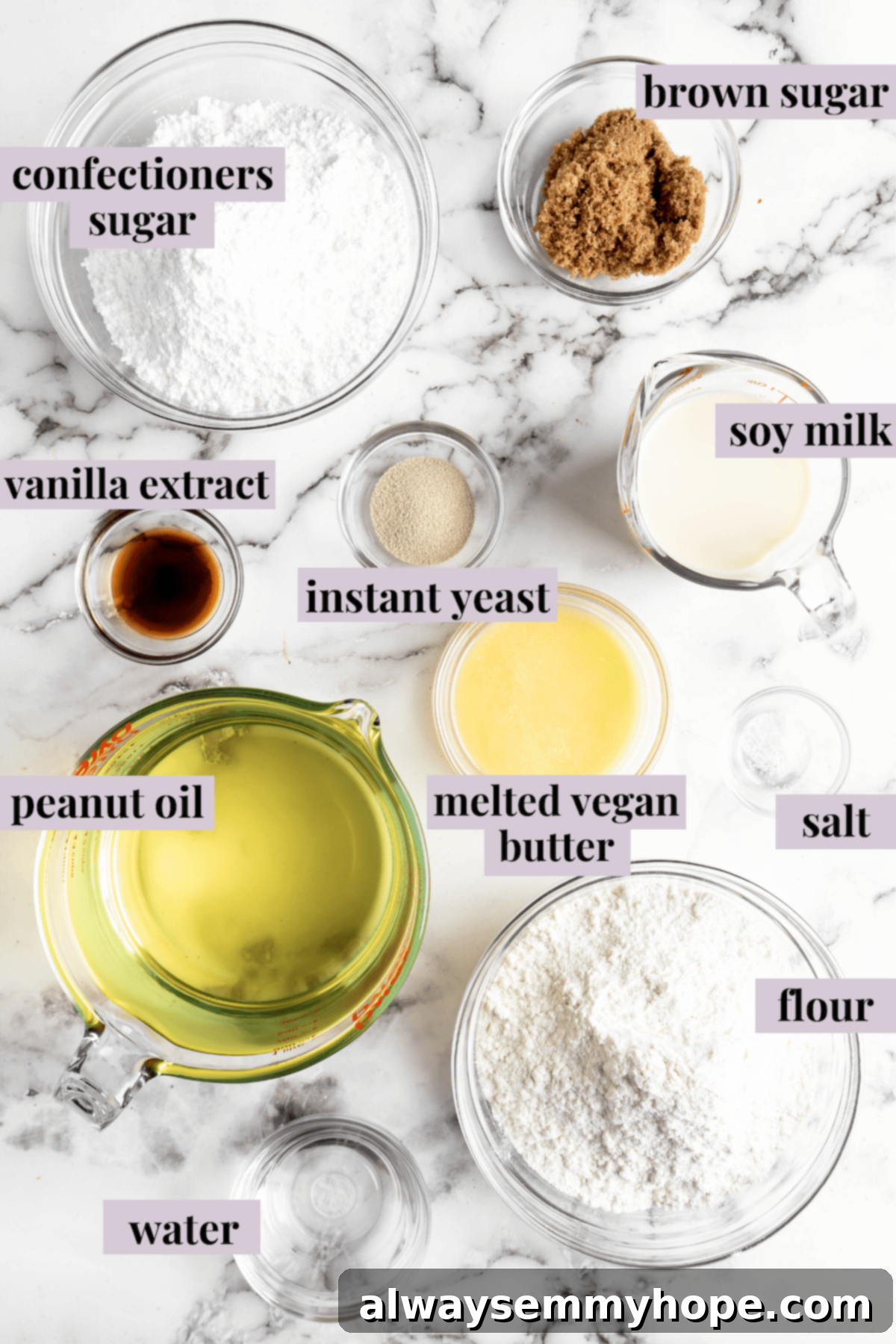
Crafting these delectable vegan donuts requires a thoughtful selection of plant-based ingredients to achieve that classic taste and texture. Below, you’ll find important notes on the key components. For the precise measurements and complete recipe details, please scroll down to the full recipe card.
For the Tangzhong (Water Roux): The Secret to Ultra-Softness
The tangzhong method, a technique borrowed from Asian baking, is what gives these donuts their extraordinary softness and extended freshness. It involves cooking a small portion of flour with liquid (milk and water) to create a thick, pudding-like paste. This paste gelatinizes the starch in the flour, allowing it to absorb more liquid, which in turn leads to a more tender, moist, and airy final product.
- All-Purpose Flour: The foundation of our tangzhong, providing the starch needed for the roux.
- Soy Milk: My preferred non-dairy milk for its protein content, which contributes to structure and richness. However, other non-dairy milks can also be used.
- Water: Combined with soy milk to create the ideal consistency for the tangzhong.
For the Vegan Donuts: Building the Flavorful Dough
- All-Purpose Flour: The main structural component of our donut dough. A good quality all-purpose flour works perfectly for these light and fluffy donuts.
- Brown Sugar: Adds a subtle caramel note and helps keep the donuts moist, contributing to their golden-brown crust.
- Instant Yeast: Essential for leavening the dough, giving these donuts their characteristic airy texture. Be sure to use instant yeast, as it can be mixed directly with dry ingredients and doesn’t require proofing beforehand. For tips on checking if your yeast is still active, see our guide on How to Test Yeast to see if it’s still Good.
- Sea Salt: Balances the sweetness and enhances all the flavors in the dough.
- Vegan Milk: Again, soy milk is my top choice for its slightly richer profile, but any warm non-dairy milk will work. It should be comfortably warm to the touch, ideally between 110°F to 120°F (43°C to 49°C), to activate the yeast without killing it.
- Vegan Butter: Provides richness, tenderness, and flavor to the donuts. Make sure it’s melted for easy incorporation into the dough. You can melt it gently in the microwave or a small saucepan.
- Vanilla Extract or Almond Extract: Vanilla extract offers that classic, comforting donut shop aroma and taste. Almond extract, on the other hand, provides a slightly more unique and sophisticated flavor profile, adding a delightful twist. Choose based on your preference!
- Peanut Oil: Or another high-smoke-point oil suitable for deep-frying, such as canola, vegetable, or sunflower oil. Peanut oil is excellent for its neutral flavor and high smoke point, ensuring your donuts fry beautifully without imparting unwanted tastes.
For the Glaze: The Sweet Finishing Touch
- Confectioners’ Sugar (Powdered Sugar): The base of our smooth, shimmering glaze. Sifting it beforehand is crucial to prevent any lumps and ensure a perfectly silky consistency.
- Vegan Milk: A small amount of warm non-dairy milk helps create a pourable glaze that adheres beautifully to the donuts.
- Vanilla Extract or Almond Extract: These extracts lend their distinct flavors to the glaze, complementing the donut dough perfectly.
Special Equipment to Have On Hand:
- Deep Fry/Candy Thermometer: Absolutely essential for monitoring and maintaining the precise oil temperature during frying, ensuring perfectly cooked donuts.
- Large, Deep, Heavy Skillet or Dutch Oven: A sturdy vessel that can hold enough oil and maintain an even temperature is key for safe and effective deep frying.
- Donut or Biscuit Cutters: For shaping your donuts. A standard donut cutter will give you the classic ring shape, while biscuit cutters (one large, one small for the hole) work just as well.
Step-by-Step Guide: How to Make Irresistible Vegan Donuts
Just like my popular vegan cinnamon rolls and ultra-soft Japanese milk bread, this vegan donut recipe utilizes the tangzhong method. This technique, involving a cooked mixture of milk, flour, and water, is the secret behind the incredibly tender crumb and prolonged freshness of these donuts. Let’s dive into the detailed process!
Step 1: Make the Tangzhong – The Foundation of Softness
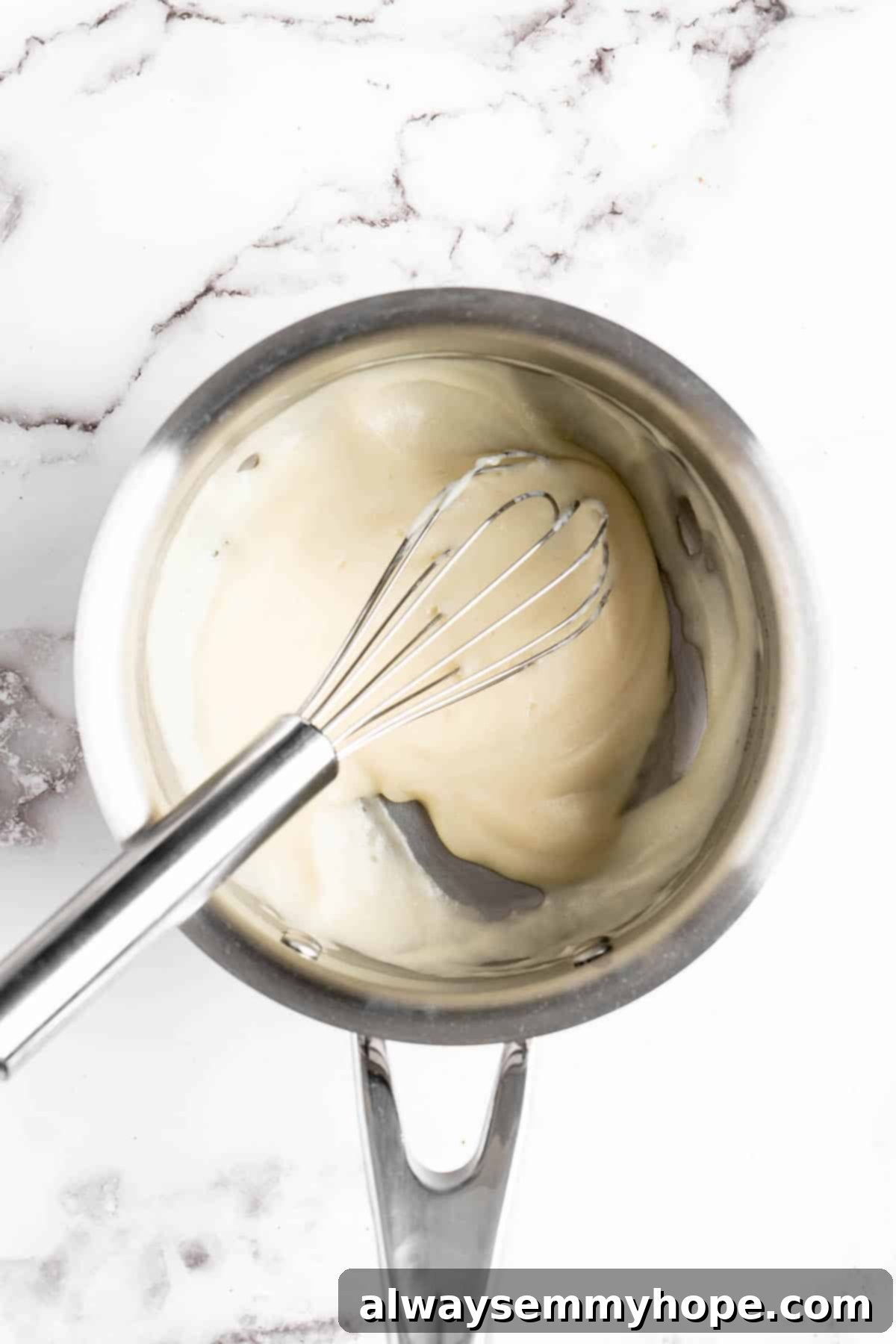
- Warm and Thicken the Ingredients: In a small saucepan, combine the all-purpose flour, vegan milk, and water. Whisk these ingredients continuously over medium-high heat until the mixture smoothly combines and then begins to thicken. This process usually takes about 1-2 minutes. You’re looking for a consistency similar to a thick pudding or a slurry. It should coat the back of a spoon.
- Chill to Cool: Once thickened, immediately remove the pan from the heat. Pour the hot tangzhong mixture into a small, clean bowl and place it in the refrigerator for about 10 minutes. This quick chill helps it cool down faster, preventing it from cooking the yeast later. I find it helpful to prepare this first while I’m gathering and measuring the rest of the donut ingredients.
Step 2: Make the Vegan Donut Dough – Developing Flavor and Texture
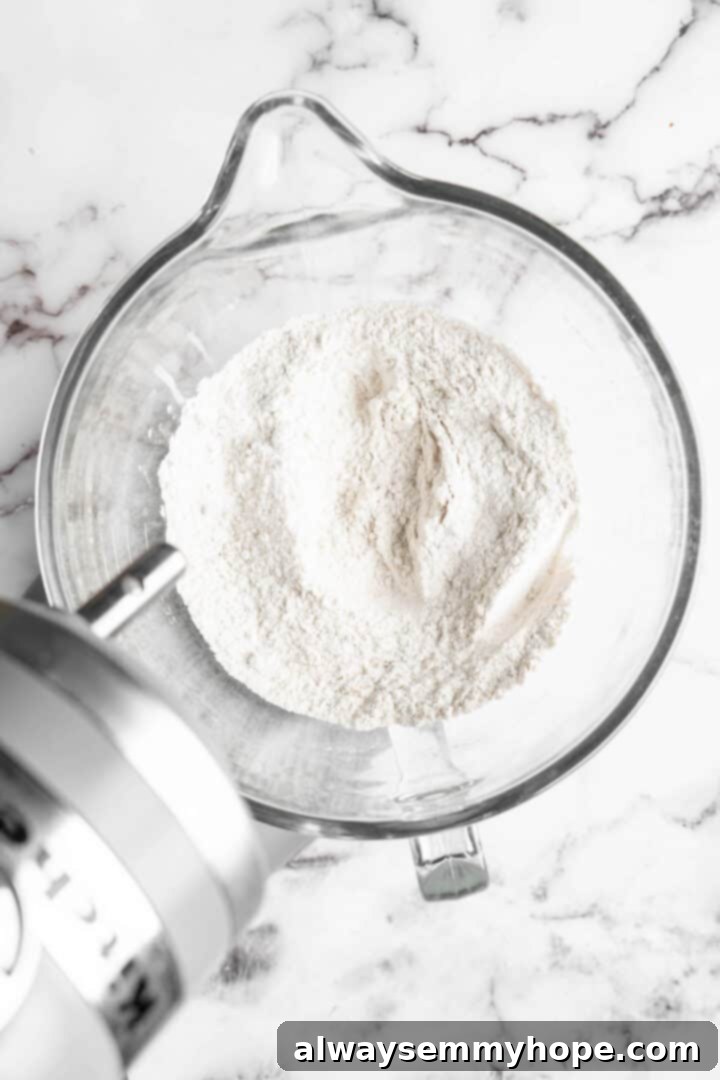
- Combine Dry Ingredients: In a large mixing bowl or the bowl of a stand mixer, whisk together the all-purpose flour, brown sugar, instant yeast, and sea salt. Ensure these dry ingredients are well combined.
- Prepare Wet Ingredients: In a separate, smaller bowl, whisk together the cooled tangzhong mixture, warm vegan milk, melted vegan butter, and vanilla (or almond) extract.
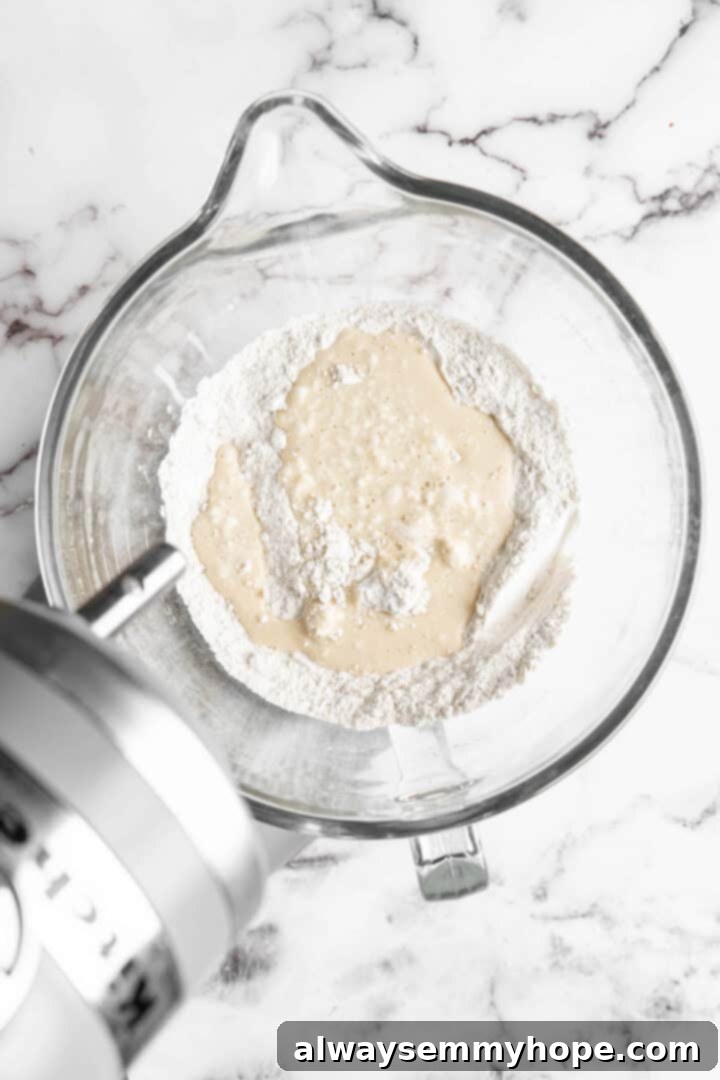
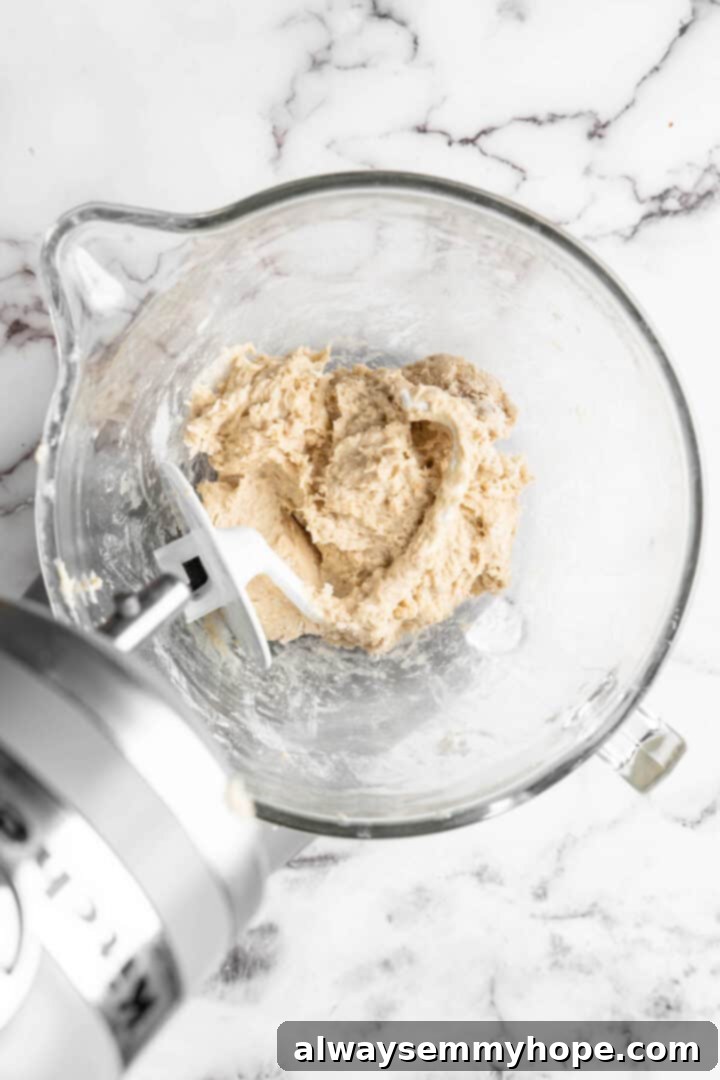
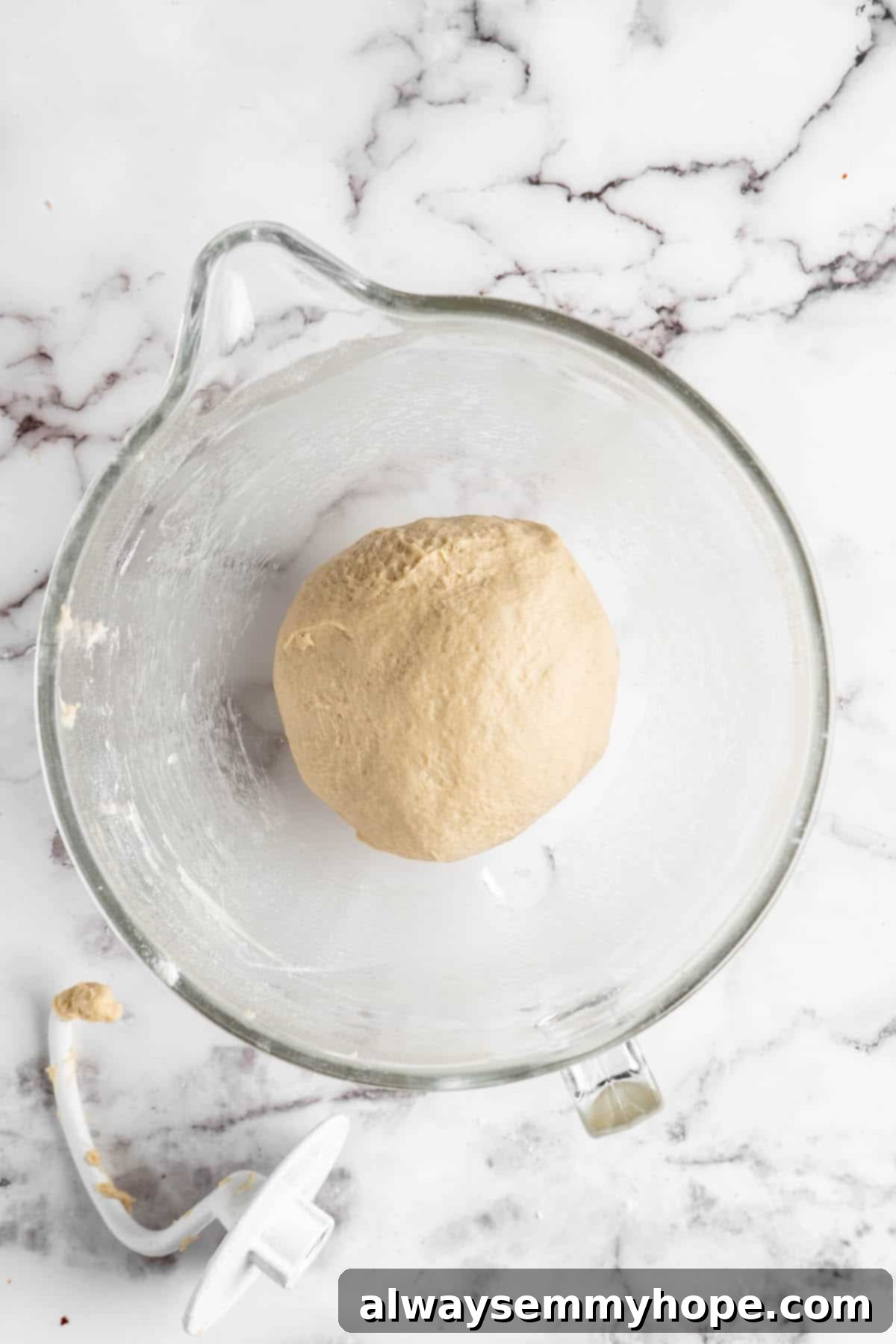
- Form the Dough: Pour the wet ingredients into the bowl containing the dry ingredients. Mix and knead the dough until it comes together and forms a soft, cohesive ball. You can do this by hand or using the dough hook attachment on your stand mixer.
- Initial Rest: Once the dough is formed, cover the mixing bowl with a clean kitchen towel and let it rest for 10 minutes. This short rest allows the flour to fully hydrate and the gluten to relax, making the subsequent kneading easier.
- Develop the Dough: After the rest, knead the dough for an additional 6 to 8 minutes. If using a stand mixer, the dough hook will do the work. If kneading by hand, you can continue to knead it directly in the bowl, pushing and folding until it becomes smooth, soft, and slightly sticky to the touch. If the dough feels overly sticky, you can incorporate up to 2 tablespoons of extra flour, adding it sparingly to avoid a tough donut. The goal is a supple, elastic dough.
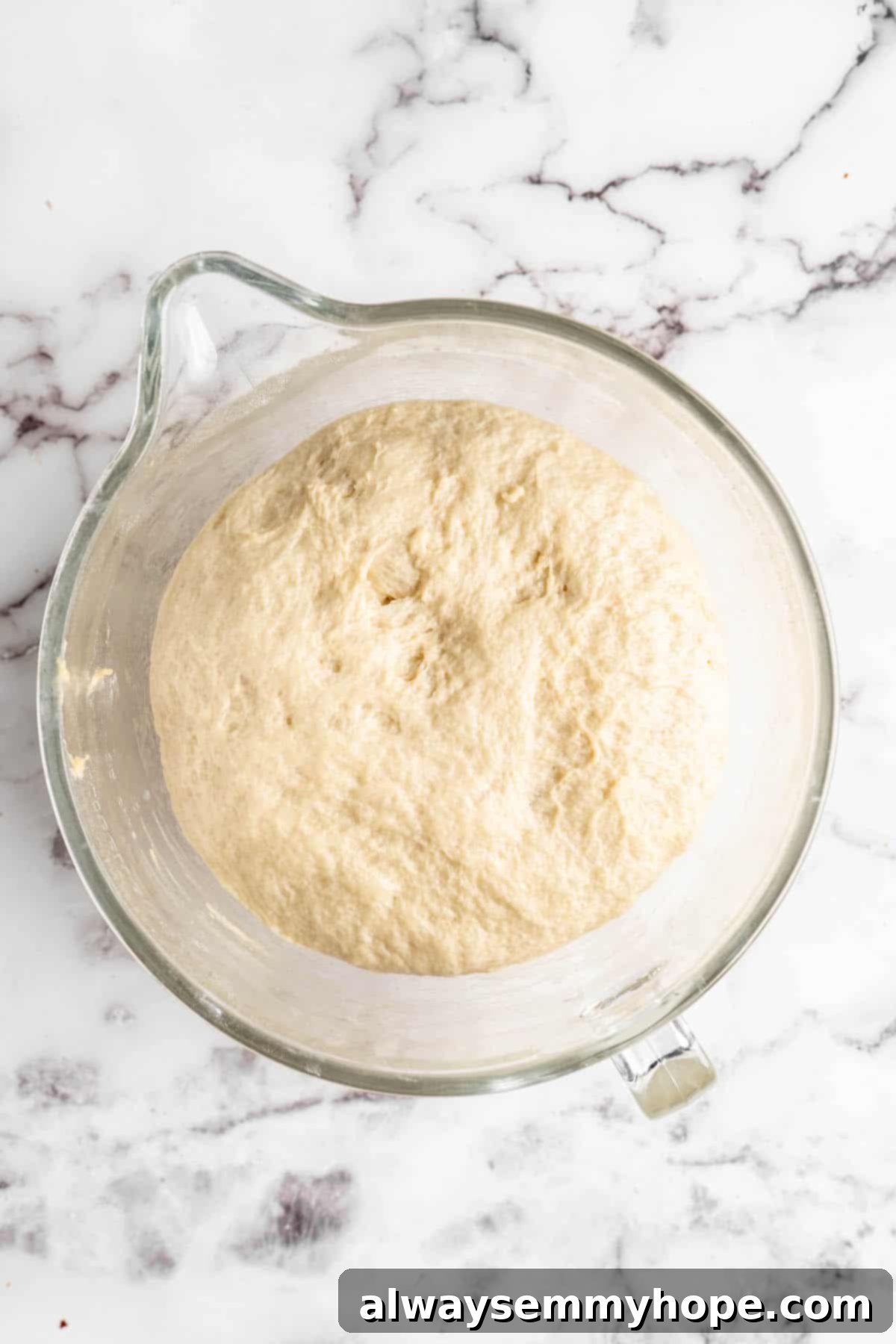
- First Rise: Lightly grease a large bowl with a little oil. Transfer the kneaded dough to this bowl, turning it once to coat lightly. Cover the bowl with the kitchen towel and place it in a warm, draft-free spot in your kitchen. Allow the dough to rise for approximately 2 hours, or until it has visibly doubled in bulk. This slow rise is crucial for developing flavor and a tender texture.
- Prepare for Cutting: Gently punch down the risen dough in the bowl to release the air. Turn it out onto a lightly floured work surface. Using your hands or a rolling pin, gently pat or roll the dough into a rectangular shape, aiming for a thickness between 1/4 and 1/2 inch. It’s important not to roll it too thin (less than 1/4 inch) or too thick (more than 1/2 inch) for the best donut shape and frying consistency. If the dough seems excessively sticky, add a very small amount of flour, but be conservative, as too much flour can result in tough donuts.
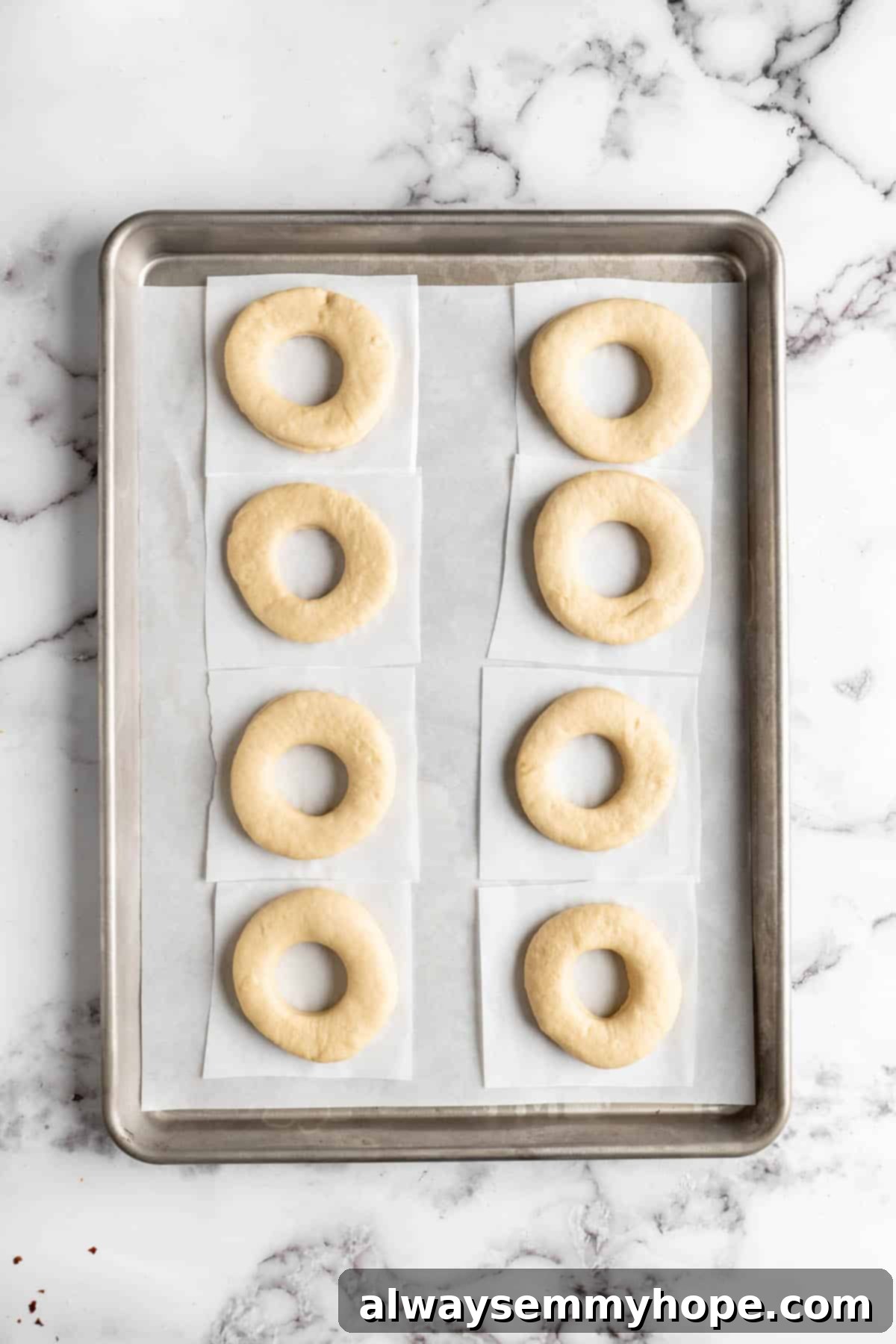
- Cut the Donuts: Use a donut cutter to create classic ring shapes. If you don’t have one, you can use a large biscuit cutter or the rim of a cup for the outer shape, and a smaller biscuit cutter or even a clean bottle cap for the center hole. Gather any dough scraps, gently press them together, re-roll, and cut more donuts. A clever tip: instead of discarding or re-rolling the small donut holes, fry them separately! They are not only delicious mini-treats but also perfect for testing your oil temperature before frying the larger donuts.
- Second Rise: Carefully transfer the cut donuts to squares of parchment paper (this makes transferring them to the oil much easier) and arrange them on a baking sheet. Lightly cover the donuts with greased plastic wrap to prevent them from drying out. Let them rise again in a warm, draft-free spot for about 45 minutes to an hour, or until they have nearly doubled in size. This second rise contributes significantly to their airy texture.
- Prepare for Frying: While the donuts are undergoing their second rise, prepare your frying station. Pour about 2-3 inches of peanut oil (or your chosen frying oil) into a large, deep, heavy skillet or Dutch oven. Attach your deep-fry thermometer to the side of the pan. Line a large baking sheet with several layers of paper towels to absorb excess oil from the fried donuts.
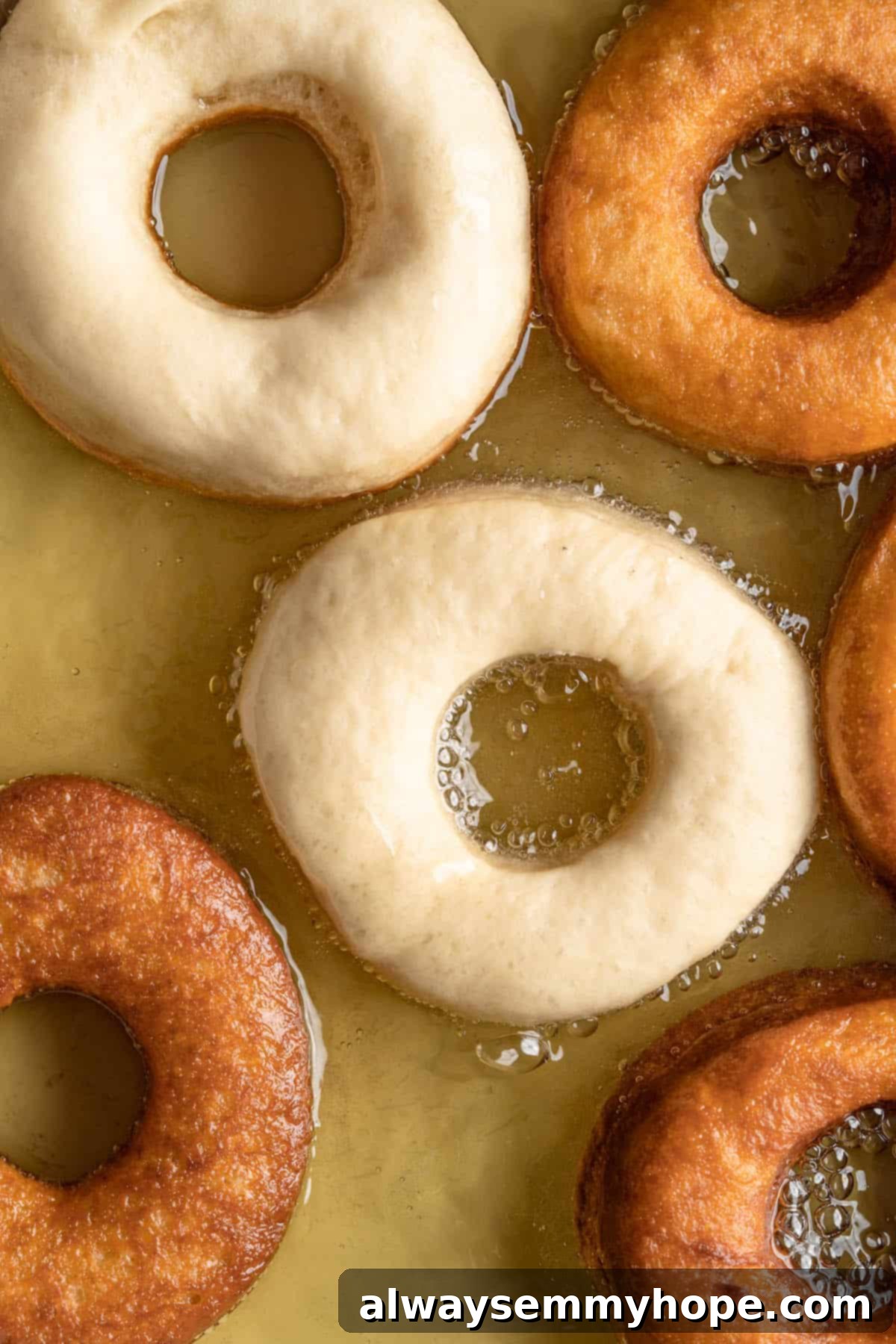
- Fry the Donuts: Heat the oil over medium-high heat until your thermometer registers 350°F (180°C). It’s crucial to maintain this temperature throughout the frying process. Carefully slide a lightly floured bench scraper or metal spatula under a risen donut and gently drop it into the hot oil. Avoid crowding the pan; fry only 2-3 donuts at a time, depending on the size of your skillet, to prevent the oil temperature from dropping too much. Fry each donut for about 1 minute per side, or until it’s beautifully golden brown. As you add donuts, the oil temperature will naturally drop slightly; adjust the heat as needed to keep it consistently around 350°F. Use a slotted spoon or even chopsticks (if you’re comfortable with them) to flip the donuts and remove them from the oil. Transfer the fried donuts to the paper-towel-lined baking sheet to drain any excess oil.
Step 3: Glaze the Donuts – The Sweet, Shimmering Finish
- Set Up Glazing Station: Place a large wire cooling rack over a baking sheet lined with aluminum foil. The foil will catch any drips, making cleanup a breeze.
- Prepare the Glaze: In a large bowl, whisk together the sifted confectioners’ sugar, warm vegan milk, and vanilla (or almond) extract until the glaze is completely smooth and free of lumps. The warmth of the milk helps create a wonderfully smooth consistency.
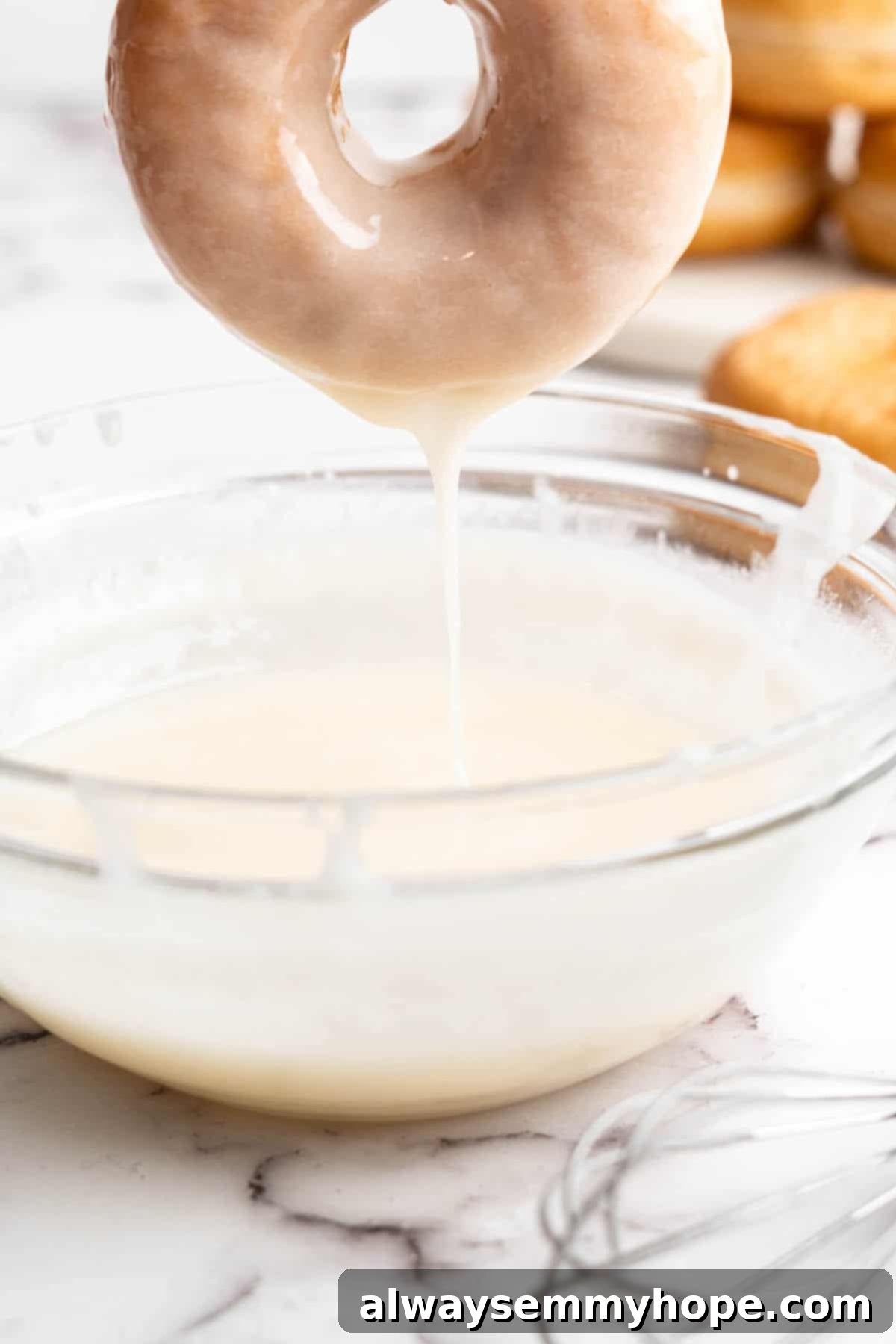
- Glaze the Warm Donuts: While the donuts are still warm (but not scalding hot), dip them one by one into the prepared glaze, ensuring they are fully coated. If you fried the donut holes, you can toss them all into the glaze bowl at the end and gently toss to coat them thoroughly.
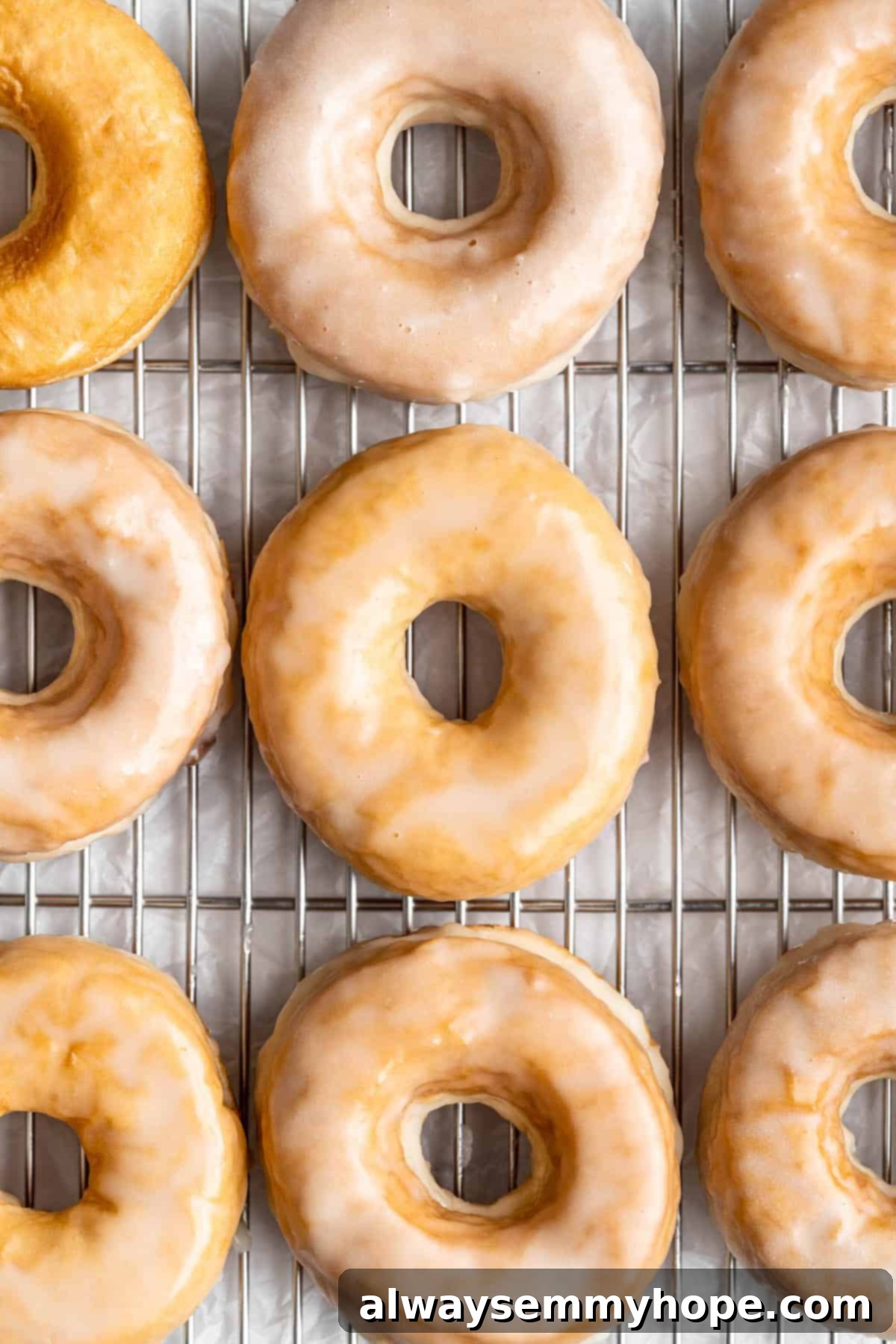
- Allow to Set: Place the glazed donuts back on the wire rack, allowing any excess glaze to drip off and the glaze to set slightly before serving. The best part? These donuts are absolutely best enjoyed warm and fresh!
Creative Variations: Customizing Your Vegan Donut Experience
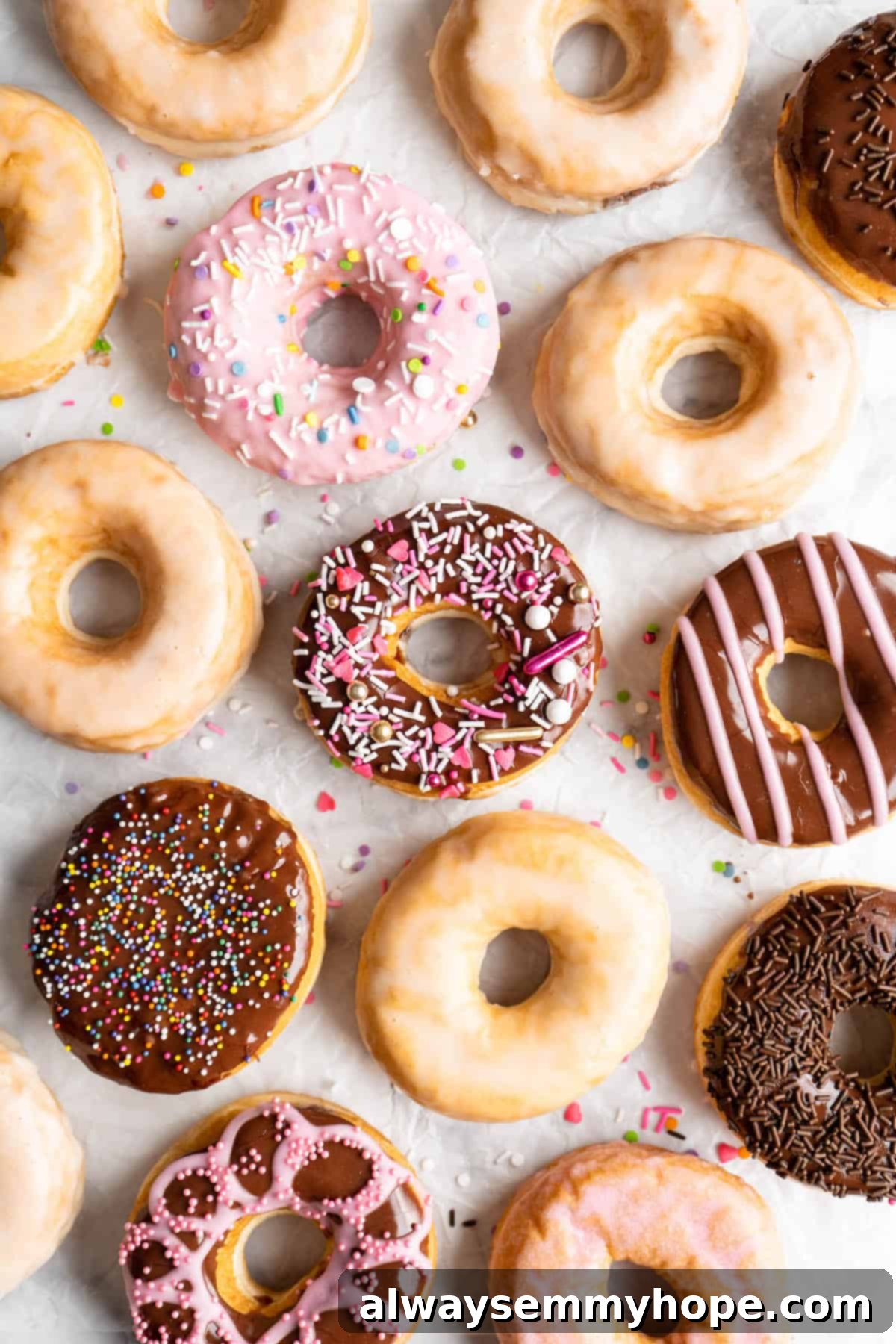
The beauty of these classic vegan donuts lies in their versatility. While the simple glazed version is utterly divine, you can easily get creative with glazes, toppings, and fillings to customize them to your heart’s desire!
- Colored Glazes: For a fun and festive touch, let your basic vanilla glaze cool slightly and thicken, then stir in a few drops of vegan-friendly food coloring. Imagine vibrant pink, blue, or green donuts!
- Chocolate Glaze: Transform your glaze by whisking in a tablespoon or two of unsweetened cocoa powder. Adjust the amount to achieve your desired chocolate intensity. A pinch of instant coffee powder can deepen the chocolate flavor beautifully.
- Sprinkles & Toppings: As soon as you dip your freshly-glazed donuts, sprinkle them generously with vegan sprinkles, chopped nuts (like pecans or walnuts), shredded coconut, or even a dusting of cinnamon sugar for added texture and visual appeal.
- Filled Donuts: If you prefer filled donuts, cut your dough into solid circles (without the center hole). Once fried and cooled completely, use a piping bag fitted with a long, thin nozzle to fill them with an array of delicious fillings. Consider fruit jams or jellies, a rich vegan custard, a light vegan mousse, or even a dollop of fluffy vegan whipped cream. Remember, for filled donuts, they must be completely cool before filling to prevent the filling from melting or making the donut soggy.
- Lemon Glaze: For a zesty twist, substitute a portion of the vegan milk in the glaze with fresh lemon juice and add some lemon zest.
- Maple Glaze: Replace the vanilla extract in the glaze with pure maple extract and a touch of maple syrup for a delightful autumnal flavor.
Tips for Success: Achieving Donut Perfection
To ensure your vegan donuts turn out perfectly soft, fluffy, and delicious every time, keep these valuable pointers in mind:
- Prevent Sticking with Parchment: Handling delicate, risen donut dough can be tricky. A great trick is to place each cut donut on its own small square of parchment paper. This allows you to easily pick up the parchment square and gently slide the donut into the hot oil without deflating it or getting sticky fingers.
- Mastering Oil Temperature with a Thermometer: This is arguably the most critical tip! A deep-fry/candy thermometer is non-negotiable. As you add donuts to the oil, the temperature will naturally drop. As you remove them, it will start to climb. Continuously monitor your thermometer and adjust your stove’s heat as needed to keep the oil consistently around 350°F (180°C). Too low, and your donuts will be greasy; too high, and they’ll burn outside before cooking inside.
- Don’t Crowd the Pan: Frying too many donuts at once will significantly lower the oil temperature, leading to greasy, poorly cooked donuts. Fry in small batches (typically 2-3 at a time, depending on your pan size) to maintain consistent oil temperature and allow for even cooking.
- The Art of Glazing: For that iconic Krispy Kreme-like shimmering glaze, timing is everything. Both your donuts and your glaze should be warm (but not hot!) when you dip them. A warm donut absorbs the glaze better, creating a thin, even coating that sets beautifully. A warm glaze is thinner and more pliable, resulting in a smooth, translucent finish. If the glaze cools too much, it will thicken and become opaque, giving a different look and texture.
- Utilize Donut Holes: As mentioned, don’t discard those donut holes! They are fantastic for testing your oil temperature. Drop one in first; if it sizzles gently and turns golden in about a minute, your oil is ready. This also helps you get a feel for the frying process before committing your full-sized donuts.
- Proper Drainage: After frying, immediately transfer donuts to a baking sheet lined with several layers of paper towels. This helps drain excess oil, preventing them from becoming soggy.
Storage Recommendations for Freshness
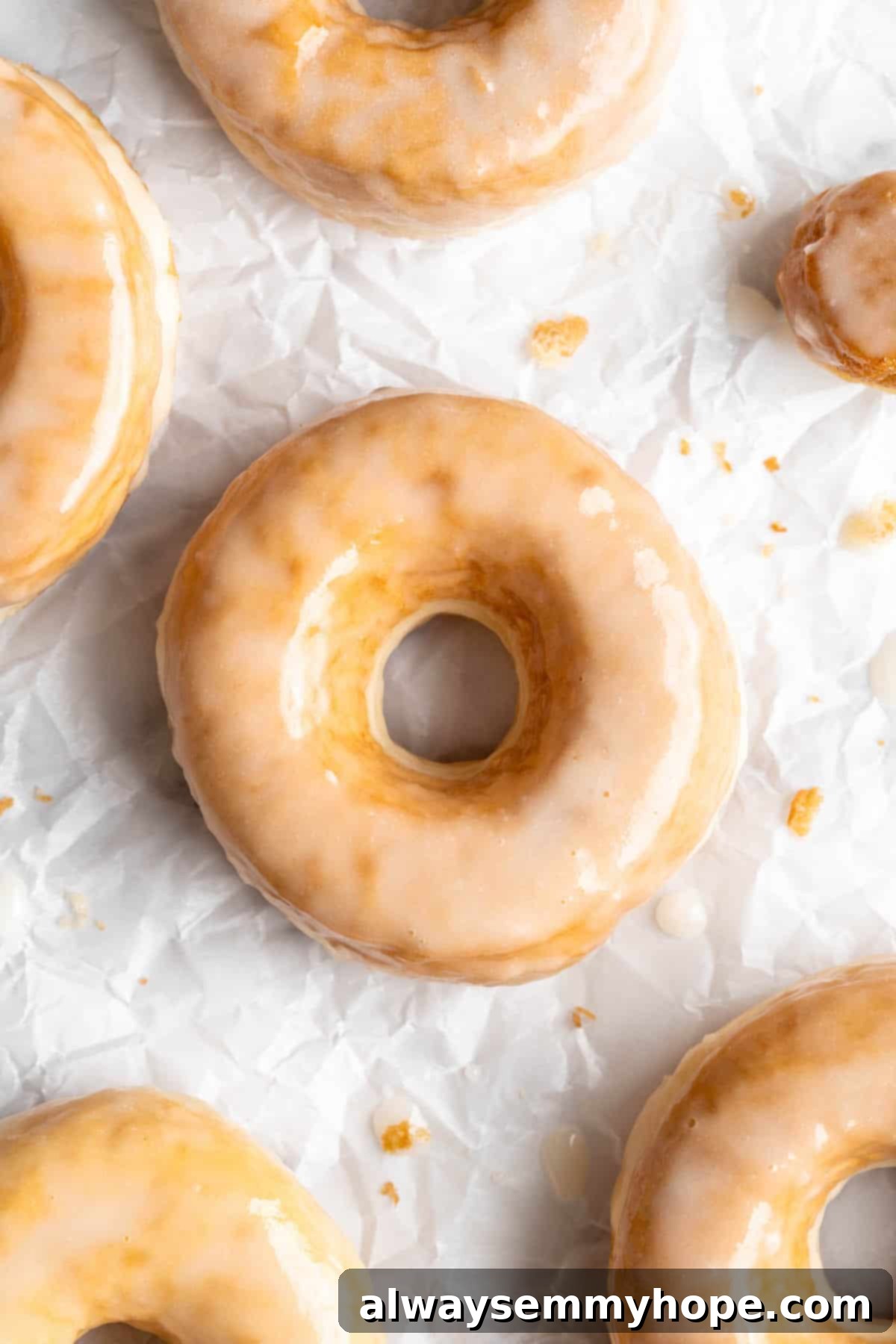
These homemade vegan donuts are truly at their absolute best when enjoyed fresh and still slightly warm, straight from the glaze. The soft, airy texture and delicate glaze are unparalleled in this state. However, if you happen to have any leftovers, they can be stored in an airtight container at room temperature for up to one day. Beyond that, their quality will start to diminish, losing some of their characteristic softness and freshness.
I generally do not recommend freezing this particular recipe for deep-fried donuts, as freezing and thawing can significantly alter their texture, often making them a bit dense or soggy. If you are looking for a vegan donut recipe that freezes well for future enjoyment, I suggest opting for a baked donut instead. Baked donuts tend to hold up much better to freezing. For a great alternative, consider trying my Baked Chocolate Cake S’mores Donuts, which are perfect for making ahead and freezing.
Enjoy these delightful vegan treats, friends! If you try this homemade vegan donut recipe, please snap a photo and share it using the hashtag #jessicainthekitchen on Instagram! I’d also love for you to leave a comment below and give the recipe a rating. Your feedback is greatly appreciated!

Vegan Donuts
16
donuts
20 minutes
20 minutes
3 hours
3 hours
40 minutes
Pin Recipe
Leave a Review
Ingredients
For the Tangzhong:
- 2 tablespoons all-purpose flour (15g)
- ¼ cup non-dairy milk (60mL) – preferably a high protein milk like soy milk
- 2 tablespoons water (30mL)
For the Donuts:
- 3 cups all-purpose flour + up to 2 tablespoons more for kneading (360g)
- ¼ cup brown sugar (50g)
- 2 ¼ teaspoons instant yeast
- ½ teaspoon sea salt
- ¾ cup non-dairy milk (180mL) – warm to touch, between 110°F to 120°F, preferably soy milk
- ⅓ cup melted vegan butter (69g)
- 1 teaspoon vanilla extract or almond extract
- 6 cups peanut oil (or other frying oil)
For the Glaze:
- 2 cups confectioners’ sugar, sifted
- ¼ cup non-dairy milk, warmed
- 1 teaspoon vanilla extract or almond extract
Equipment
- Deep fry/candy thermometer
- Large, deep, heavy skillet or Dutch oven
- Donut or biscuit cutters
Instructions
To make the Tangzhong:
- In a small pan, whisk together the all-purpose flour, non-dairy milk, and water until fully mixed. Place the pan over medium-high heat and stir continuously until the mixture thickens quickly, within 1-2 minutes. It should resemble a thick pudding or a slurry. Remove from heat and pour into a small bowl, then refrigerate for about 10 minutes to cool.
To make the Donuts:
- Whisk the flour, sugar, yeast, and salt in a large mixing bowl or your stand mixer’s bowl. In a separate, smaller bowl, whisk the cooled tangzhong mixture, warm non-dairy milk, melted vegan butter, and vanilla extract.
- Pour the wet ingredients into the dry ingredients. Knead by hand or with a dough hook until a soft dough forms. Cover the bowl with a kitchen towel and let the dough rest for 10 minutes.
- After resting, knead the dough for 6 to 8 minutes. If kneading by hand, you can do so directly in the bowl. The dough should become smooth, soft, and slightly sticky. Add up to 2 tablespoons of flour gradually if needed to manage stickiness.
- Transfer the dough to a large, lightly greased bowl. Cover with a kitchen towel and place in a warm, draft-free spot. Let it rise for about 2 hours, or until doubled in bulk.
- Gently punch down the dough, then turn it out onto a lightly floured work surface. Pat or roll the dough into a rectangle between 1/4 and 1/2-inch thick. Avoid adding too much flour, as it can toughen the donuts.
- Use a donut cutter, or a large and small biscuit cutter, to cut the donuts.
- Gather any scraps, re-roll, and cut more donuts. Fry donut holes separately to test oil temperature before the main donuts.
- For easier frying, I recommend placing each cut donut onto individual parchment pieces.
- Cover the donuts loosely with greased plastic wrap and let them rise again for 45 minutes to an hour, or until doubled in size.
- Heat the peanut oil in a deep, heavy skillet to 350°F (180°C). Line a large baking sheet with paper towels.
- Maintain the oil temperature around 350°F throughout frying, adjusting heat as necessary. Carefully slide a lightly floured bench scraper or metal spatula under a donut and gently drop it into the oil. (Chopsticks can also be used for handling.)
- Fry 2-3 donuts at a time, depending on your skillet size, to avoid crowding.
- Fry until golden brown on the bottom (about 1 minute), then flip and fry the other side until golden.
- Use a slotted spoon to remove fried donuts and transfer them to the paper-towel-lined baking sheet to drain excess oil.
To glaze the Donuts:
- Place a large wire rack on a baking sheet lined with foil for easy cleanup.
- Whisk confectioners’ sugar, warm non-dairy milk, and extract in a large bowl until smooth. Dip donuts in the glaze while still warm (but not hot). Toss donut holes in the glaze as well.
- Place glazed donuts on the wire rack to allow excess glaze to drip off before serving. These donuts are best eaten immediately, but will keep for up to a day.
Notes
Calories: 201kcal
Carbohydrates: 38g
Protein: 3g
Fat: 4g
Saturated Fat: 1g
Polyunsaturated Fat: 1g
Monounsaturated Fat: 2g
Trans Fat: 1g
Sodium: 126mg
Potassium: 53mg
Fiber: 1g
Sugar: 18g
Vitamin A: 15IU
Vitamin C: 1mg
Calcium: 31mg
Iron: 1mg
Disclaimer: Although jessicainthekitchen.com attempts to provide accurate nutritional information, kindly note that these are only estimates. Nutritional information may be affected based on the product type, the brand that was purchased, and in other unforeseeable ways. Jessicainthekitchen.com will not be held liable for any loss or damage resulting for your reliance on nutritional information. If you need to follow a specific caloric regimen, please consult your doctor first.
American
Breakfast, Dessert, Snack
Jessica Hylton