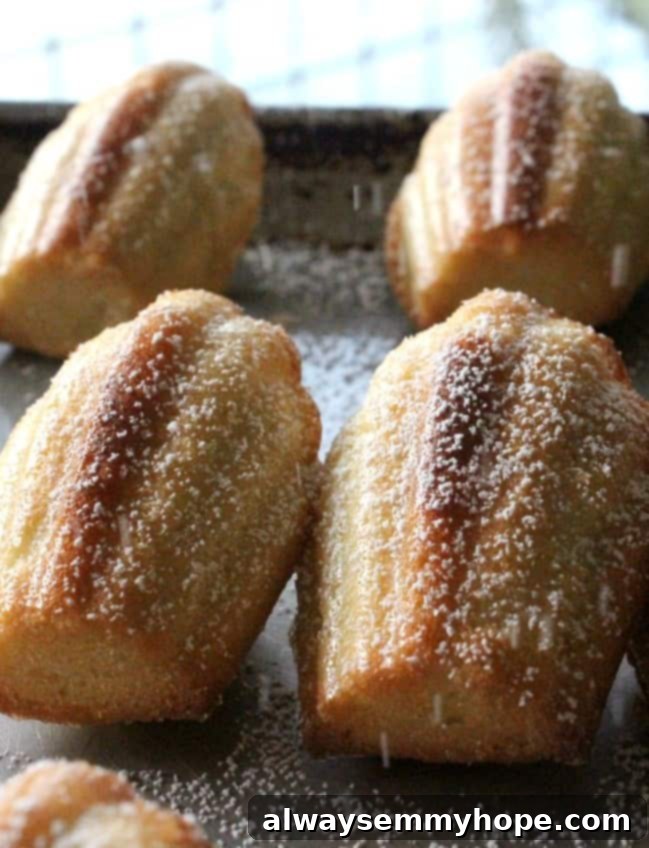
Classic French Madeleines: Your Guide to Buttery, Delicate Perfection
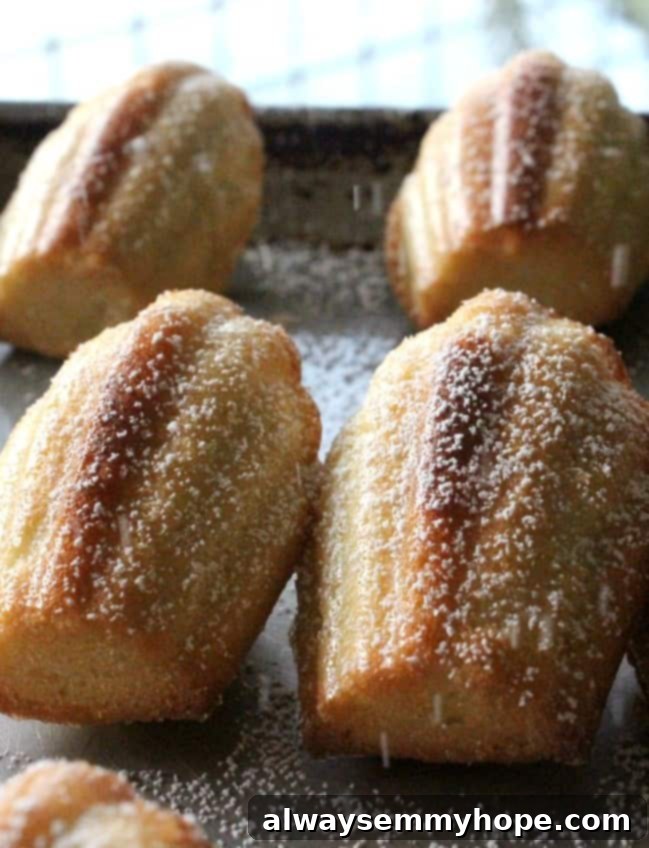
There are few pastries as universally charming and delightfully elegant as the classic Madeleine. These iconic shell-shaped French cakes, with their delicate texture and signature “hump,” evoke a sense of nostalgic comfort and sophistication. I recently had the pleasure of baking a batch of these buttery, sweet delights, generously sprinkled with powdered sugar, for a charity Tea Party. And I must say, they were an absolute hit, perfectly complementing the elegant theme of the event.
My first encounter with Madeleines wasn’t through taste, but through their enchanting name and delicate appearance. Much like the beloved character from the old French cartoon, “Madeline,” the pastry itself exudes a dainty, refined feeling. Yet, beneath that soft exterior, lies a most welcome surprise: a slight, tender crunch that contrasts beautifully with the moist, airy crumb. The dusting of powdered sugar isn’t merely decorative; it’s an essential element that subtly enhances the Madeleine’s natural sweetness, creating a balanced flavor profile that allows you to enjoy several without feeling overwhelmed. It’s a touch that elevates them from simple cakes to a truly exquisite treat.
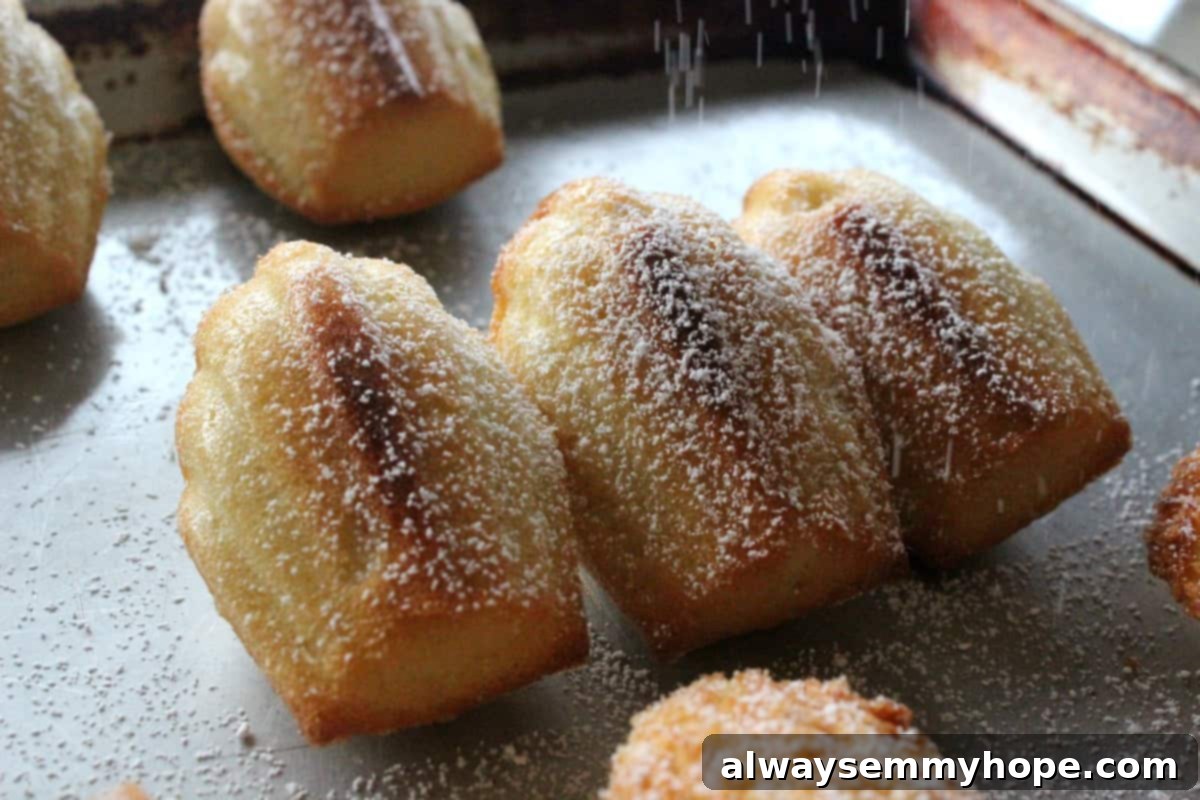
The Irresistible Allure of Madeleines: A Journey Through Taste and Tradition
Madeleines hold a special place in the world of French pâtisserie, not just for their delightful taste but also for their rich history and cultural significance. Originating from the Lorraine region of France, these small sponge cakes are instantly recognizable by their distinctive shell shape, a result of being baked in special Madeleine pans. While their exact origin is debated, one popular legend attributes their creation to a young cook named Madeleine Paulmier in the 18th century, who baked them for Stanislas Leszczynski, the Duke of Lorraine.
However, the Madeleine’s most famous literary association comes from Marcel Proust’s “In Search of Lost Time,” where the taste of a Madeleine dipped in lime blossom tea triggers a flood of childhood memories for the narrator. This passage cemented the Madeleine’s status as a symbol of nostalgic recollection and comfort, making it more than just a cake; it’s a sensory experience deeply tied to memory and emotion. Every bite promises a delicate journey back to simpler, sweeter times.
Achieving the Iconic “Hump”: Secrets to Perfect Madeleines
One of the defining characteristics of a truly perfect Madeleine is its prominent “hump” or “bump” on one side. This gentle rise isn’t just for aesthetics; it signifies a well-made batter and proper baking technique, contributing to the cake’s unique texture. The secret to achieving this beautiful hump lies primarily in temperature contrast and the resting period of the batter. Chilling the Madeleine batter for at least three hours (or even up to two days) is crucial. This allows the gluten to relax and the flavors to meld, but more importantly, it creates a significant temperature difference between the cold batter and the hot oven. When the cold batter hits the high heat, it causes a rapid expansion of gases, pushing the center of the cake upwards before the edges set, thus forming that signature hump.
Beyond chilling, ensuring your Madeleine pan is properly prepared is equally important. Whether it’s a traditional metal pan (buttering and flouring generously is key, even for nonstick) or a silicone mold, a little attention to detail here prevents sticking and helps in achieving that pristine shell pattern. The rapid initial blast of heat (often around 400°F/200°C) is also vital for the hump development, quickly setting the exterior while the interior continues to rise.
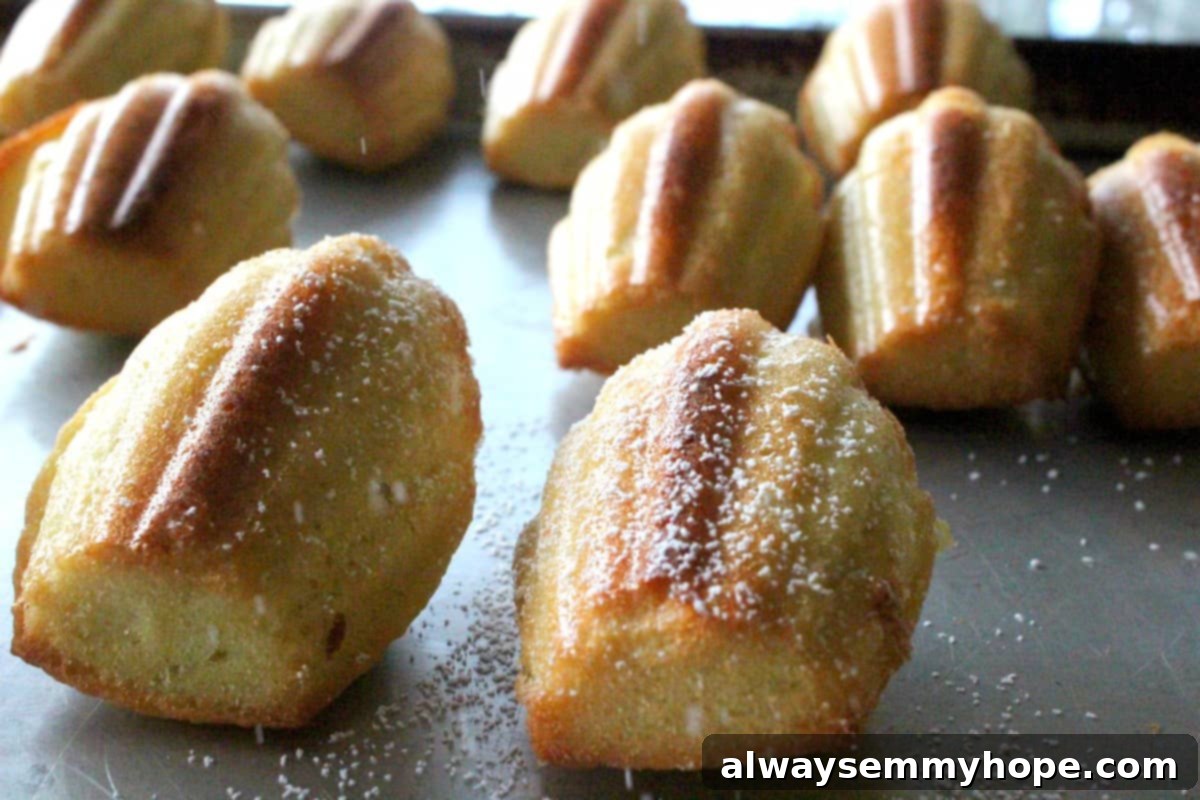
Baking Tips for Madeleine Success
Making Madeleines might seem intimidating at first glance, but with a few simple tips, anyone can achieve bakery-quality results right in their own kitchen. Here are some essential pointers to ensure your Madeleines are always perfect:
- Room Temperature Eggs: Ensure your eggs are at room temperature. This helps them emulsify better with the sugar, leading to a lighter, airier batter.
- Sift Dry Ingredients: Always sift your flour and baking powder together. This removes lumps and aerates the mixture, contributing to a smoother batter and a tender crumb.
- Don’t Overmix: After incorporating the dry ingredients and melted butter, fold them gently. Overmixing can develop the gluten too much, resulting in tough Madeleines. A rubber spatula is your best friend here.
- Chill the Batter: As mentioned, chilling is non-negotiable for the iconic hump. The longer the chill, the more pronounced the hump tends to be.
- Hot Oven, Then Reduce (Optional but Recommended): Some recipes suggest starting with a higher oven temperature (like 400°F/200°C) for the first few minutes, then slightly reducing it to finish baking. This initial blast helps with the hump formation.
- Don’t Overfill the Molds: Fill the Madeleine molds almost to the top, but avoid overfilling. The batter needs space to rise and develop its shape.
- Cool Immediately: Once baked, Madeleines are best removed from the pan almost immediately. A gentle tap on the counter often does the trick, or a careful run with a butter knife around the edges. Allow them to cool on a wire rack to prevent sogginess.
- Serve Fresh: Madeleines are truly at their best when enjoyed fresh, ideally slightly warm from the oven or at room temperature. Their delicate texture is most pronounced then.
Beyond the Classic: Delicious Madeleine Variations
While the classic lemon and vanilla Madeleine is undoubtedly a masterpiece, these versatile little cakes lend themselves beautifully to various flavor enhancements. You can easily adapt the base recipe to create exciting new variations:
- Citrus Zest: Experiment with orange or lime zest instead of lemon for a different citrusy bright note.
- Chocolate Dipped: After cooling, dip one end of the Madeleine in melted dark or white chocolate and sprinkle with finely chopped nuts or zest for an extra touch of decadence.
- Spiced Madeleines: Add a pinch of cinnamon, nutmeg, or cardamom to the dry ingredients for a warm, comforting flavor profile, especially perfect for fall.
- Matcha Madeleines: Incorporate a teaspoon of ceremonial grade matcha powder for a beautiful green hue and an earthy, subtle flavor.
- Glazed Madeleines: Instead of powdered sugar, prepare a simple glaze with powdered sugar and lemon juice for a tangy, sweet coating.
These variations make Madeleines suitable for any occasion and palate, proving that this timeless French pastry is truly a canvas for culinary creativity.

Classic Madeleines
Pin Recipe
Leave a Review
Ingredients
- 3/4 cup all-purpose flour, 95 gram
- 1/2 teaspoon double-acting baking powder
- 2 large eggs, at room temperature
- 1/2 cup sugar, 100 grams
- Grated zest of 1 lemon
- 2 teaspoons vanilla extract
- 5 tablespoons unsalted butter, melted and cooled, 2 1/2 ounces; 70 grams
Instructions
- Sift together the flour and baking powder and keep close at hand. Working in a mixer fit with the whisk attachment, beat the eggs and sugar together on medium-high speed until they thicken and lighten in color, 2 to 4 minutes. Beat in the lemon zest and vanilla. Switch to a large rubber spatula and gently fold in the dry ingredients, followed by the melted butter.
- Cover the batter with plastic wrap, pressing the wrap against the surface to create an airtight seal, and chill for at least 3 hours, perhaps longer–chilling helps the batter develop its characteristic crown, known as the hump or the bump. (The batter can be kept tightly covered in the refrigerator for up to 2 days.)
- Center a rack in the oven and preheat the oven to 400 degrees F (200 degrees C). If your Madeleine pan is not nonstick, generously butter it, dust the insides with flour and tap out the excess. If the pan is nonstick, you still might want to give it an insurance coating of butter and flour. If it is silicone, do nothing. No matter what kind of pan you have, place it on a baking sheet for easy transportability.
- Divide the batter among the molds, filling them almost to the top. Don’t worry about smoothing the batter, it will even out as it bakes.
- Bake large madeleines for 11 to 13 minutes, small ones for 8 to 10 minutes, or until the cookies are puffed and golden and spring back when touched.
- Pull the pan from the oven and remove the cookies by either rapping the pan against the counter (the madeleines should drop out) or gently running a butte knife around the edges of the cookies.
- Allow the madeleines to cool on a cooling rack. They can be served ever so slightly warm or at room temperature.
Notes
Recipe from Smitten Kitchen
Disclaimer: Although jessicainthekitchen.com attempts to provide accurate nutritional information, kindly note that these are only estimates. Nutritional information may be affected based on the product type, the brand that was purchased, and in other unforeseeable ways. Jessicainthekitchen.com will not be held liable for any loss or damage resulting for your reliance on nutritional information. If you need to follow a specific caloric regimen, please consult your doctor first.
Whether you’re hosting a formal tea party, looking for a thoughtful homemade gift, or simply craving a delicate treat to accompany your morning coffee or afternoon tea, these classic Madeleines are always an excellent choice. Their buttery, tender crumb, subtle lemon notes, and delicate crunch make them universally appealing. With this recipe and a few key tips, you can confidently bake a batch of these exquisite French shell cakes and create your own memorable “Proustian moment.” Happy baking!